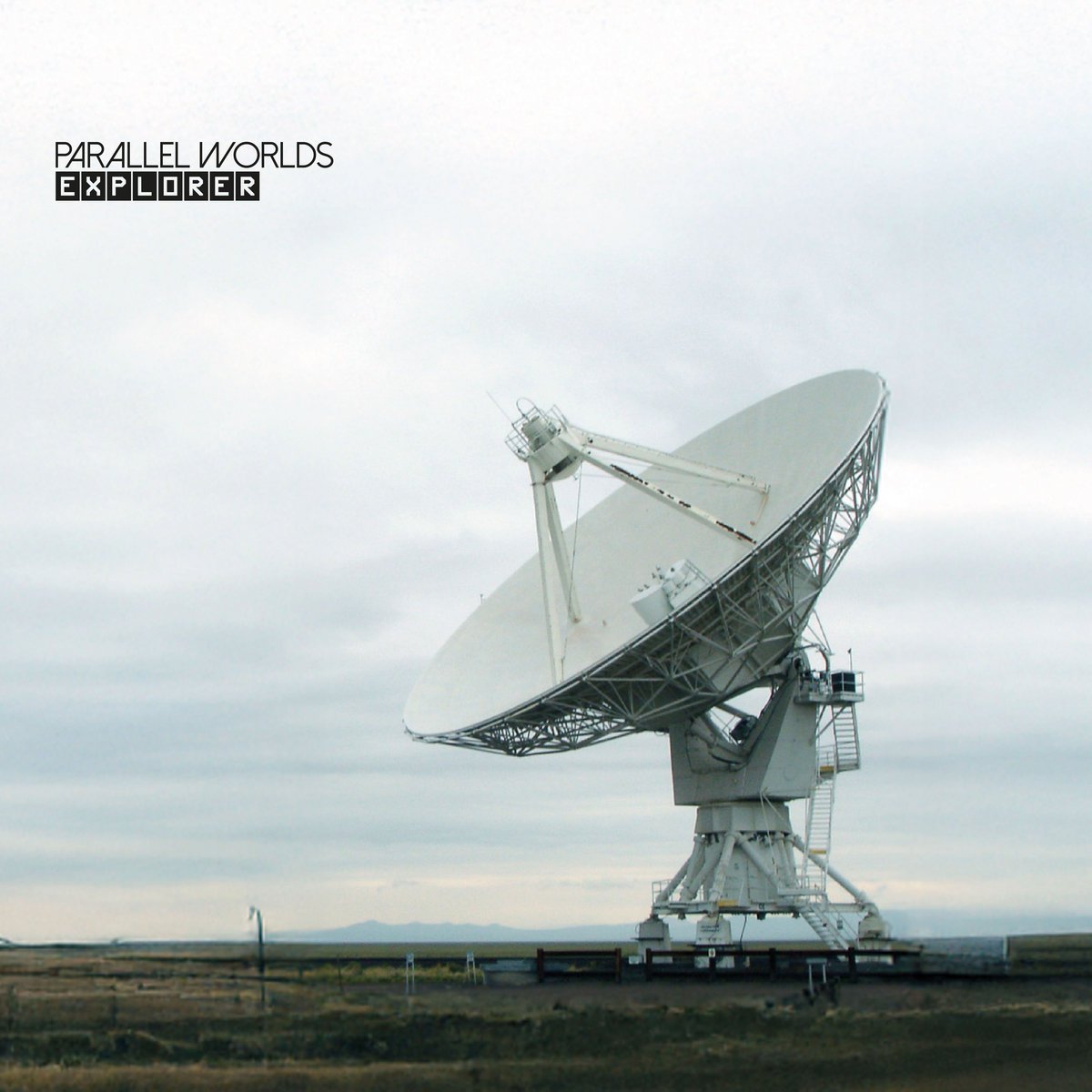
There is a particular kind of strangeness at play and it does not announce itself. It does not arrive with the theatrical menace of horror or the alienating severity of pure abstraction. It arrives with the quiet, uncanny insistence of a room you recognize that you have never entered — familiar in geometry, wrong in atmosphere. Explorer, the latest from Parallel Worlds, operates precisely in that odd liminal register, and does so with a consistency and control that marks it as one of the more genuinely fascinating releases to emerge from the IDM-adjacent underground this year.
The album’s opening statement, “Bendophonic,” establishes the governing logic immediately: thin, luminous synth tones pick out a melody that is simultaneously playful and displaced, like an old music box found in an empty house. Shimmering reverb-drenched pads materialize around it in slow accretion — bass, harmonic textures, something almost like strings but not quite — and the cumulative effect is less construction, more coalescence, as though the track were condensing out of some pre-existing ambient medium rather than being assembled. The arpeggio that threads through the piece shifts key with an unhurried inevitability, and this is the album’s first demonstration of one of its core compositional strategies: tonal migration as the primary vehicle of mood, a technique that keeps the listener in a state of perpetual, low-grade reorientation.
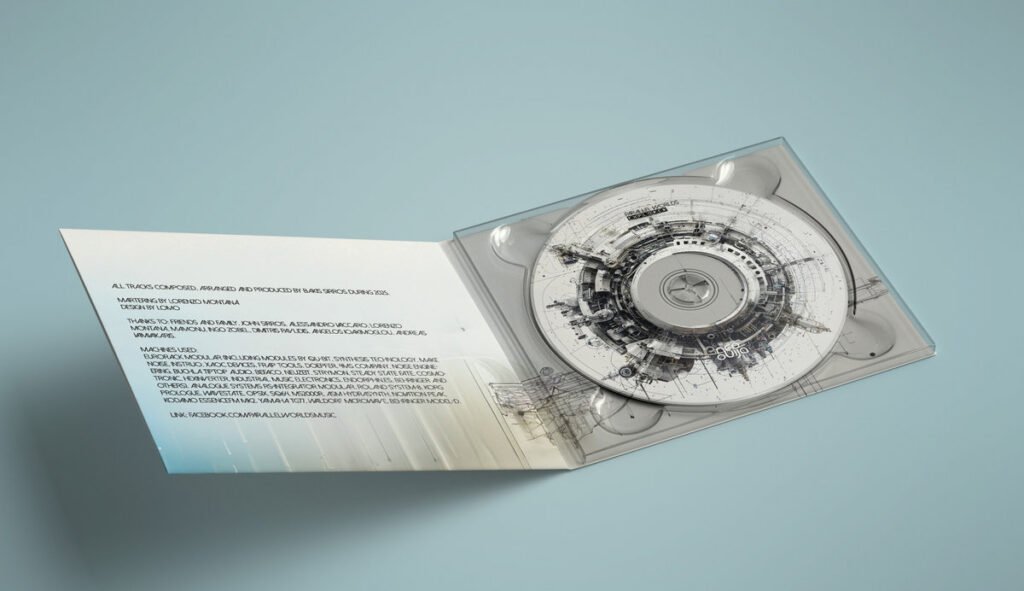
“Phase” deepens the palette considerably. Modulated white noise percusses the periphery in short, clipped bursts, less rhythm than nervous system, while a bass presence accretes beneath melodic material that itself feels provisional, exploratory, unsure whether it intends to arrive anywhere. Parallel Worlds has an acute understanding of tension as a narrative tool: this is not music that withholds resolution as a rhetorical strategy but music that seems to have concluded, at some foundational level, that resolution is beside the point. The crescendo that “Phase” perpetually implies but never delivers is not a failure of follow-through but a structural argument about the nature of expectation itself.
“Still Unknown” and “Persistence” represent the album at perhaps its most formally assured. The IDM drumwork here, metrically cautious, percussion rendered in tight rims, clicks, glitched micro-events distributed with taxonomic precision, strongly recalls the early Warp catalogue’s most introspective moments without rehearsing them, and the melodic writing over both tracks has a quality that might almost be described as dissociative: minor-key figures that feel emotionally legible in isolation but refuse to cohere into anything as stable as full narrative or statement. “Persistence” in particular achieves a sustained affective register that is genuinely difficult to name — not quite grief, not quite dread, something older and less culturally mediated than either.
“Patience” and “Fullmoon” constitute a kind of emotional centre of gravity, and here the album’s most interesting tension becomes audible. The former opens with a melodic line that carries the weight of private loss — there is nothing operatic in its sorrow, which is precisely what gives it its power — before percussion enters in the form of spare, insistent clicks and rimshots that feel like the sound of time continuing regardless. “Fullmoon” offers a near-twin mood, its harpsichord-adjacent pad sonorities suggesting a different tradition of melancholy — something pre-electric, almost — while the gradual introduction of near-theremin frequencies tilts the atmosphere toward something spacious, spectral, other-dimensional.
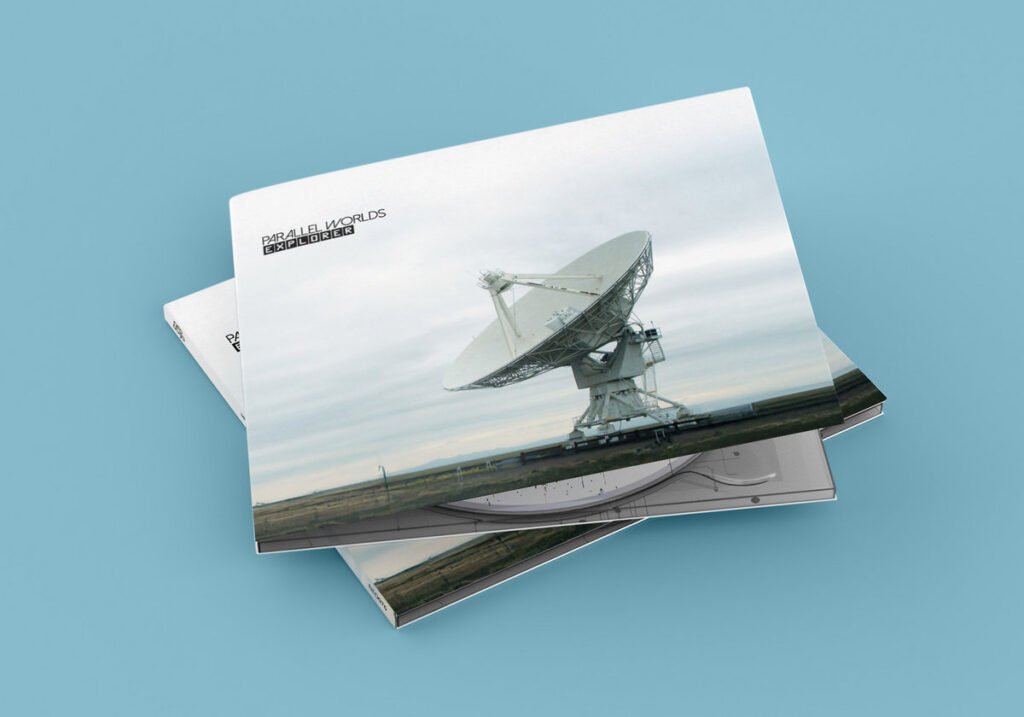
“Soundwise,” “Tonight,” and the closing “Octo” maintain the album’s established emotional atmosphere without repitition, each locating a slightly different position within the same coordinate system. “Soundwise” carries the densest sense of dislocation, its synth patches doing something to the sonic environment that unsettles before the drums have even arrived. “Tonight” deploys bell-like tones with an almost classical economy, the clarity of each strike acting as a kind of ironic contrast against the prevailing murk. “Octo” ends things on a note of alien detachment, its melodic material genuinely odd in the etymological sense, and in doing so confirms that Explorer is precisely that: a cartography of territories that exist adjacently to the known, mapped with patience, precision, and a quiet, unnerving calm.
Explorer ultimately proposes that strangeness need not be loud to be profound, that the uncanny can be a dwelling place, not a provocation, inhabited with the same unhurried seriousness that Parallel Worlds brings to the structural and tonal decisions across these nine tracks. In a moment when experimental electronic music so frequently deploys atmosphere as a substitute for substance, Explorer is a record in which mood and structure are genuinely inseparable: the one an argument made through the other.
Explorer by Parallel Worlds released on 19 June 2026 exclusively on Neo Ouija