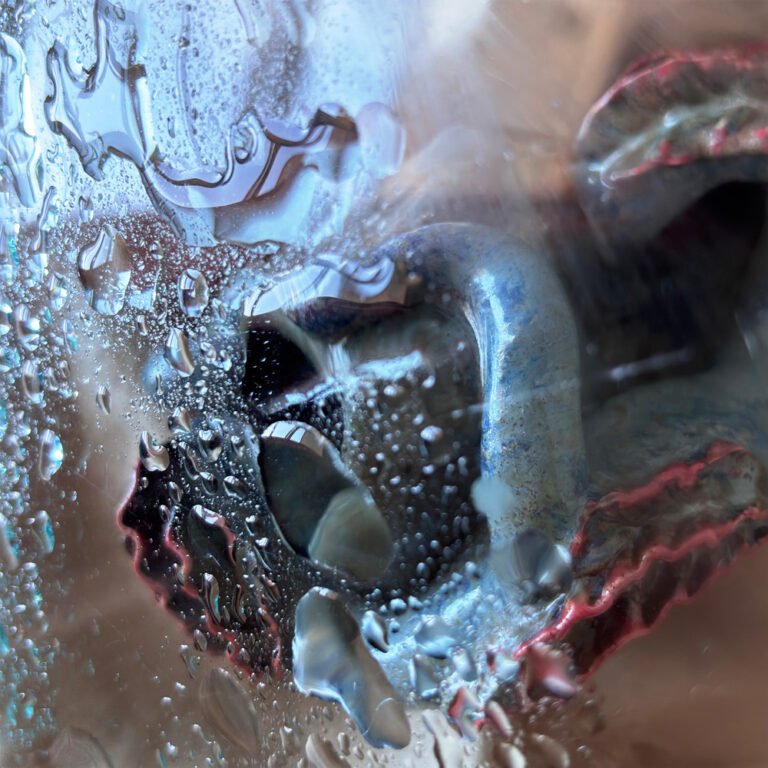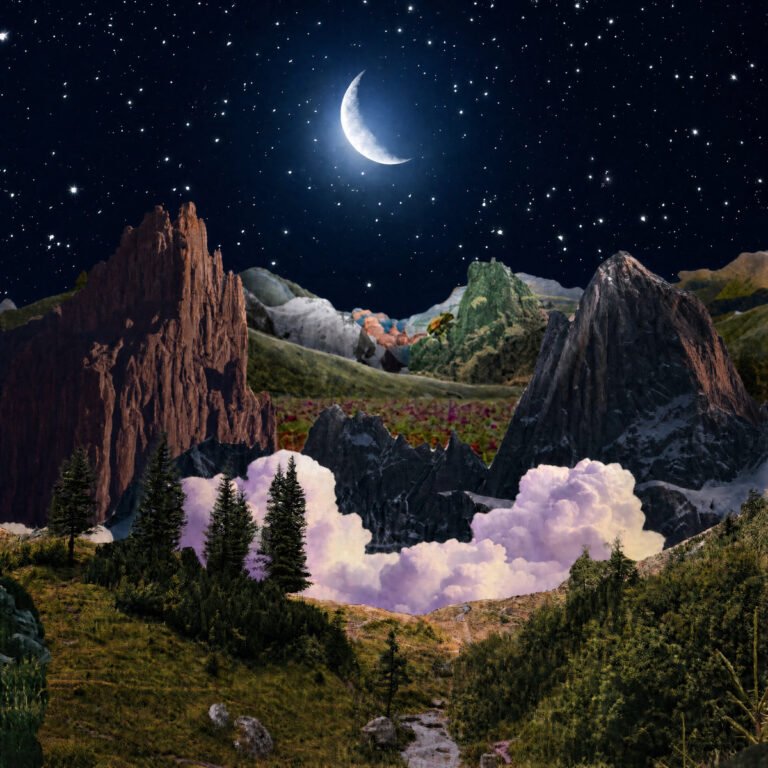
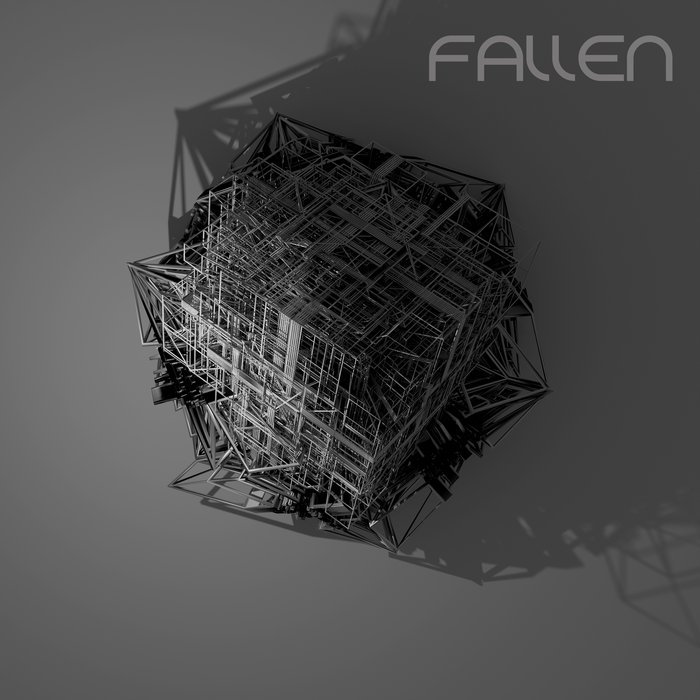
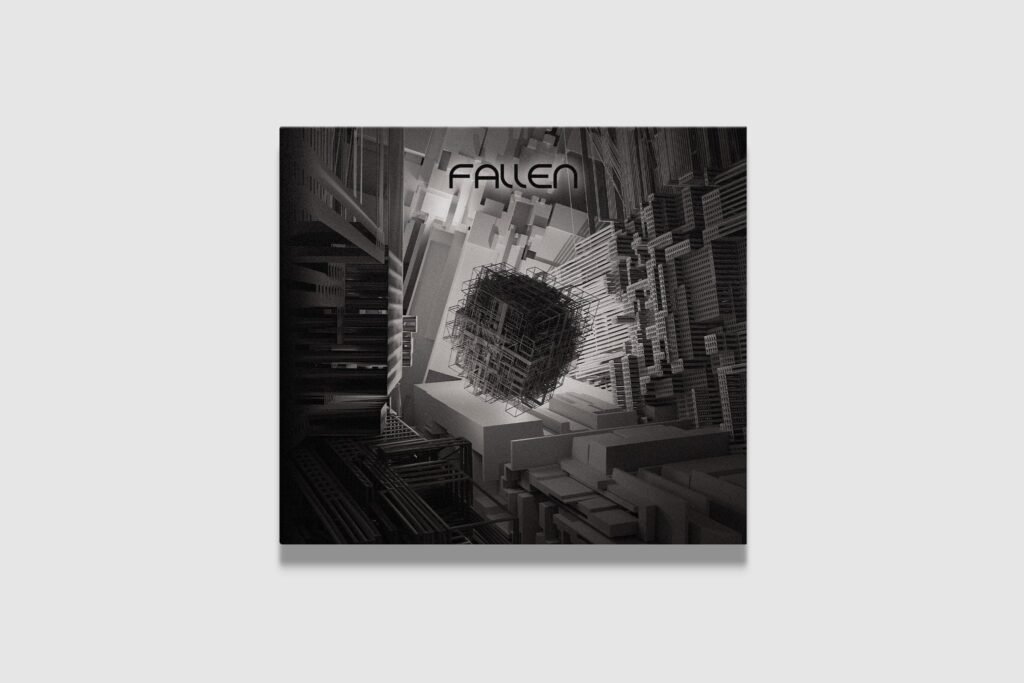
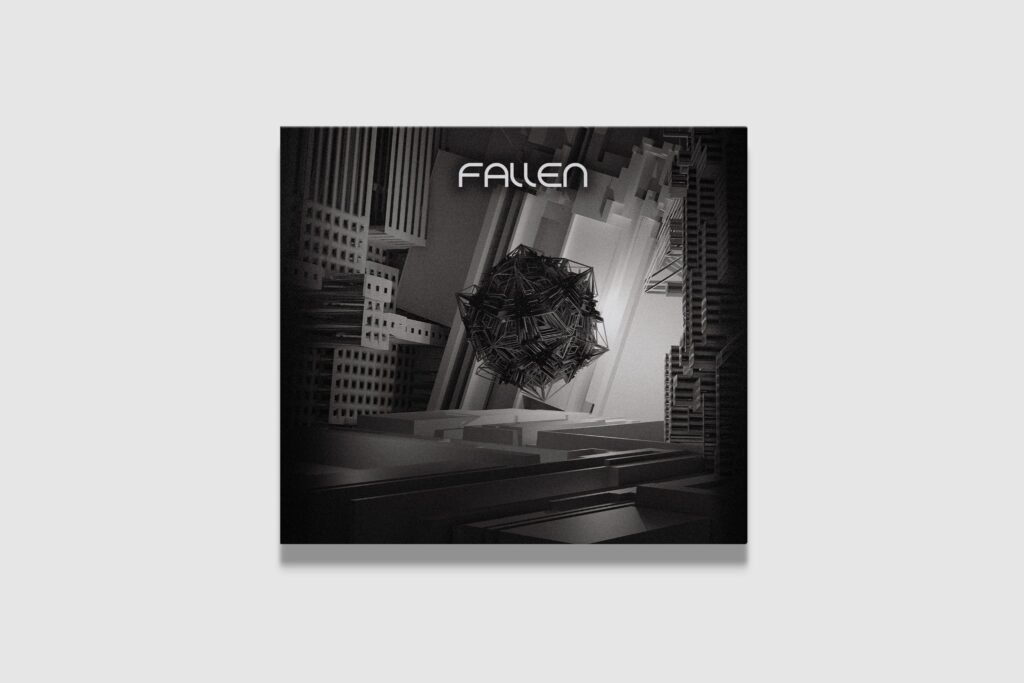
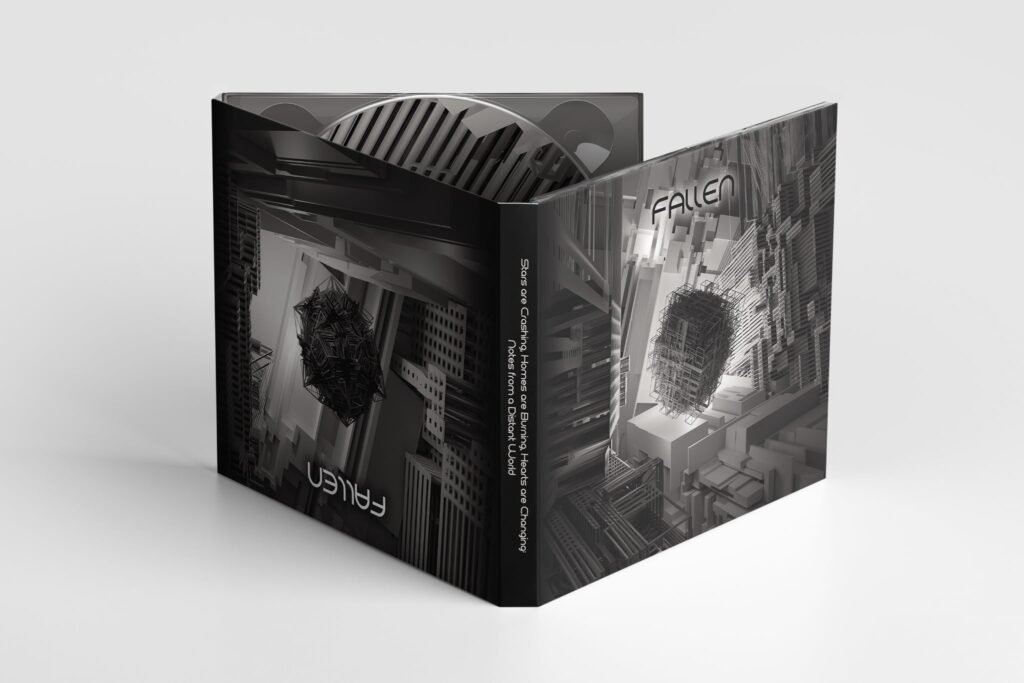
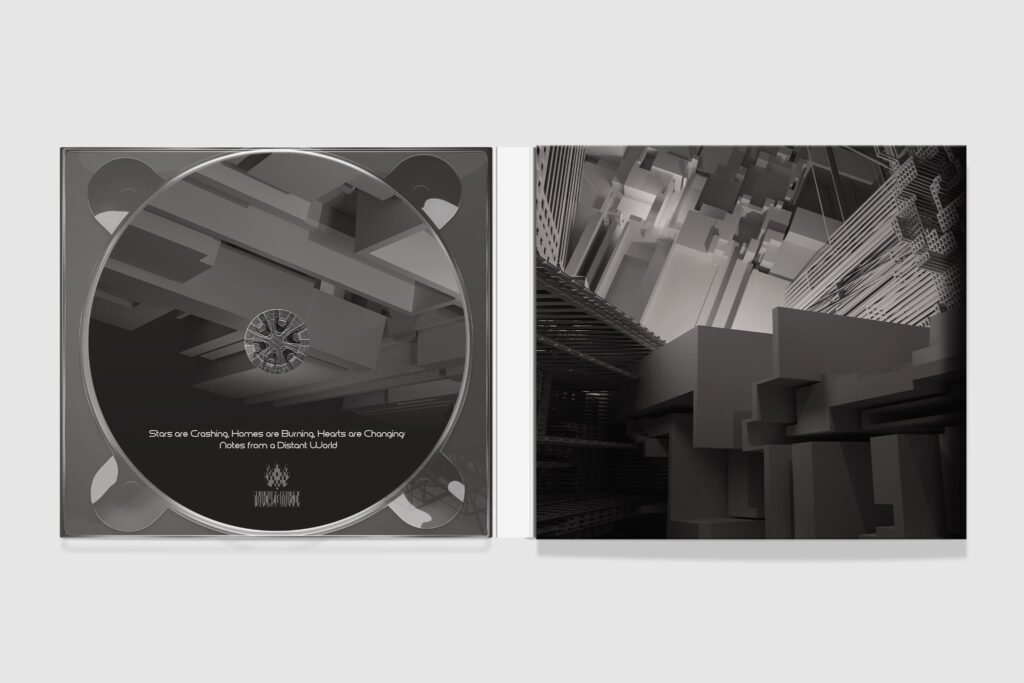
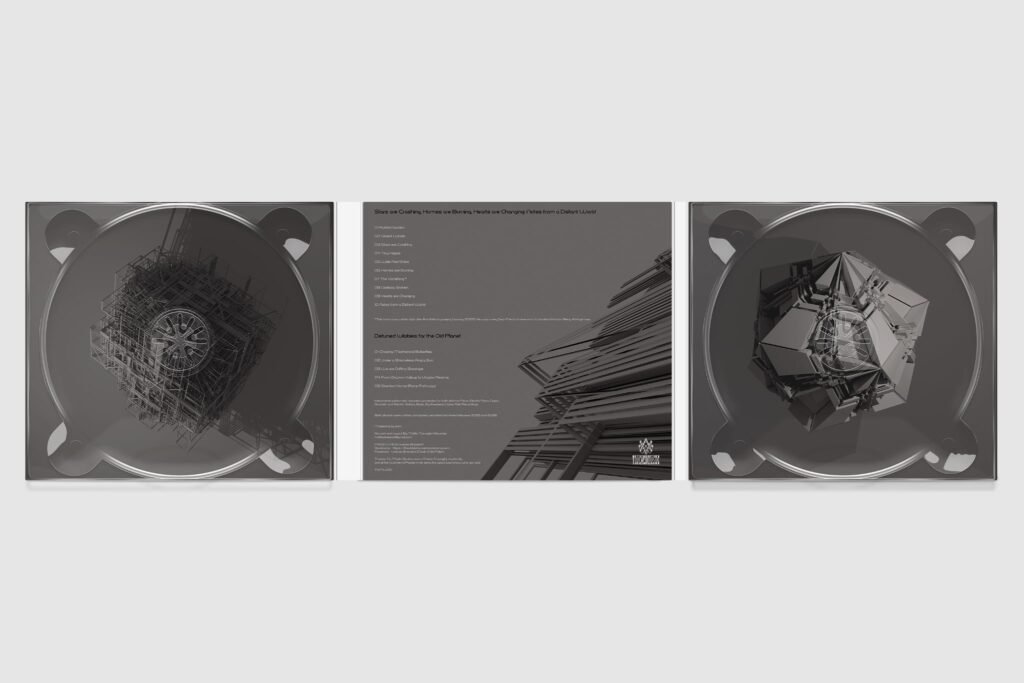
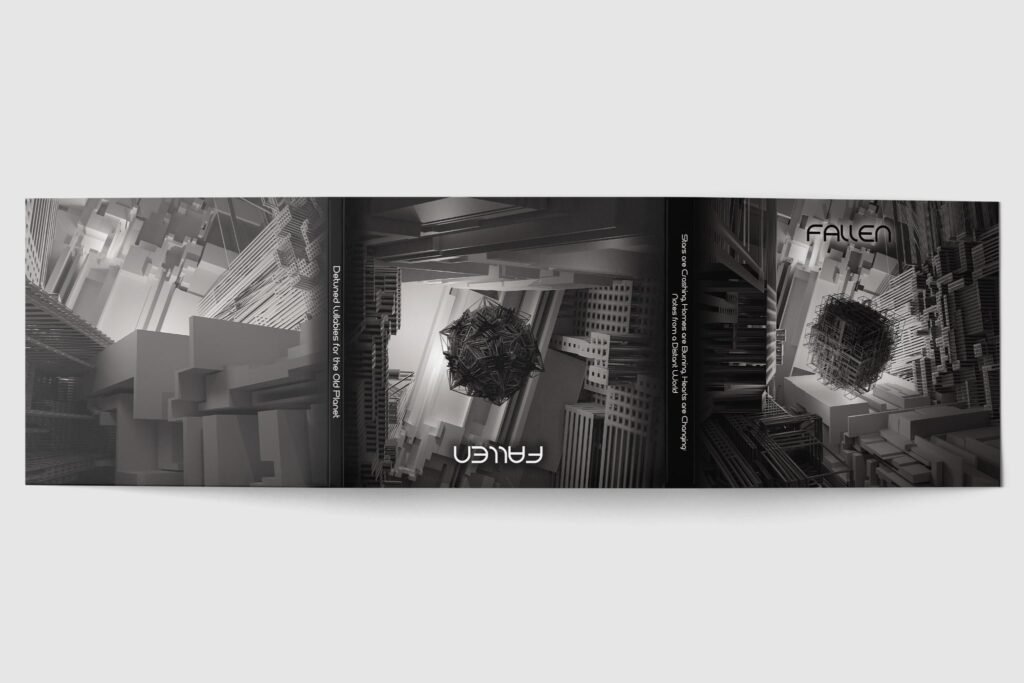
Fallen’s new outing on Touched Music is a genuine two-for-one: a single release housing two full records, a full-length ambient statement paired with a shorter companion album, both packaged together under a single price tag. It’s a generous way to structure a release, and one that gives Lorenzo Bracaloni plenty of room to stretch out across two distinct moods, without compressing everything into a single, tighter statement. Whether that generosity pays off depends on what actually fills those two records, and by the end, the material earns its keep, track by track building a genuine case for the scale of the whole thing.
The first of the two records carries a title so sprawling it borders on its own kind of statement piece: Stars Are Crashing, Homes Are Burning, Hearts Are Changing: Notes From A Distant World. It’s a mouthful by any reasonable standard, closer to a sentence than a name, and reading it back more than once tends to tie the tongue. The second record, mercifully more restrained by name in comparison, goes by Detuned Lullabies for the Old Planet — still evocative, still a touch florid, but at least containable in a single breath. Whatever the reasoning behind naming an album with what amounts to a full paragraph, the material housed inside both records earns the ambition behind that gesture, track after track making a genuine case for itself.
A thin, reedy synth line opens the record on “Rusted Gardens,” quiet and metallic, barely there at first, like something waking up slowly in the dark. Then a single chord arrives all at once, a burst of sound announcing an arrival, and the quiet that follows feels different for having been interrupted. Calm, plinking melodies begin to circle after each chord, joined by a bass note so deep it feels less heard than felt, a low hum sitting beneath everything else. Even the drums, simple single kicks laid out in 4/4, feel unhurried here, nothing like a club rhythm — more like footsteps measured out beneath starlight. The whole piece takes on a bell-like, dreaming quality, patient and unresolved, as though it were composed to be heard half-asleep.
Wind textures and quiet drone lead into “Violent Winds,” where a chime-like lead and simple kick-and-rimshot pattern eventually take hold. There’s something almost soothing in how the track handles those harsh, wind-driven forces, as though it’s working to make them bearable, a reminder that nature shifts from one second to the next and that even its harshest moments don’t define the whole landscape; by the fade at the two-thirds mark, when a sunnier melody rises in its place, Mother Nature feels welcoming again.
The album’s momentum shifts noticeably on “Stars Are Crashing,” which opens in stark abstraction — a single deep bass note and the sound of metal crashing, ringing out periodically into near-silence, as though something is still assembling itself out of the dark. Nearly a minute passes before drums, a very deep bass synth, and layers of pad crash in all at once, and it’s here that a three-note bass figure emerges, loud and distorted, repeating for a stretch before dropping back into quiet again. Pads and textures continue to shift underneath, waxing and waning, and the whole piece moves with a clearer sense of purpose than anything preceding it. By its close, that track’s warmth tips fully into something brighter — a lift, a loosening, a genuine surge of joy that feels radiant.
That energy carries forward into “Tiny Hopes,” which opens on a short, shimmering synth intro before settling into something warmer and more grounded. An acoustic-guitar-like sound joins alongside deep bass synth, ambient water sounds trickling somewhere in the background, and slow, calm drums easing in with a gentle, modulated filter movement washing over everything. The melody itself repeats patiently, again and again, deepening each time as new flourishes layer quietly on top — never rushing toward anything, simply growing richer with each pass. Somewhere in that patience, birdsong finds its way in too, small and unassuming, until melody and birdsong seem to fold into one another, nature’s own voice threading itself into the arrangement until it’s hard to tell where the instrumentation ends and the world outside it begins.
Chimes lead the way into “Wide Red Skies,” the melody looping and echoing outward before birdsong drifts in against a faint metallic drone somewhere underneath. When drums and bass finally arrive, they settle into something unhurried, almost lounge-like in temperament, though far too slow and spacious to ever be mistaken for one. Piano flourishes surface briefly here and there, and a horn-like synth swells in with a slow attack and an even slower release, stretching the whole piece out until it feels less like a song moving forward than a landscape simply being observed — the kind of track built for open air and long, unbroken stretches of walking.
Space thins out considerably on “Homes Are Burning,” a warm, analogue track built around chime-like synth and a deliberate use of open air between elements. There’s barely a drum to speak of beyond the occasional panning cymbal one-shot, and the bass carries textures buried deep beneath the surface, with plucking strings threading through. A long pause interrupts the piece entirely before it begins again with the same tune, the same melody — more minimal than anything around it, though minimal isn’t quite the right word, since the space itself is doing real emotional and cinematic work rather than simply leaving a gap.
What might be the strongest cut on this half of the record comes next. “The Vanishing” opens on cosmic, airy pads that swirl and drift, punctuated by a very deep bass, before a synth lead with a Wurlitzer-like plink locks into the rhythm and the drums finally arrive in a slow, heavy breakbeat. Bright but quiet chimes offer a simple accompaniment overhead, and then, at the halfway mark, a male voice enters alongside reverb-soaked pads, and the track takes on a strange, elegiac weight it hadn’t carried before — as if it’s quietly asking whether an entire way of life might survive only as music once everything else about it has gone. Piano fragments surface in the background from there, vocal pads linger, drums pan and soak in reverb, and the whole thing settles into a very slow, very deliberate groove. It has a little bit of everything, and it earns every second of its runtime.
Drum hits and symphonic swells repeat and recede in interesting ways on “Useless, Broken,” which opens on a strange, broken-up metallic synth before a rich analogue pad rises up behind it, slow 4/4 kicks and a strings-based piano melody settling the track into an odd, murky soundscape. Every so often a drum hit lands alongside a symphonic swell before receding back into that quieter phase. It leaves open the question of just what the title actually refers to — society? nature? mankind itself? — its odd outpourings of sound landing somewhere close to purgatory, though whether that state is new or something that was always there is left entirely to the listener.
A similar oscillation runs through “Hearts Are Changing,” which opens on stringed chords and a vintage, warbling synth before drums, bass, and another synth lead crash in together. Near the minute mark the track falls away entirely for a brief, airy break carried by a choir-like synth, before everything returns at once, with no gradual fade-in. That constant back-and-forth between soft and loud feels almost like the heart redirecting the mind away from old, dead-end patterns, both moving toward something more hopeful in the same direction together.
A slow flat kick and a snapping snare panning left to right close out the first album on “Notes from a Distant World,” a genuinely David Lynchian mood hanging over the whole thing, its brief, hushed exchange of melody and voice carrying an odd sort of optimism, as though pointing toward some further settlement with more to offer than the one just left behind.
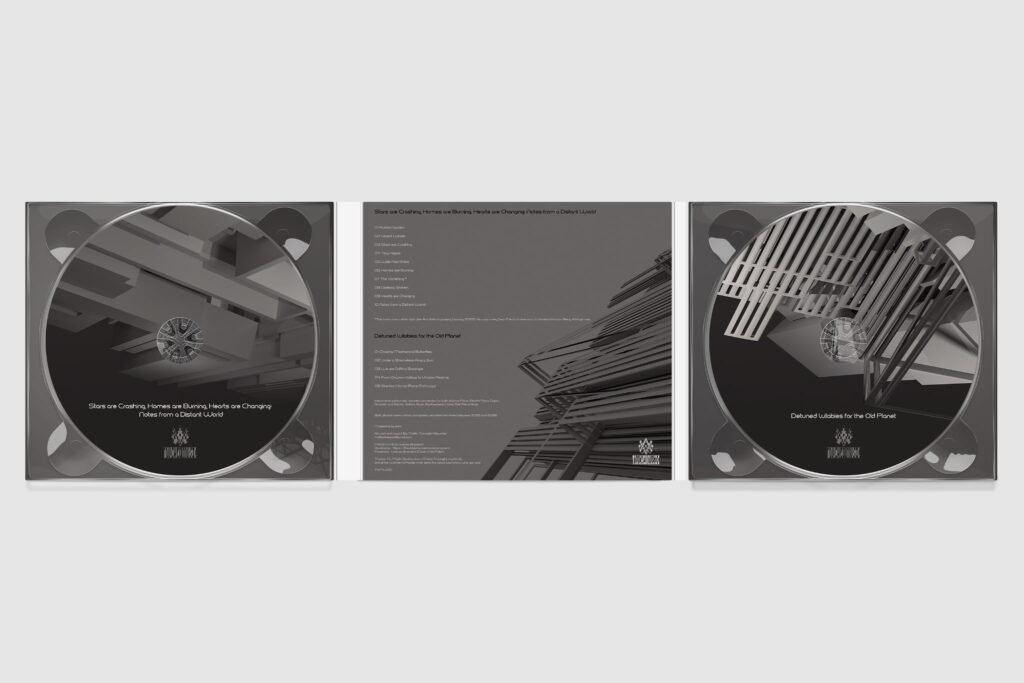
The second album, Detuned Lullabies for the Old Planet, opens in near total darkness. “Chasing Mechanical Butterflies” lingers for nearly two minutes in subterranean echo, dripping water, and unbroken ambience before a plaintive drone finally surfaces, and a clicking rhythm settles in beside a deep, 8-bit-toned bass figure. Bright metallic chimes arrive later to counterbalance the gloom, and by the track’s end there’s a genuine abundance of activity happening at once — yet the arrangement never feels cluttered, each element granted its own pocket of space to occupy.
The pace loosens considerably on “Under A Shameless Angry Sun,” which abandons the steady four-on-the-floor pulse for a halting, air-filled breakbeat, unfolding over ambient chatter and birdsong. Its lead synth carries a plucked, string-like character, faded and vibrato-laden, the tone weathered enough to suggest a recording left out in the elements for years. Nothing here hurries; the track finds its gait early and never abandons it.
“We Are Drifting Starships” retreats into something closer to pure atmosphere — synths and ambience alone at first, joined gradually by piano flourishes that trail off into soft washes of echo, a steady kick eventually settling into a six-beat measure that functions as ballast rather than propulsion. It’s the sparest track on either record, thinner than the material surrounding it, but the sound design here is next-level, genuinely some of the strongest work on the whole release, carrying the track entirely on its own even when very little is technically happening.
Storm swells and twilight-toned synths announce “From Dry Iron Valleys To Utopian Realms,” which then settles into a clean, unadorned melodic line free of ornament. Once the bass enters beside a very slow drum pattern, the entire architecture locks into place at once: the bass tracing the melody with precision, twinkling piano surfacing and receding, deep cosmic pads arriving in slow pulses underneath. The track assembles itself with real patience, and by its final minute stands as arguably the most fully realized composition across either record.
The closer, “Direction Home (Ruins Pathway),” opens on a pulsating, distorted synth before a thick, mean-sounding, heavily processed bass tone erupts and bends sharply downward, a gesture the track repeats obsessively throughout its runtime. That opening synth gradually curdles into something closer to a clanging cymbal, and once the drums enter, it operates almost like a snare against a heavy, driving kick. Underneath it all, a ghostly backward-sounding pad drifts quietly, unresolved, and the track’s persistent unease only sharpens the pull of its groove rather than undercutting it — there’s a sense of return here too, as if the piece itself were a voice working its way back toward some clearer understanding, even while everything around it refuses to settle.
What actually unites these two records is a shared patience with sound design, more than with composition in the traditional sense. The pleasure here comes from sounds & texture accumulating, decaying, and reappearing, not from melodic development or hooks. “The Vanishing” and “From Dry Iron Valleys To Utopian Realms” succeed because their layers are introduced with real discipline, each new sound given enough room to register before the next one arrives. The quieter tracks succeed by a different, more difficult route: “Homes Are Burning” works because of what it withholds, using near-silence as a compositional tool, not an absence to be filled.
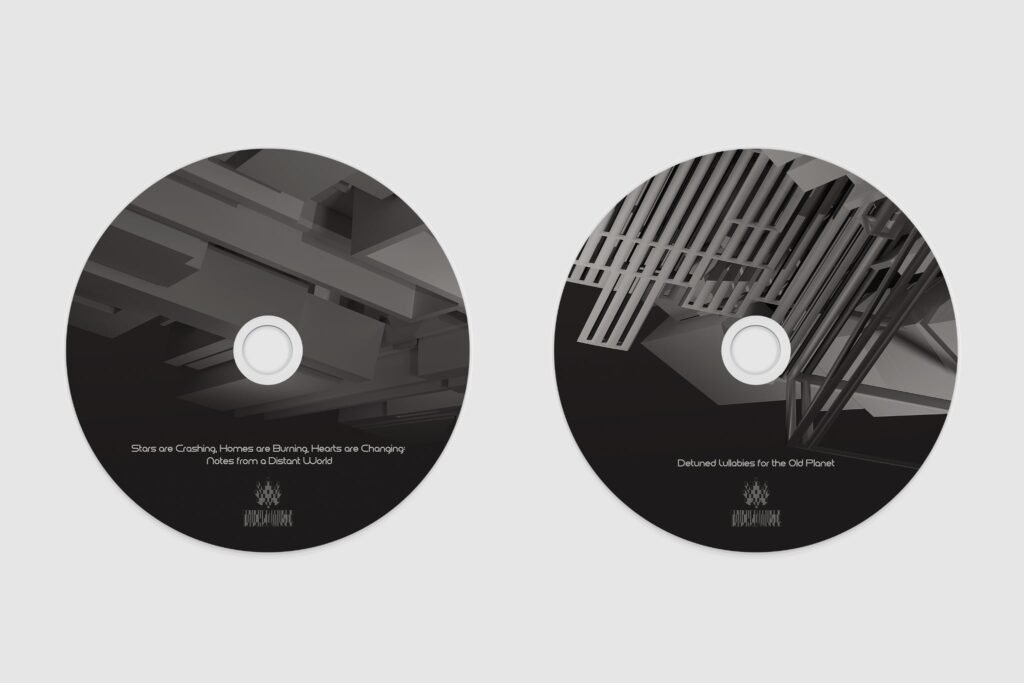
Structured as two records but released as one, this new album lets Fallen inhabit two distinct sonic climates — the warmer, cinematic pull of Stars Are Crashing, Homes Are Burning, Hearts Are Changing: Notes From A Distant World set against the colder, more granular world of Detuned Lullabies for the Old Planet — and neither ever feels like the lesser half of the pairing. It’s an ambitious, patiently constructed piece of work, and one that reflects well on Touched Music‘s ear for artists willing to take their time.