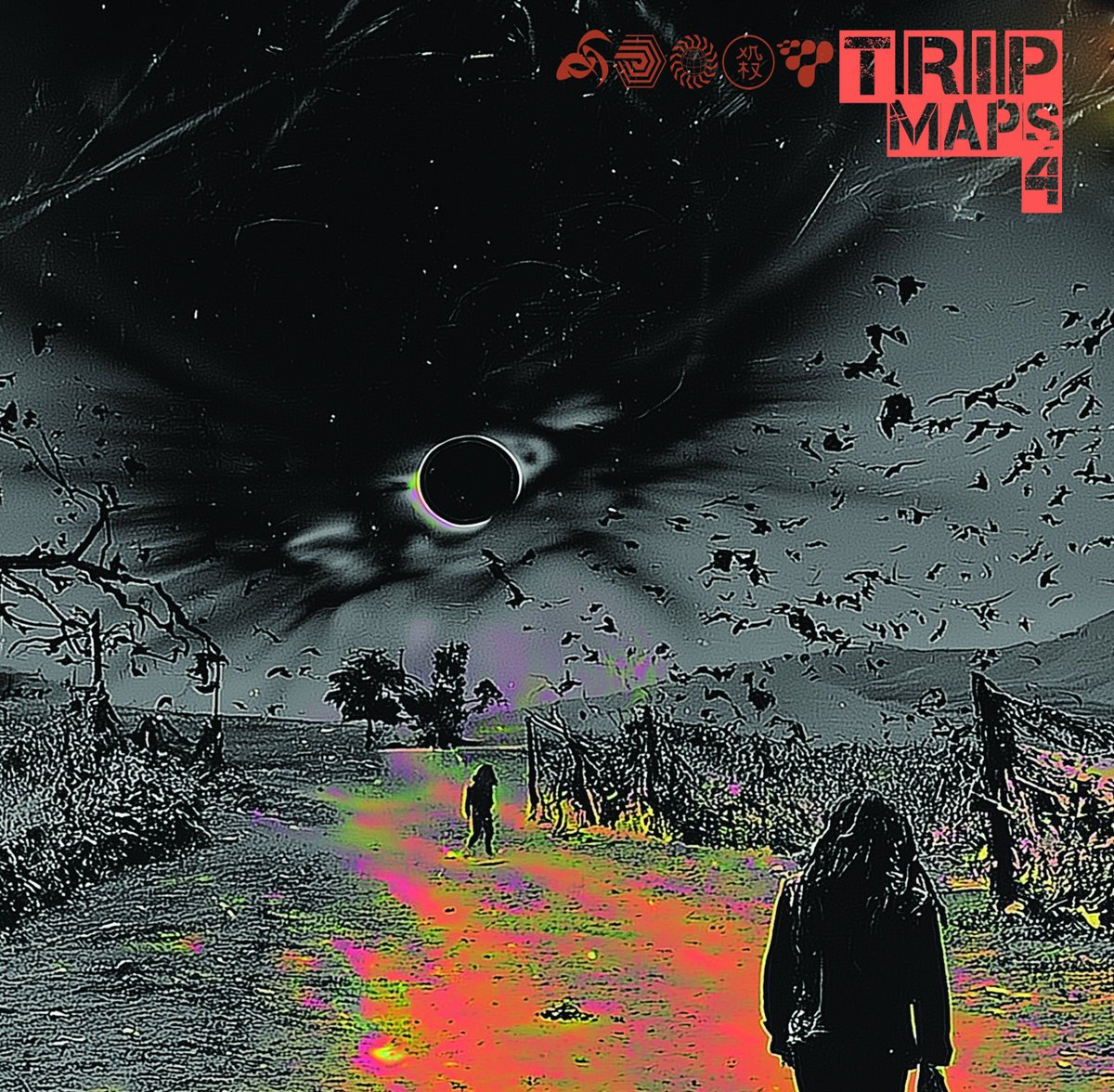
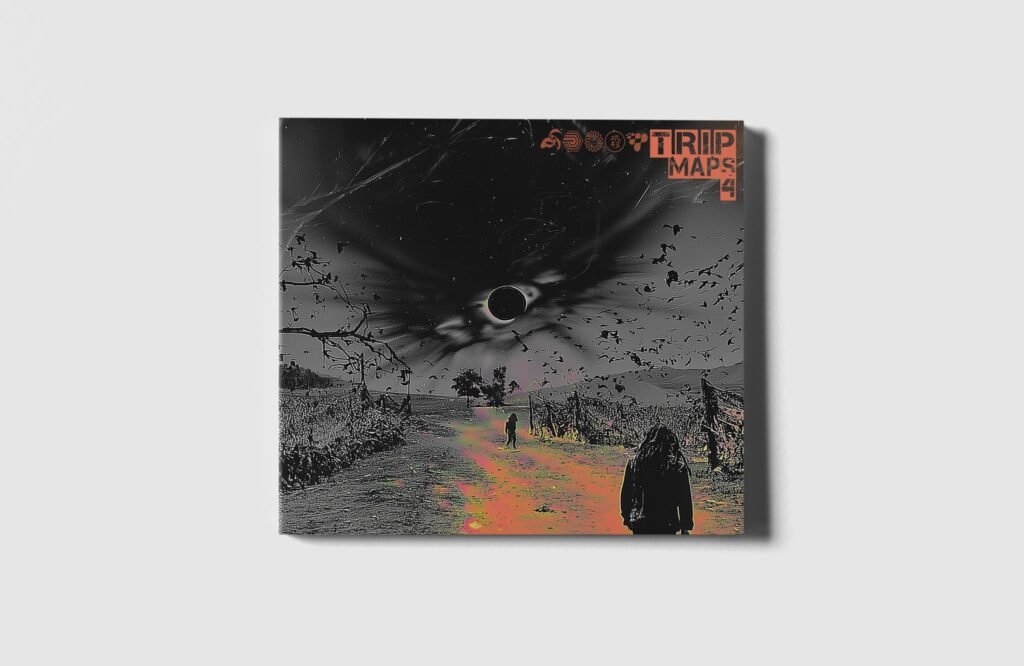
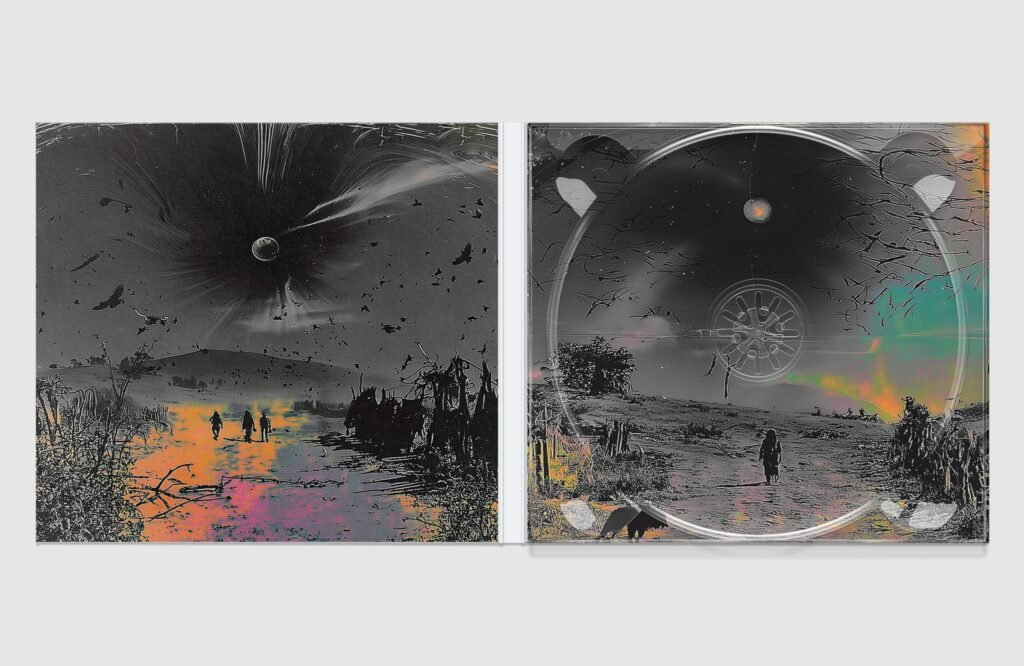
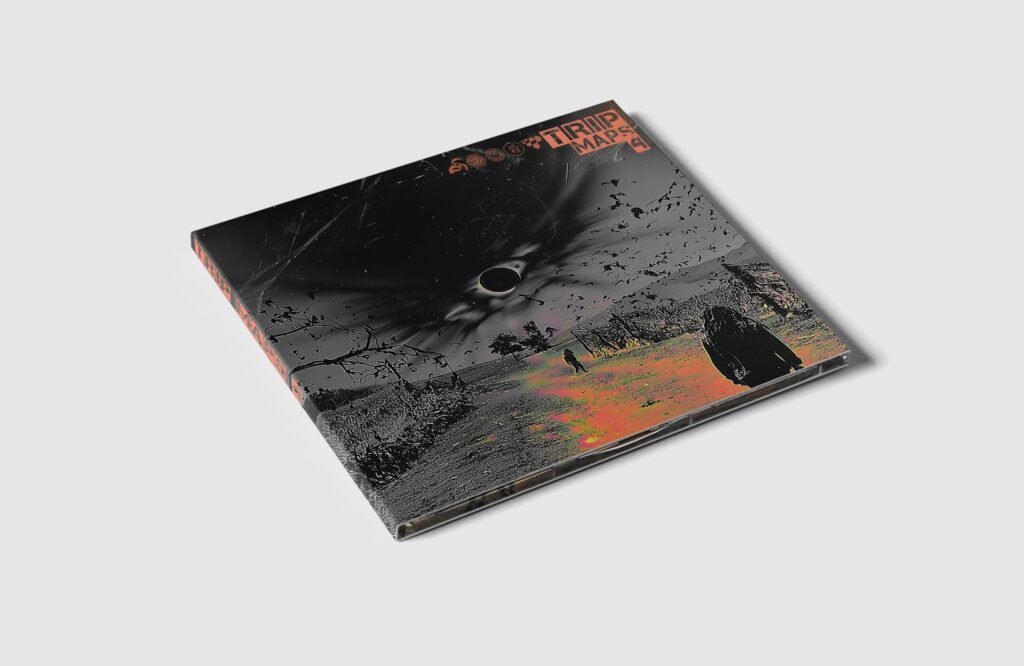
“Hey! Do you wanna trip?” A voice asks the question before anything else happens on Trip Maps 4, and everything that follows is indeed just that. This latest entry in the ongoing series landed on 30 October 2026 as a joint release from FSOLdigital and Touched Music, on CD only, with no digital purchase to be had; a modest price to pay for such an eclectic trip through bubbling psychedelia. As in the Trip Maps and Mind Maps series generally, every track is presented as another artist’s work remixed by Brian Dougans or by both members of The Future Sound Of London, though not every name on the sleeve is quite what it seems.
The descent is slow enough to feel in your knees. Strings hang in the air as a drone, a flute circles a small motif, and a guitar so quiet it can hardly be called a strum lets each chord note ring on into the distance. Credited to DPBD, “Beyond This” feels like a doorway gradually materialising in the fog. The initials stand for Daniel Pemberton and Brian Dougans, making the credit a half-disguise in itself: Pemberton sits outside FSOL, Dougans does not. Enofa continues the slow drift with more flute and strings, its fragments of melody arriving like signals from some distant landscape beyond the tree line, never hurrying, never quite resolving.
Then the ground gives way. An arpeggiated synth run emerges, a filter breathes open and shut, and ghostly metallic tones begin circling in lockstep until it feels as if the dream has swallowed the listener whole. “Time Washed” arrives under the name Synthi A, though the alias conceals another piece of mischief, the track itself belonging to FSOL. Zen Wooley answers with a keyboard melody that sings like a bird gliding above swirling pads. Halfway through, the scenery changes without warning. Metallic fragments begin drifting through the margins, a sparse rhythm cautiously reassembles itself, and for a moment it feels as though the machinery generating the dream has become visible behind the curtain.
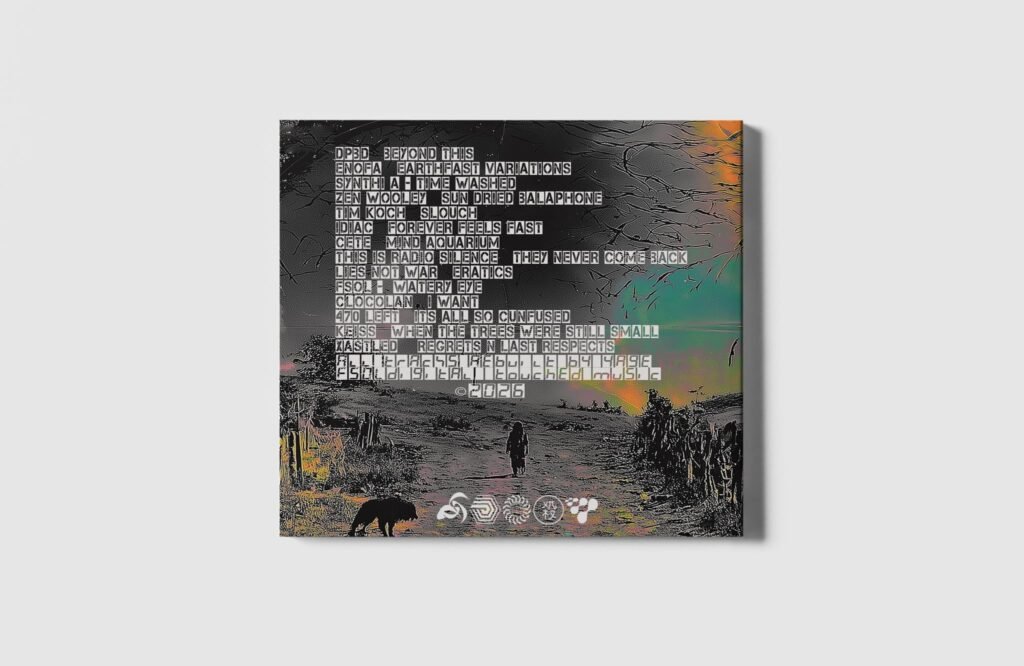
Deeper in, the trip turns nocturnal. Tom Koch leads the listener into an electronic jungle after dark. Hand drums echo between unseen shapes, deep bass stirs beneath the undergrowth, and distant modular squalls flare up like strange wildlife glimpsed between the trees. For a relatively sparse piece, the effect it leaves is notable. Whole pockets of darkness remain between sounds, allowing the imagination to populate them. Close behind, IDIAC offers one of the album’s most dislocated moments. A woozy high-pitched synth line drifts overhead while a slowed human voice seems to linger in the eaves, surfacing and disappearing like a half-remembered conversation from another room. The groove itself is excellent, but its real achievement is the peculiar feeling of being detached from one’s surroundings.
A disturbed carnival melody drifts in next, slow and halting and hollow, as if heard through failing transmission lines. CETE transforms it into something stranger still. Fragments of colour, brass and movement reassembled incorrectly beneath fading lights pulsate. It turns slowly in place like a psychedelic kaleidoscope whose mechanisms are beginning to fail. Next, This Is Radio Silence drags the dream somewhere more industrial. Strange whirring rhythms, distant voices and sheets of drone create the sense of wandering through abandoned machinery left running with no operators present. The track resists destination, preferring instead to lose itself in corridors of texture and echo.
Then the dream develops a pulse. A sitar appears, an acoustic drum kit locks into motion, and a deep bass pushes everything forward. Credited to Lies Not War, “Eratics” feels like a gathering of momentum after so much drifting, a dusty psychedelic jam glimpsed through heat haze. The name is another disguise, however, as the track ultimately leads back to Dougans himself. FSOL then appear under their own banner with “Watery Eye”, a brief guitar vignette alive with birdsong and morning air. It arrives like a clearing in the forest, a place to stop and collect one’s bearings before moving onward.
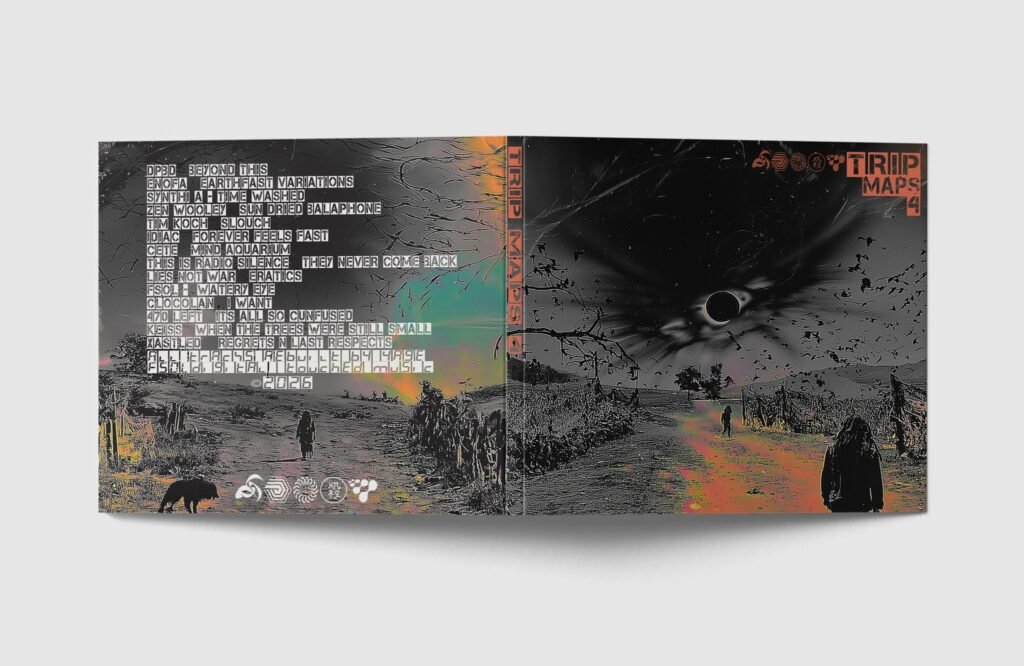
The final stretch unfolds in slow motion. Clocolan and “I Want” provide the album’s most compelling detour. Slow drums drag themselves forward beneath a ghostly detuned synth, while short bass notes seem to carve channels through the fog. The rhythm feels detached from gravity, trudging onward with stubborn purpose while the arrangement hovers overhead like an apparition. Nothing quite settles into place. The effect is subtly unnerving yet impossible to pull away from. Where much of Trip Maps 4 drifts, this track stalks. It is the highlight of the disc.
470 Left emerges from ambience and snippets of conversation before settling into a thick breakbeat carried by a bass synth of near-geological weight. Around it, drones and strange effects come and go like passing weather systems. Keiss follows with birdsong, footsteps and piano before collapsing into a damaged groove of glitching percussion and distorted kicks that feels perpetually on the verge of falling apart. A very strong track indeed, and hearing the FSOL treatment on it is the bee’s knees.
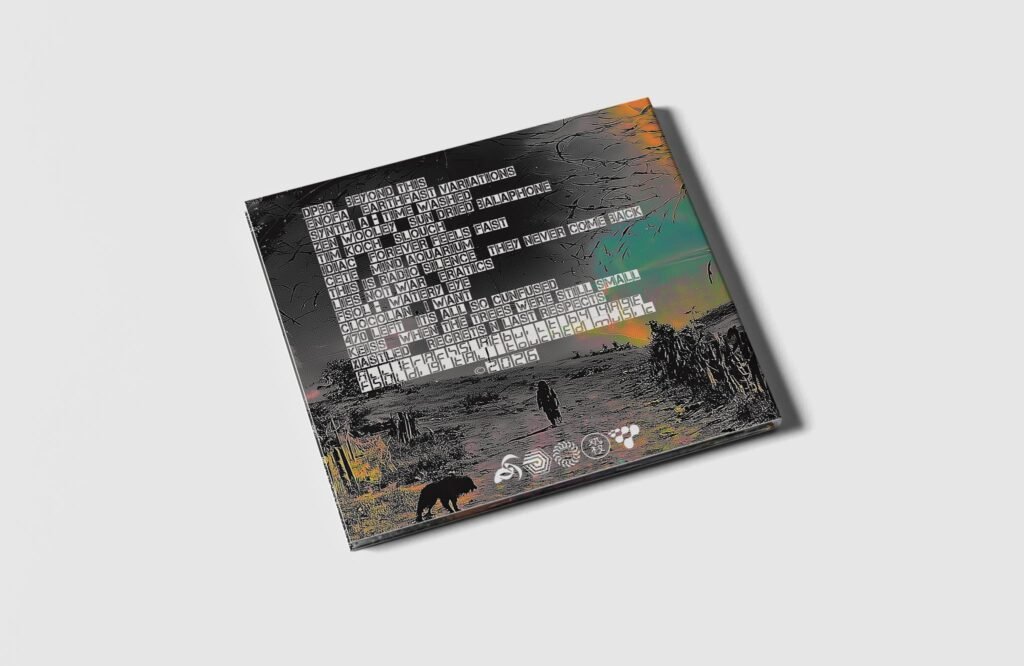
Morning comes in as XASTLED. A very slow electronic beat carries flowing guitar lines, warm horns and patient pads toward the horizon. By the end, the guitar and brass have transformed the scenery entirely. The sensation is of watching sunlight creep across empty streets before the city is awake, soulful and quietly optimistic. It even brings to mind a sunrise over Detroit. I suspect this track and 470 Left may be further examples of Dougans or FSOL operating behind masks, though I could easily be wrong.
Waking from Trip Maps 4 involves a little detective work. Some of the figures encountered along the journey belong to genuine collaborators, others to aliases and inventions, with Dougans himself occasionally stepping into the story under another name. Discovering which is which becomes part of the souvenir. By the time the dream dissolves and daylight returns, the puzzle is every bit as memorable as the music itself. Another stellar installation in a thoroughly enjoyable series.
Written by Jonathan Bishop. Jonathan is a writer, and the Editor and Founder of ChoonReview. His engagement with electronic music began in the late 1980s through early industrial acts such as Skinny Puppy, Coil and Ministry, and that interest soon spread into other styles such as Plunderphonics (John Oswald, Negativland, Stock, Hausen & Walkman et al). When IDM exploded onto the scene in the early 1990s, he became utterly immersed in it and that devotion has stayed with him ever since. Today Jonathan works as an engineer and sound designer, with Bitwig Studio as his primary creation platform. The hands-on knowledge of sound design and production that comes with that work shapes how he listens to and writes about the releases that reach ChoonReview.
Trip Maps 4 by FSOL released on 30 October 2026 on FSOLdigital and Touched Music