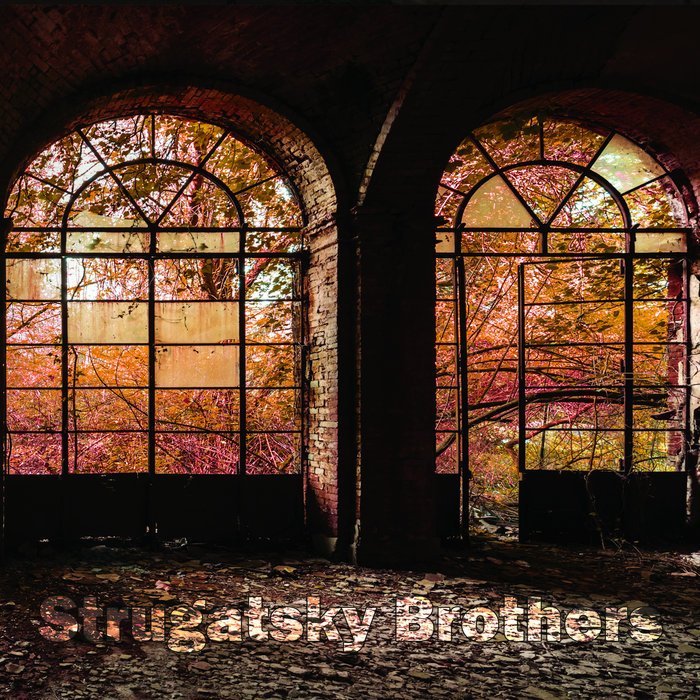
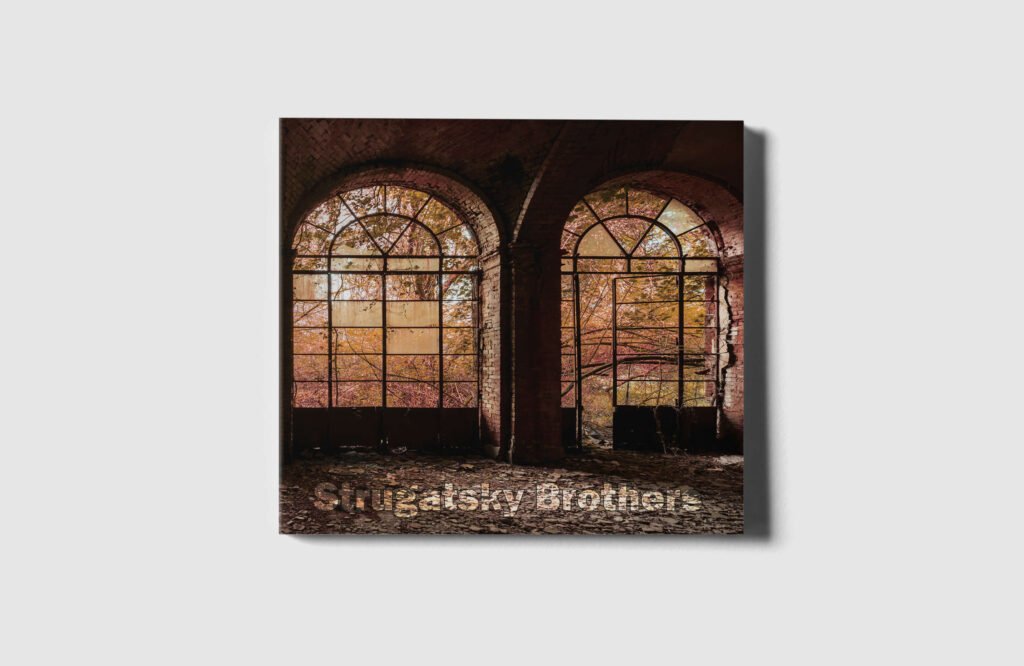
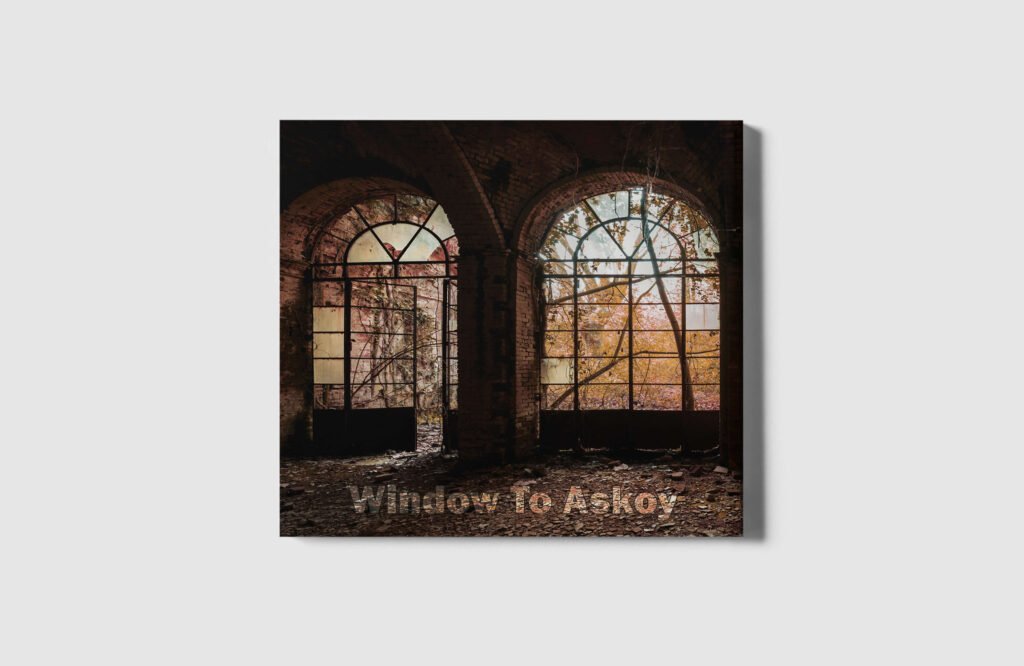
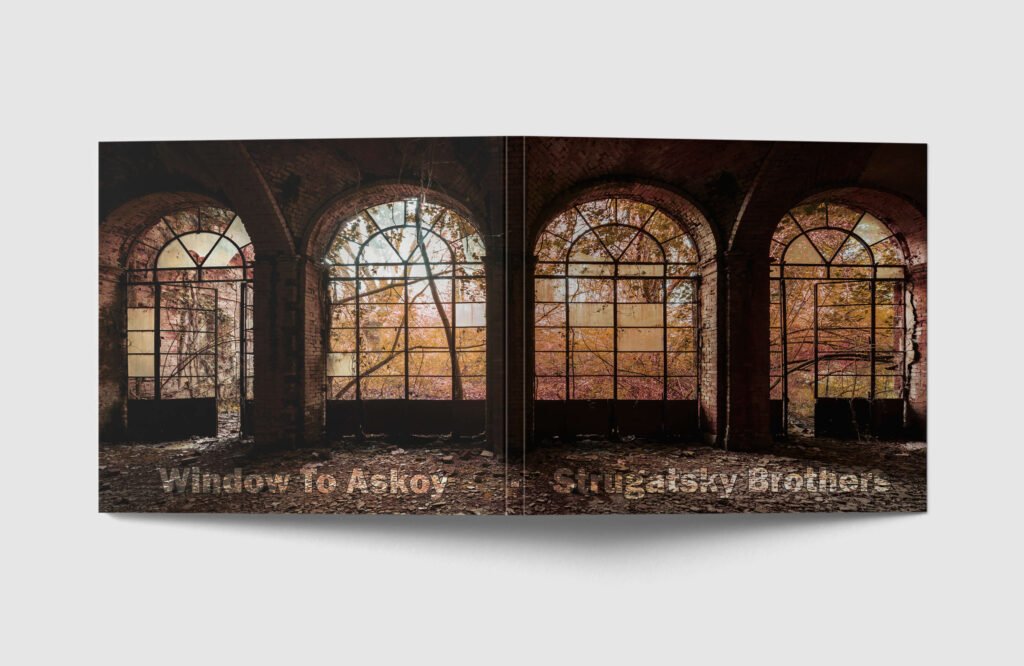
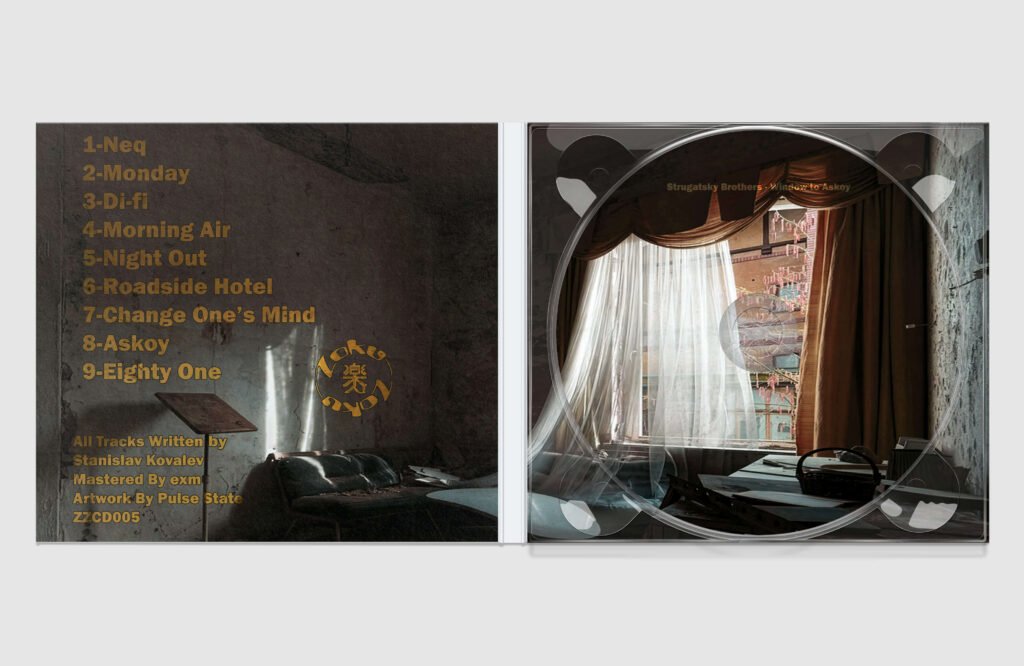
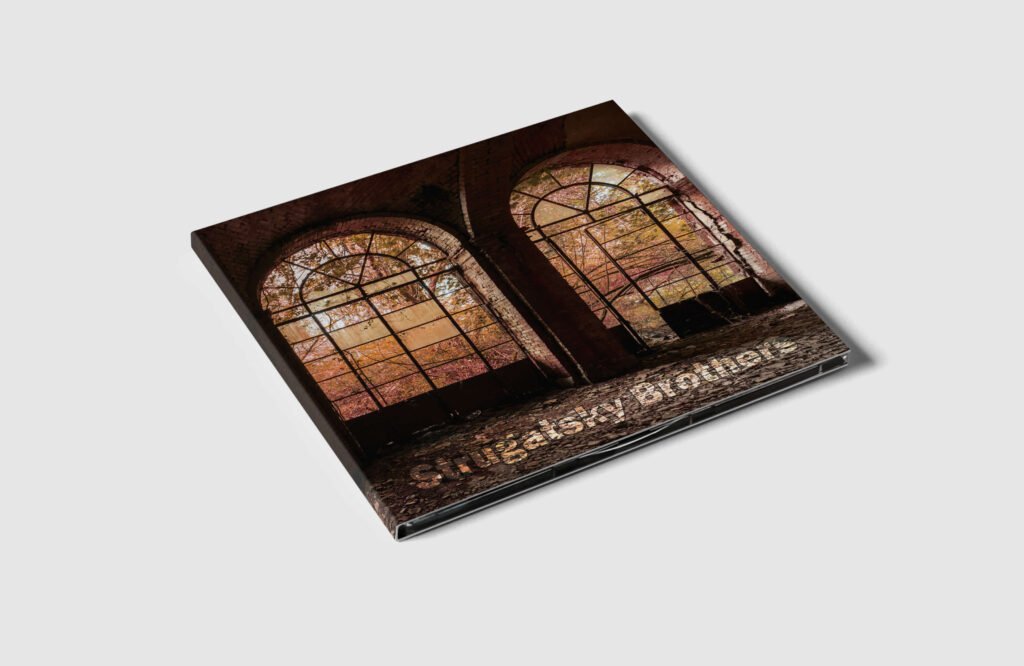
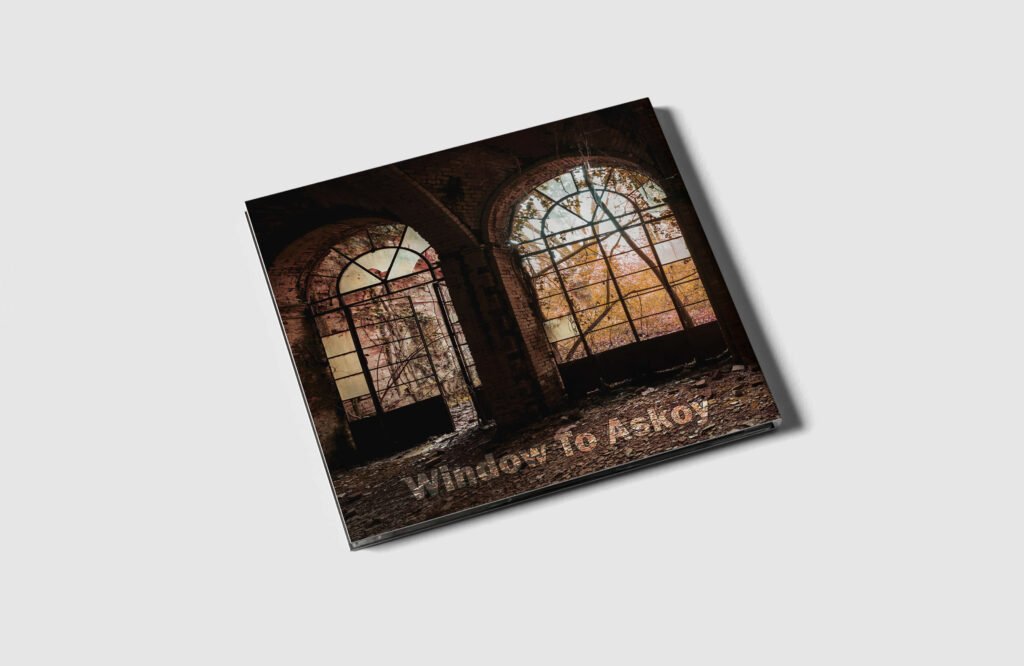
Stas Kovalev, recording here as Strugatsky Brothers though more often known as Keiss, unveils Window To Askoy on 25 September 2026 through the UK label Zoku‑Zoku, issued on glass‑mastered CD and digitally via Bandcamp. The album comprises twelve pieces: nine core tracks and three bonus works built from deep reverberation, panoramic spread, and bass that lingers in the rafters, felt more than foregrounded. From the outset, the record establishes a kind of acoustic fog: a world where sound behaves less like music and more like unknowable phenomena.
Immediately, Window To Askoy summons the peculiar gravitational field of Andrei Tarkovsky’s Stalker. Not through homage or cinematic reference, but through a shared philosophy of space. Tarkovsky’s Zone is a place that teaches you how to move through it; Kovalev’s album teaches you how to listen through it. Both works operate on the premise that meaning is not delivered but revealed slowly through patience, drift, shadow, and the accumulation of textures that seem to predate the observer. The resemblance is not thematic but ontological. They share a belief in environments that think.
Kovalev’s compositions thicken the way Tarkovsky’s frames do: incrementally, almost imperceptibly, as if guided by an unseen logic that reveals itself only through duration. What begins as a faint shimmer gradually acquires mass, density, and gravitational pull. Reverb becomes sediment, layering upon itself like silt in slow water. Echo becomes architecture, defining corridors and chambers within the sound stage. Decay becomes narrative—the story told not by what enters but by what lingers.
The music on Window To Askoy does not progress; it deepens. It behaves like wading into water whose temperature and clarity shift with each step, the surface unchanged but the world beneath growing darker, more complex, more reflective. Silence is not absence but material, an active force shaping the contours of each piece. Space is not emptiness but pressure, a kind of acoustic weather that settles around the listener. Atmosphere is not decoration but structure, the very scaffolding on which the album hangs.
Kovalev treats sound as something elastic, stretching and contracting according to its own internal physics. Moments dilate. Textures bloom slowly, as though emerging from behind a veil. The ear adjusts to a different pace, a different logic, a different kind of attention. What seems static at first reveals movement; what seems simple reveals strata; what seems quiet reveals depth. The compositions behave like living environments—responsive, shifting, aware.
The album’s core elements: pads, drones, metallic flourishes, low‑lying bass, these behave like artifacts of a world that has been abandoned but continues to resonate. Echo, phase shift, and long decay function as compositional tools in their own right, shaping the terrain more than any melodic gesture. Melody, when it appears, feels like residue, a faint trace of something that once passed through the space and left only its shadow. The music here shares Stalker’s fascination with what remains after action, with the ghostly persistence of processes never shown directly.
Kovalev also understands the film’s treatment of intention. In Stalker, the Zone resists direct approach; it rewards those who relinquish control. Window To Askoy behaves the same way. Musical ideas rarely present themselves cleanly. Instead, passages often arrive already in motion, as though the listener has tuned into a transmission that began long before they entered. There is no overture, no thesis, no structural signposting—only a gradual accretion of grit, bass, tension, atmosphere. The album demands surrender, not interpretation. It asks the listener to move through it the way Tarkovsky asks viewers to move through the Zone: slowly, attentively, without expectation.
Restraint is the glue holding the record together. Kovalev consistently refuses resolution, letting decay trail into nothing rather than closing phrases cleanly. The bass, often kept low in the mix and soft at the edges, behaves like environmental pressure, pressing on the body the way the Zone presses in on its visitors—quietly, insistently, without ever declaring its presence. Even the stereo field feels alive, shifting subtly as though responding to the listener’s movement. Counting the twelve pieces almost misses the point: the album wants to be heard in a single continuous session rather than as a sequence of discrete events.
As the record progresses, its atmosphere becomes increasingly immersive, almost geological. Textures accumulate like layers of silt. Harmonic overtones bloom and dissolve like light passing through dust. The sense of scale expands and contracts unpredictably, mirroring the way Tarkovsky’s spaces seem to breathe. By the closing minutes, silence itself feels charged, expectant—the way the Zone’s air seems to hold its breath just before something shifts, even if nothing does. The album cultivates that same tension between desolation and revelation, between vastness and intimacy.
Window To Askoy offers no answers to whatever it circles. It leaves the listener standing at a threshold, aware that something immense sits just beyond comprehension, and is unwilling to explain itself any further. Like Stalker, it trusts that the experience of moving through the space is the meaning. The journey is the interpretation. The atmosphere is the message.
Window To Askoy by Strugatsky Brothers releases 25 September 2026 on Zoku-Zoku