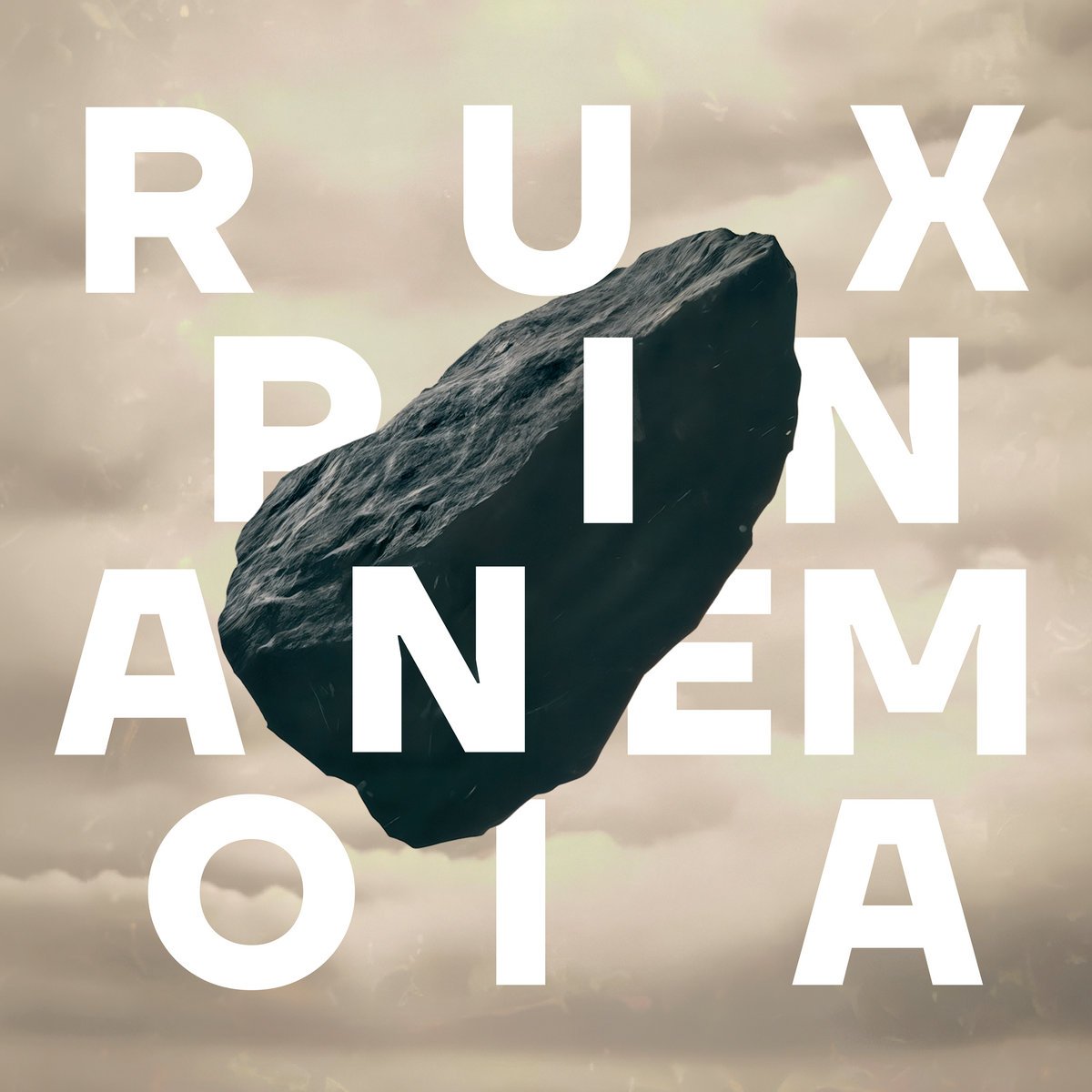
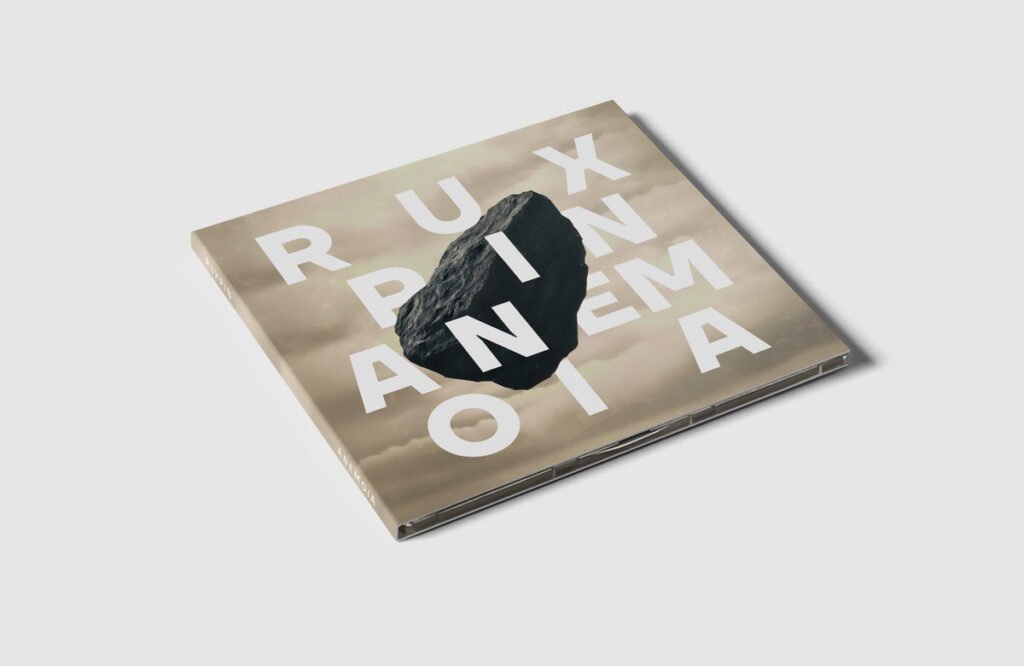
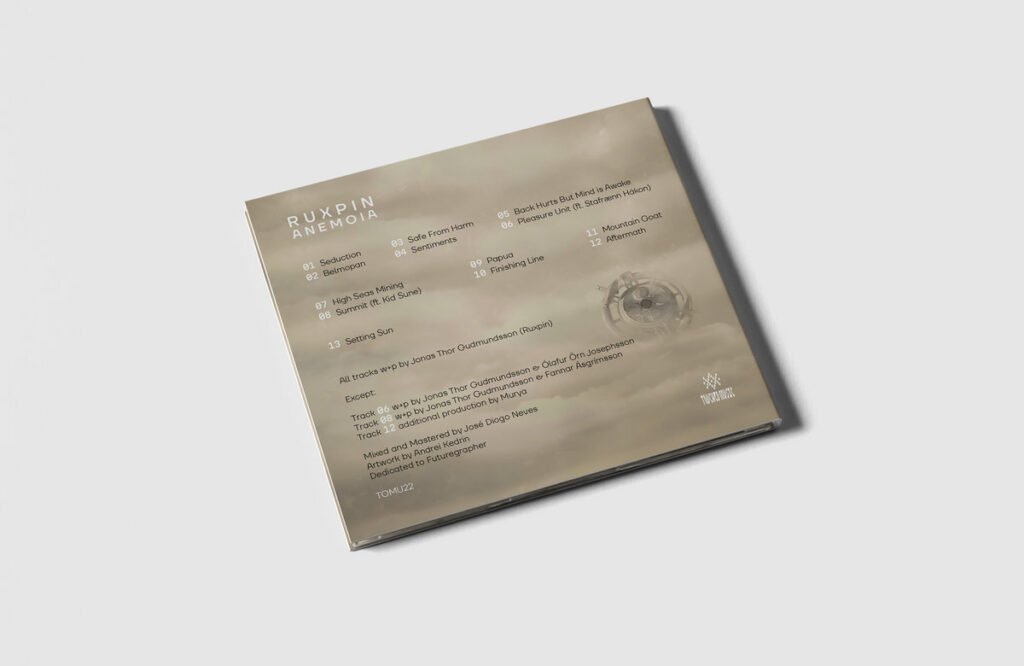
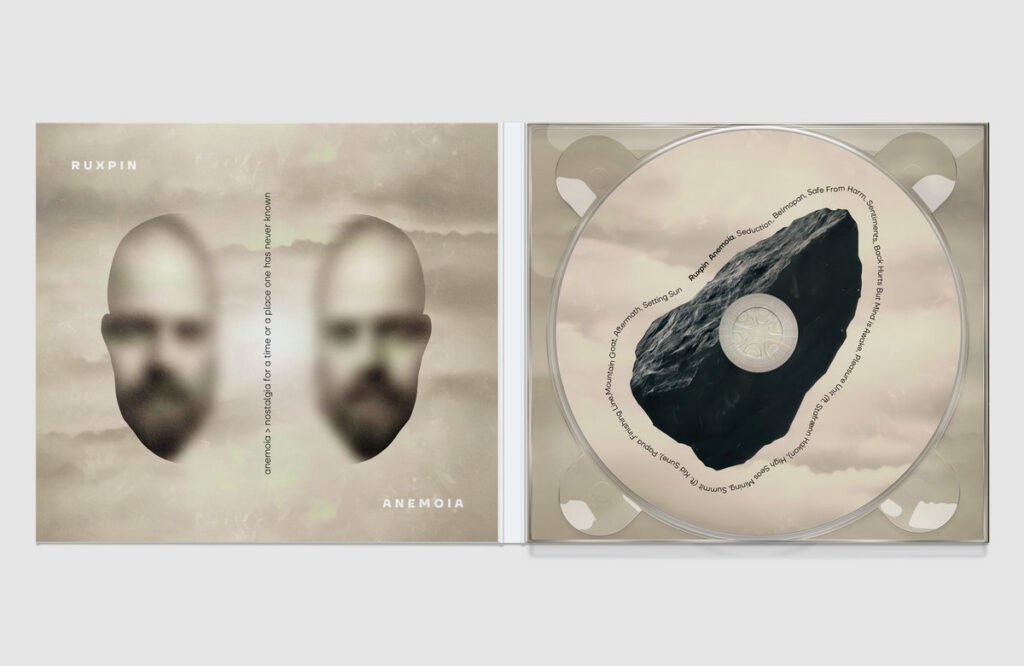
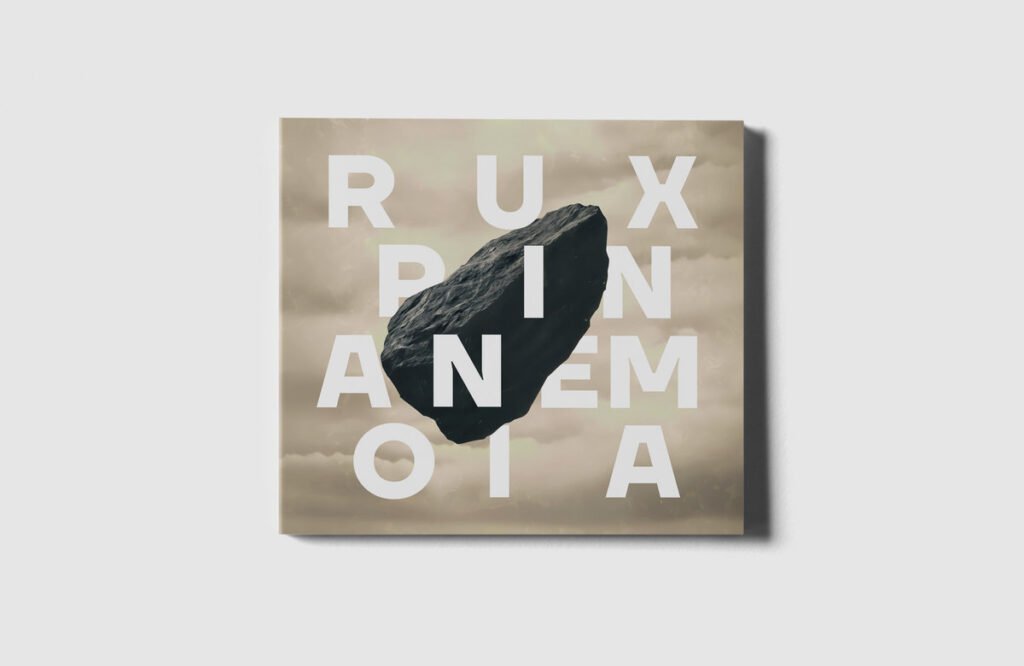
Ruxpin visits Touched Music with Anemoia, released 12 June, 2026, and the quality of the album shines through immediately. This new scorcher runs on sharp, street-wise drum programming and rich analogue synth work, with grooves that lock you in and hold you tight. Tracks build weight through sheer pre-meditated, hip-hop leaning, slo-mo drum rhythms and skin-tight interactions between elements, with each shift adding something fresh. This is a release that is dialed in from start to finish, and it reinforces why Touched Music continues to punch way above its weight.
“Seduction” opens the album with a hazy, almost psychedelic drift, like a slow, trippy ascent on a ski-lift where the air feels thin and the view stretches endlessly outward. From there, Ruxpin drops into a steady drum groove that carries a quiet sense of consequence. The mood stays laid back but never slips into passivity—instead, it exudes cool, un-forced confidence, balancing relaxed textures with a mild and necessary undercurrent of tension. This is a track that moves with purpose, locking into its stride early and holding there, setting a suave and self-assured tone for everything that follows.
The focus tightens around a drum-led framework in “Belmopan,” with the rhythm section doing the heavy lifting while everything else locks neatly into place around it. There’s a strong, almost conversational interplay between the drums and a scale-based bass synth, the low end moving with purpose as it underpins the groove rather than overwhelming it. Above that, synth pads stretch out into an eight-chord cycle that repeats with quiet insistence, each pass adding depth without clutter. Each element pulls its weight, none stepping out of line—and the result is a track that lands with far more impact than its individual pieces would suggest, fully dialed-in and absolutely on point.
With “Safe From Harm,” Ruxpin leans into a rhythmic core that beats with the soul and swagger of a hip-hop track, the drums carrying that pulse with real authority from the outset. But there is a deeper pull in the way that backbone is offset by a striated bass line and a simple, dusty, vintage-sounding lead synth melody, both of which add texture and character without disturbing the track’s flow. The drum work is fabulous throughout, holding tight to an informed urban swing while the synth work quietly expands the emotional range. This is a well-constructed track in the truest sense, with every element placed just right and the whole thing landing with confidence, weight, and style.
The familiar hip-hop underpinning continues in “Sentiments,” but quickly pivots into something far more lounge-informed, settling into a smooth, unhurried melodic groove that carries a wistful kind of weight. The progression leans into that reflective space, unfolding with a soft emotional pull while subtle, horn-like background synths add an extra layer of warmth and texture. It’s a track that’s clearly lived-in and gently nostalgic on purpose with the drums keeping things grounded in that street-level rhythm while everything above drifts with purpose. The result is deeply chillaxed and effortlessly stylish, a lounge-tinged cut that drips in sentimentality.
The entry-point here hits with a punchy, raw percussion lead-in, complete with vocal snippet samples that expand the track, but “Back Hurts But Mind Is Still Awake” quickly deepens into something far moodier. Layers of analogue-sounding synth chords roll in, casting a shadow over the tune and shifting the tone toward something more introspective and slightly ominous. There’s a slow-building tension here, with the melodic line carrying the sense of an approaching storm, like distant thunderclouds gathering just out of sight. The drums never lose their edge, cementing everything in that rugged rhythm while the surrounding elements stretch outward, leaving us with a track that feels heavy with atmosphere, tightly constructed, undeniably powerful.
A different rhythmic language comes into play on “Pleasure Unit ft. Stafraenn Hákon,” opening on a breakbeat pulse with a solid, supportive bass line beneath it before a brief vocal snippet gives way to the wider atmosphere. Once the synth pads arrive, the track begins to glow from the inside, twinkling with arpeggios that lean into a hazy, dreamy 1980s sensibility while the drums move with a slightly loose shuffle rather than any hip-hop snap. There is something beautifully suspended about the whole thing, as if the music is drifting across a bank of fog with every edge softened and every melodic detail catching the light just enough. The track broadens the album’s reach yet fits effortlessly into the established flow.
An eight-chord synth figure lays the foundation from the outset here, looping with a calm insistence that gives the track its wistful, slightly recollective tone, and “High Seas Mining” leans fully into that sense of reflective space. The requisite breakbeat arrives underneath this with a steady presence, initially understated but gradually coalescing into something heavier and more defined, carrying a quiet sense of consequence as it settles into the groove. There’s a careful balance at work between motion and atmosphere, the melodic loop defining the mood while the drums evolve around it, tightening the structure without disturbing that introspective feel. It lands as a rock-solid piece, one that shows how much mileage Ruxpin can get from restraint and precise control of his elements.
With “Summit ft. Kid Sune,” the atmosphere settles into something low-key and quietly meditative, never pushing too hard but always maintaining a steady internal pulse. A deep, modulated bass presence sets the tone right away, punctuated by stabs that feel both physical and slightly submerged, while a drum beat with just enough swing gives the groove a natural, rolling motion. The vocals come in sparingly, used more as texture than focal point, and they sit perfectly in the mix without pulling attention away from the broader movement of the track. There’s a subtle nod to an ’80s aesthetic in the synth work, but it doesn’t feel derivative—instead, it’s absorbed into Ruxpin’s palette and reshaped into something distinctly his own. A chilled, patient piece that lets its elements breathe while keeping everything firmly in line.
As “Papua” settles in, soft vocal pads drift into the mix, adding a smooth, almost velvety layer that enhances the track’s laid-back character. Everything here feels effortlessly controlled, with that suave, cool tone running front to back while the rhythm keeps things gently rolling along. A slightly sluggish hip-hop breakbeat with an overdriven kick feel drives this one from the outset, paired with a deep, supportive bass synth that gives the groove real weight without slowing its stride. It’s the kind of cut that invites you to sink all the way into Spliffville, soaking in those chilled, premium textures as they move with quiet confidence.
Minimal synth stabs set the tone early, landing in lush, full chords that sit neatly over a tightly wound, down-key breakbeat, giving “Finishing Line” an immediate sense of control and restraint. When the full melodic structure arrives, it opens wide into a complex weave of synth lines—notes and chords interacting, pushing and pulling against each other with touches of distortion and dissonance that add real bite. There’s a physical quality to the groove here, something that is tactile as the elements collide and resolve in motion, building into something deeply infectious without ever losing its grip on precision. As it moves toward the close, a subtle drum-swing begins to take hold, easing the tension and letting the track saunter out with a quiet confidence. One of the strongest cuts on the album, no question.
A stripped-back framework takes hold here, with “Mountain Goat” leaning heavily on minimal drums and piano chords that lock into a deeply addictive drive right from the start. As the track develops, supportive pads fill in the edges while subtle washes of noise drift in and out of the background, adding texture without disturbing the core structure. There’s a lot to admire in how carefully everything is placed, and the underlying ideas are undeniably strong, giving the piece a solid sense of identity. At the same time, the restraint feels a touch overextended, with the sparseness holding it back from fully realizing its potential. It’s still a very good track, built on excellent bones, but you can’t help but feel there was room here to push it even further.
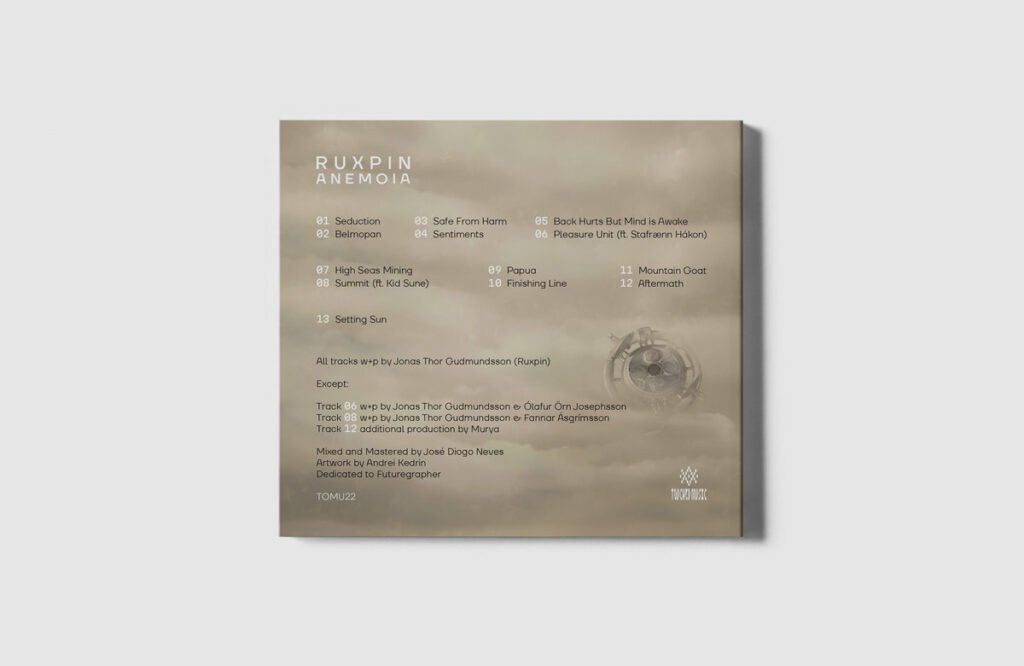
Synth pads take the lead straight away, opening into a gentle melodic wash before the drums settle in—a downtempo breakbeat that feels thick, lazy, and completely unforced, giving “Aftermath” its deep sense of ease. There’s something unmistakably warm about the atmosphere here, like the whole track is bathed in sunlight, each layer glowing softly as it unfolds. The analogue pads are especially rich, spreading out in wide, lush swathes over that syrup-y, rhythmic bass, and everything moves with a calm, almost reassuring momentum. It’s one of those pieces that just feels good to sit inside, where tone, light, and mood align in a way that’s quietly striking.
The final stretch of the album shifts fully into ambient terrain, with “Setting Sun” abandoning drums and rhythm entirely in favor of pure texture and atmosphere. Soft, glowing musical currents spread out like light over distant pastel fields, while a faint, high-pitched tone hangs in the air, wavering with a quiet persistence that feels otherworldly. Beneath it all, low-end pulses stir slowly, giving the piece a sense of depth without ever cursing it with anything resembling a beat. The imagery it conjures is vivid and expansive, like watching the horizon draw its final breath as day transitions into something more reflective. It’s a lovely, contemplative finale that lets everything settle, offering a calm, unhurried exhale to close out the journey.
Stepping back from the individual cuts, what becomes clear is just how complete a statement Anemoia really is. Ruxpin moves with total control across shifting rhythmic frameworks, from grit-laced, hip-hop-informed grooves to looser breakbeat explorations and finally into pure ambient space, and at no point does the thread loosen or fray. The interactions between drums, bass, and synth work remain consistently tight, with each track adding a new angle. This is a record built on detail, patience, and a deep understanding of how to make electronic music feel physical and immersive all at once. It stands out not just as a strong release, but as a remarkably assured one—an album that knows exactly what it wants to be and follows through on that vision with style, confidence, and real substance.
Anemoia by Ruxpin released on 12 June, 2026 exclusively on Touched Music