Liebe does not announce itself with grand statements or dramatic gestures. It begins already in motion, as if the listener has stepped into a space that was active before anyone arrived. That choice says a great deal about how Hugo Granzner approaches this album. Rather than framing it as an event, he presents it as a place. What matters here is not arrival or destination, but presence.
Releasing digitally on 28 January 2026 through the EQ Ambient Sublabel, Liebe is Granzner’s second album and it shows an artist more focused on refining intent than proving capability. The record does not chase novelty. It also does not retreat into comfort. Instead, it commits to a focused emotional and sonic range and explores what can be done inside those limits. That decision gives the album its character.
Liebe approaches its themes indirectly, letting tone and pacing do the work rather than leaning on explicit signals. The album’s central theme, Love, is treated as something collective and unresolved, not framed through personal narrative or emotional payoff. Granzner resists explanation, allowing repetition, restraint, and gradual development to carry meaning. The album communicates through atmosphere and proportion, trusting the listener to sit with ambiguity instead of being guided toward a fixed interpretation.
The structure of Liebe avoids obvious peaks. There are no moments designed to dominate attention. Instead, the album maintains a steady presence, with small changes in texture and density providing movement. Sounds are introduced carefully and often withdrawn before they become familiar, keeping the listening experience alert even when the music remains quiet.
Rhythm appears, but it is rarely foregrounded. When pulse is present, it acts as a stabilizing force rather than a driver. It holds the music in place instead of pushing it forward. This contributes to a sense of balance that runs through the album. Nothing is rushed and nothing lingers longer than necessary. The pacing suggests careful editing and control.
There is also a clear absence of excess. Liebe does not rely on layers stacked for impact. Instead, it uses limited materials and allows their interaction to create depth. Space functions as an active element. Silence, decay, and distance matter as much as the sounds themselves. This keeps the album clear and prevents it from dissolving into blur.
The emotional range remains restrained but present. Weight and tension surface at points, followed by gentle release. These shifts are subtle, yet effective. They introduce movement without breaking the album’s internal consistency. The mood stays focused without becoming static.
Production supports this balance throughout. The sound is clean without feeling sterile. Textures retain grain and imperfection, which keeps the music real, visceral. The mastering preserves dynamic space rather than compressing it flat, making extended listening natural rather than fatiguing.
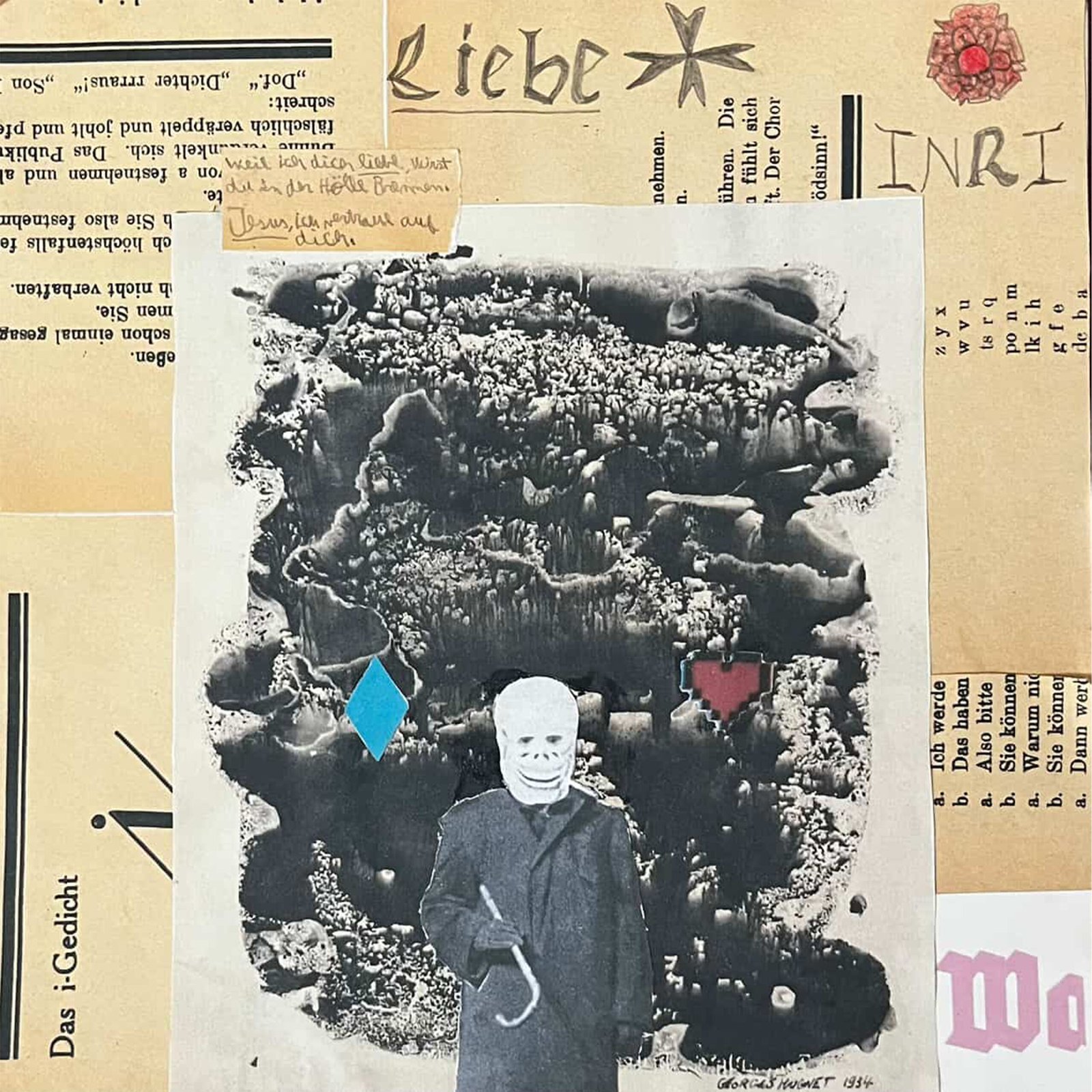
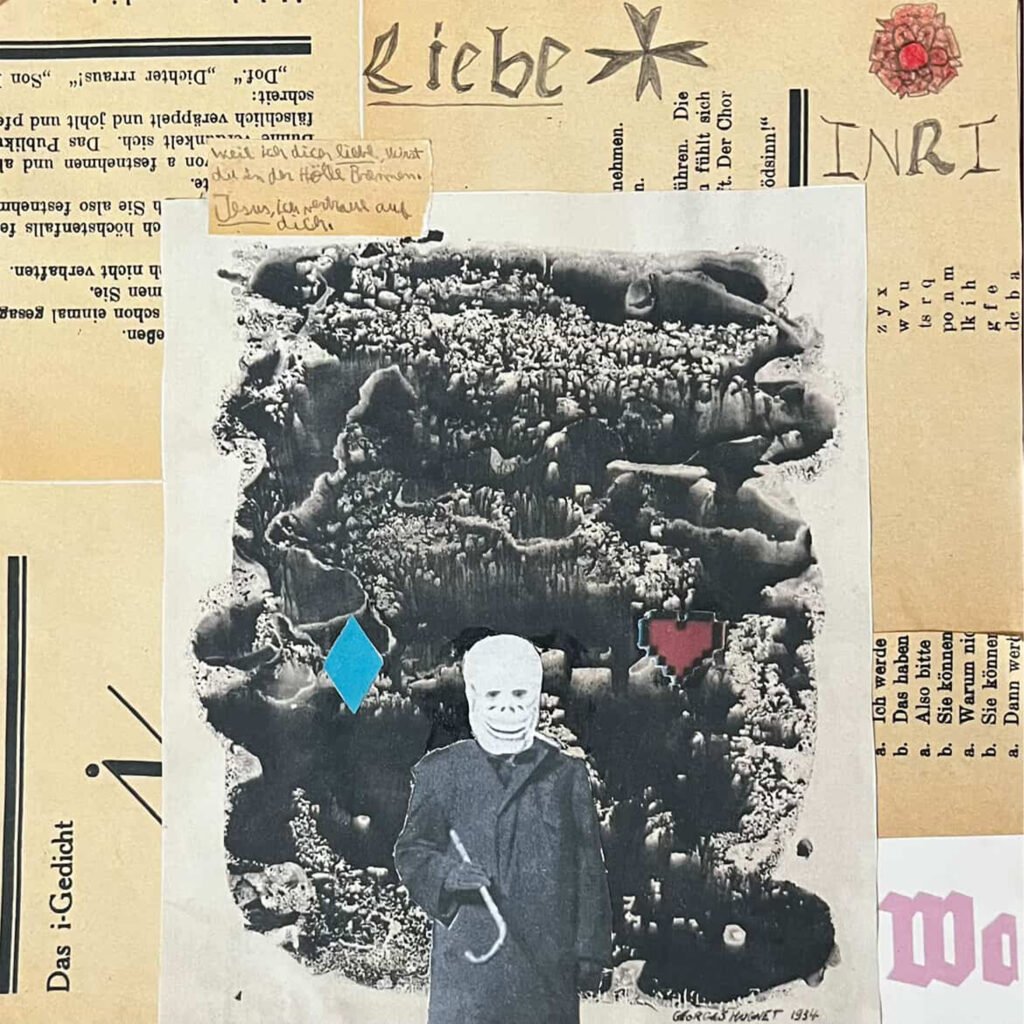
The album artwork is dense and confrontational, built from layered collage, religious text, and fragmented imagery anchored by an unsettling central figure. It refuses clarity or resolution, stacking meanings rather than organizing them. This matches the album’s approach, where ideas are allowed to accumulate and coexist without being explained or softened, reinforcing the sense of tension that runs through the record.
This release fits naturally within the direction of EQ Ambient Sublabel, which has consistently emphasized patience, atmosphere, and artist-led exploration over quick impact. Liebe reflects that focus through its measured pacing and refusal to over explain itself. At the same time, it sits comfortably within the broader EC Underground ecosystem, where experimentation is treated as a process rather than a statement. The album feels aligned with a curatorial approach that values coherence, long form listening, and trust in the artist’s instincts, allowing work like this to unfold on its own terms rather than being shaped to external expectations.
Rather than reaching for a dramatic conclusion, Liebe ends by holding its ground. The album stays consistent to its own logic, neither escalating nor resolving in obvious ways. That steadiness becomes its strength. Granzner shows confidence through restraint, allowing the work to remain open rather than pushing it toward a statement it does not need to make. What lingers is not a single moment or gesture, but the cumulative effect of careful decisions made across the whole record. Liebe leaves the impression of an artist comfortable with ambiguity, willing to let meaning remain unfinished, and attentive to how small shifts can carry lasting weight.
Liebe by Hugo Granzner releases 28 January, 2026 on the EQ Ambient Sublabel