


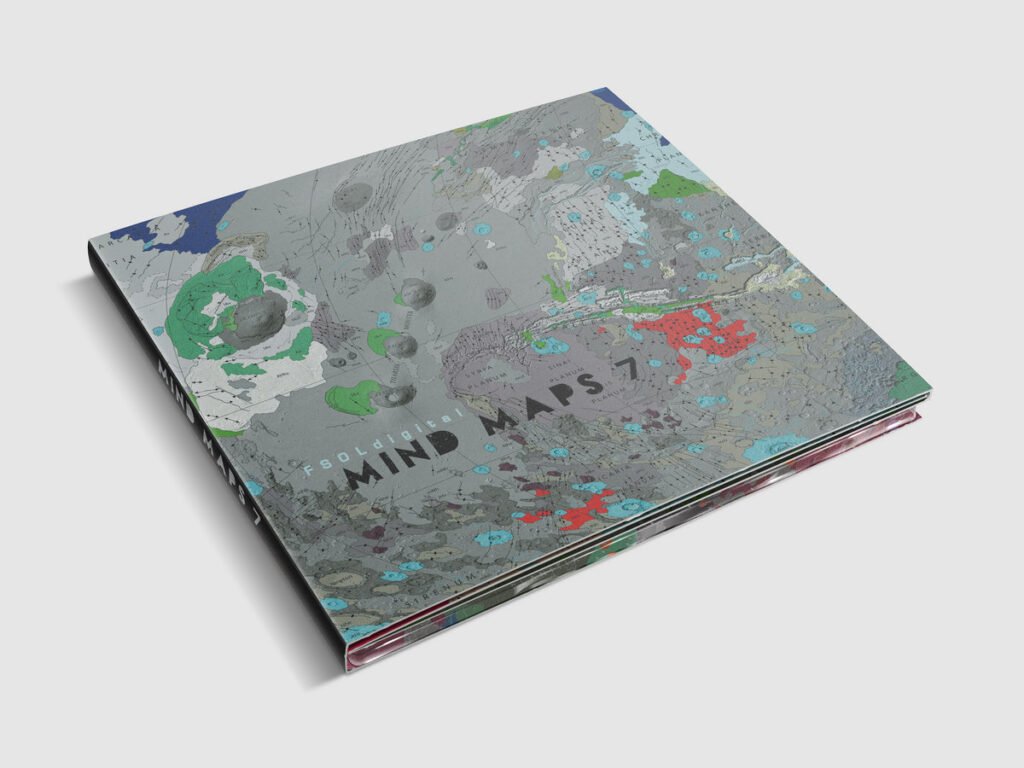
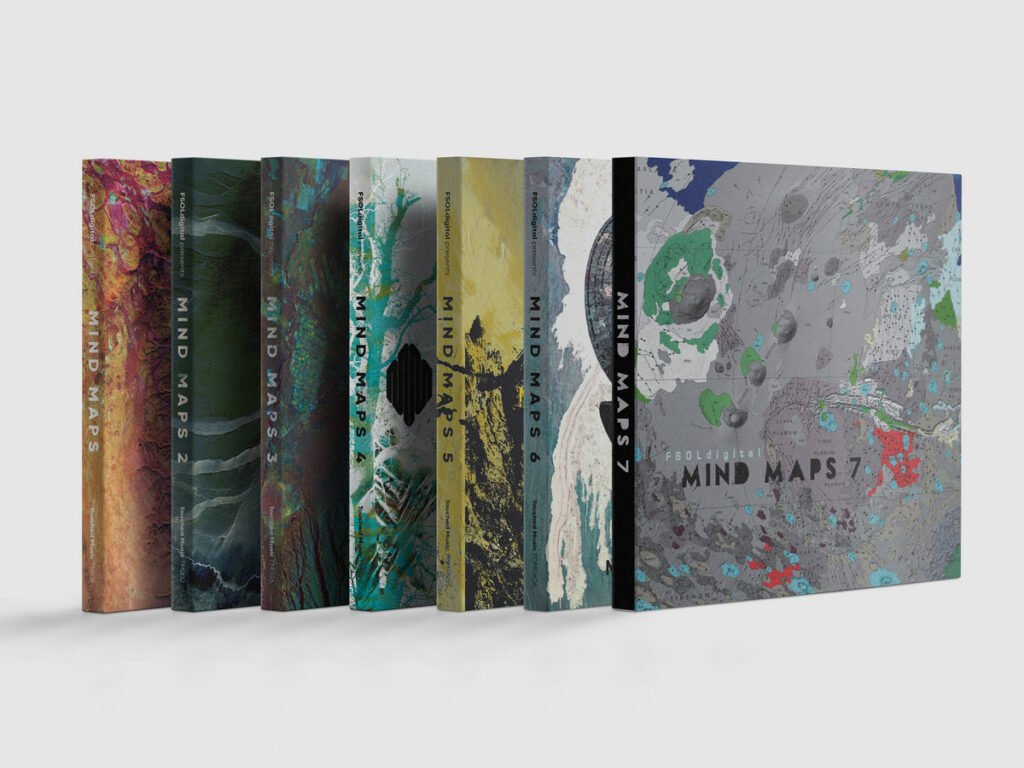
The Mind Maps series occupies a singular position within the broader ecosystem surrounding The Future Sound of London. Issued in collaboration with Touched Music and available exclusively as physical Compact Disc releases, the series has never behaved like a conventional compilation program. Rather than functioning as a simple showcase of artists, each volume serves as a carefully constructed act of curation, interpretation, and contextual reimagining. Across seven installments, Brian Dougans and Touched Music have gradually established a parallel archive—one in which contemporary electronic music is not merely collected but refracted through the distinctive aesthetic lens of FSOL. Mind Maps 7 may be the clearest realization of that concept thus far.
Composed almost entirely of Yage remixes (this is Dougans operating under one of his most revered aliases) the album takes works from a diverse collection of artists and subjects them to a process that is less remixing than it is translation. The source material remains identifiable, yet each composition is reconstructed according to a coherent aesthetic framework. This is not a collection of isolated reinterpretations; it is a unified sixty-minute journey, precisely as FSOL described it, a cinematic passage where disparate musical voices are woven into a single narrative continuum.
The decision to release the album exclusively on Compact Disc is not a novelty or marketing gimmick. It is integral to the work itself. Touched Music‘s accompanying statement correctly identifies a reality that many listeners have quietly accepted: modern streaming platforms encourage fragmentation. Music becomes content, tracks become units of consumption, and albums become little more than playlists assembled by the artists themselves. Mind Maps 7 directly rejects that paradigm. It asks for uninterrupted attention. It demands attentive listening. Most importantly, it rewards both.
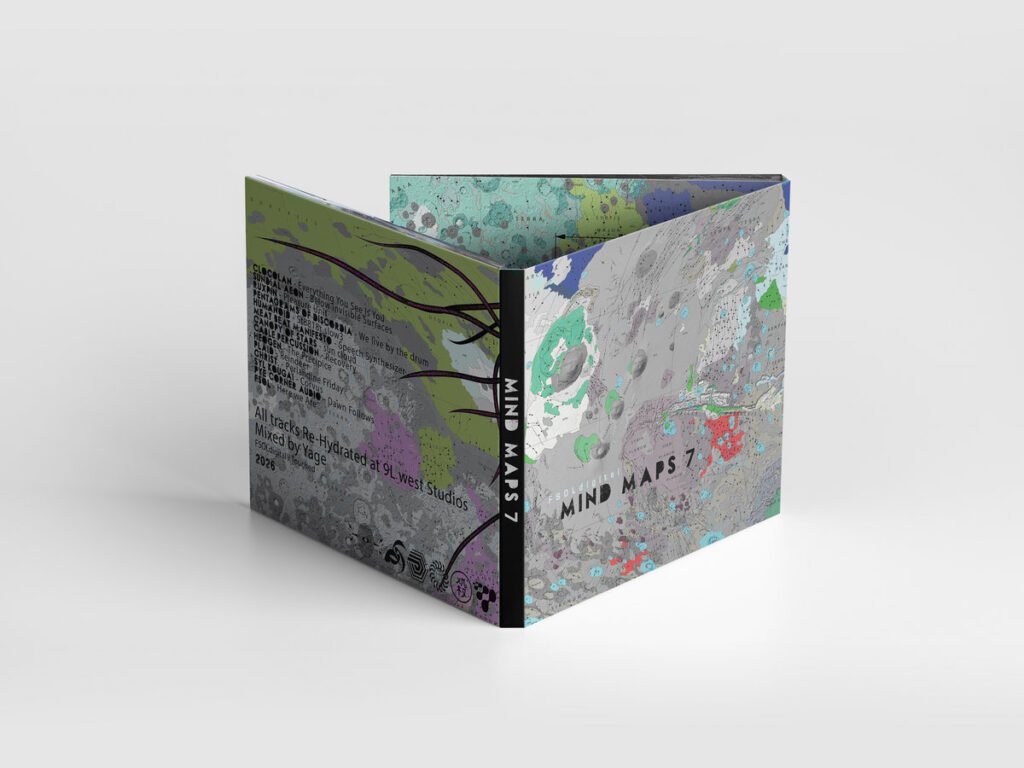
From the moment ‘PLAY’ is pressed, the album demonstrates an uncommon sense of pacing. Clocolan’s “Everything You See Is You” arrives transformed into a dense landscape of drifting analogue textures and steadfast rhythmic motion. The contrast between the deliberate drum programming and the unstable warmth of the synthesizers immediately establishes a central tension that will recur throughout the album: movement versus suspension, rhythm versus atmosphere.
That balance becomes one of the record’s greatest strengths. Dougans understands better than most producers that electronic music need not choose between propulsion and immersion. Sundial Aeon’s “Below Invisible Surfaces” unfolds with near-geological patience, allowing melodic acid flourishes and cavernous percussion to emerge gradually from expansive clouds of ambience. Pentagrams Of Discordia’s “We Live By The Drum” similarly reveals Dougans’ remarkable ability to preserve the emotional depth of original works while subtly altering a track’s gravitational center, nudging it toward kinetic momentum without sacrificing its soul.
Throughout the album, one becomes increasingly aware of how carefully these remixes have been sequenced. Individual tracks are impressive, but the true achievement lies in their relationships to one another. The listener is carried through shifting emotional climates: the slow-motion acid hypnosis of Humanoid’s “St8818r Slow 3“; the manic rhythmic abstraction of Meat Beat Manifesto’s “Speech Synthesizer“; the gorgeous sunlit optimism of Canopy Of Stars’ “Sun Cloud“; the intricate, wonked-out, IDM-inflected architecture of cable.percussion’s “Recovery“.
The transitions between tracks are as smooth as glass and highly valuable; they function like miniature movements within the larger composition.
Several pieces stand out as particularly exemplary demonstrations of Dougans’ interpretive abilities. “Perlandine Friday” by Christ. is remarkable for how successfully it balances reverence and reinvention. The emotional core remains intact, yet the remix unmistakably bears Dougans’ signature. Syl Kougai’s “Corvus“ ventures into darker, more experimental territory, presenting unstable tonalities, unconventional sampling, and rhythmic structures that seem perpetually on the verge of collapse before cohering into a deeply satisfying groove. Pye Corner Audio’s “Dawn Follows“ offers another highlight, preserving the melodic immediacy of the original while enhancing its sense of momentum and spatial depth.
Equally worthy of attention are the album’s more elusive and understated moments. Ruxpin’s “Pleasure Unit“ demonstrates Dougans’ refusal to treat remixing as a merely structural exercise; instead, he subtly reorganizes the relationships between melodic elements, allowing motifs that once occupied separate spaces to converse more freely. The result feels less like a revision than an alternate perspective on the same landscape. Heogen’s “The Precipice” occupies another notable position within the sequence, pairing impeccably locked bass and percussion with luminous melodic contours that seem to expand outward into increasingly spacious territory. It exemplifies one of the album’s recurring strengths: the ability to sound uplifting and expansive without sacrificing compositional sophistication. Likewise, Plaid’s “Reindeer“ provides one of the collection’s most delightfully perplexing excursions, preserving the duo’s characteristic eccentricity while amplifying its dreamlike ambiguities. The track feels suspended between playfulness and mystery, inviting repeated listens not because it obscures its meaning, but because it continuously reveals new dimensions of it.
Perhaps the most impressive aspect of Mind Maps 7 is Dougans’ restraint. Many remix projects suffer from a need to demonstrate transformation for its own sake. Here, every alteration appears purposeful. The objective is not to overwrite the original artists but to reveal alternative perspectives contained within their compositions. The album repeatedly demonstrates that reinterpretation can be an act of appreciation rather than domination.
The closing original FSOL composition, “Here We Are”, serves as an elegant epilogue. Following thirteen remixes, it functions almost like a return to the source—a reminder of the aesthetic worldview that has quietly unified everything preceding it. Alien, dreamlike, subtly unsettling, and impossible to fully categorize, it leaves the listener suspended rather than resolved, which feels entirely appropriate for a series devoted to exploration rather than conclusion.
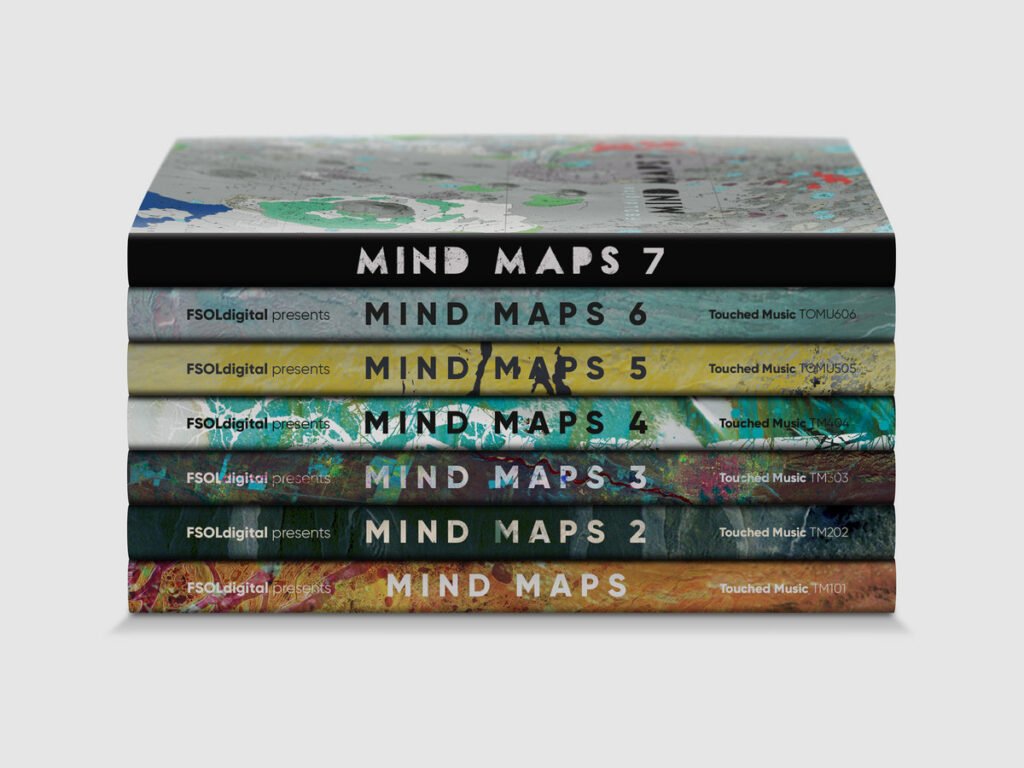
What may be the finest addition to the series to date, Mind Maps 7 is incredibly coherent. In lesser hands, fourteen tracks drawn from such a varied collection of artists could have become stylistically fragmented. Instead, Dougans succeeds in creating something that feels less like a compilation than a single extended work viewed through multiple perspectives. The album possesses a clear logic, a sense of narrative progression, and an emotional continuity that is increasingly rare within contemporary electronic music.
In an era dominated by convenience, Mind Maps 7 asks for commitment. In return, it offers immersion. It is an album that treats listening as an intentional act and trusts the audience to meet it on those terms. That trust is fully justified.
The result is one of the strongest entries in the Mind Maps series to date: a sophisticated, deeply musical work that demonstrates not only Brian Dougans’ continued brilliance as a producer and sound sculptor, but also the enduring value of the album as a complete artistic statement. This is essential listening—not because it demands attention, but because it earns it.
Mind Maps 7 by FSOLdigital & Touched Music released 10th of July, 2026