


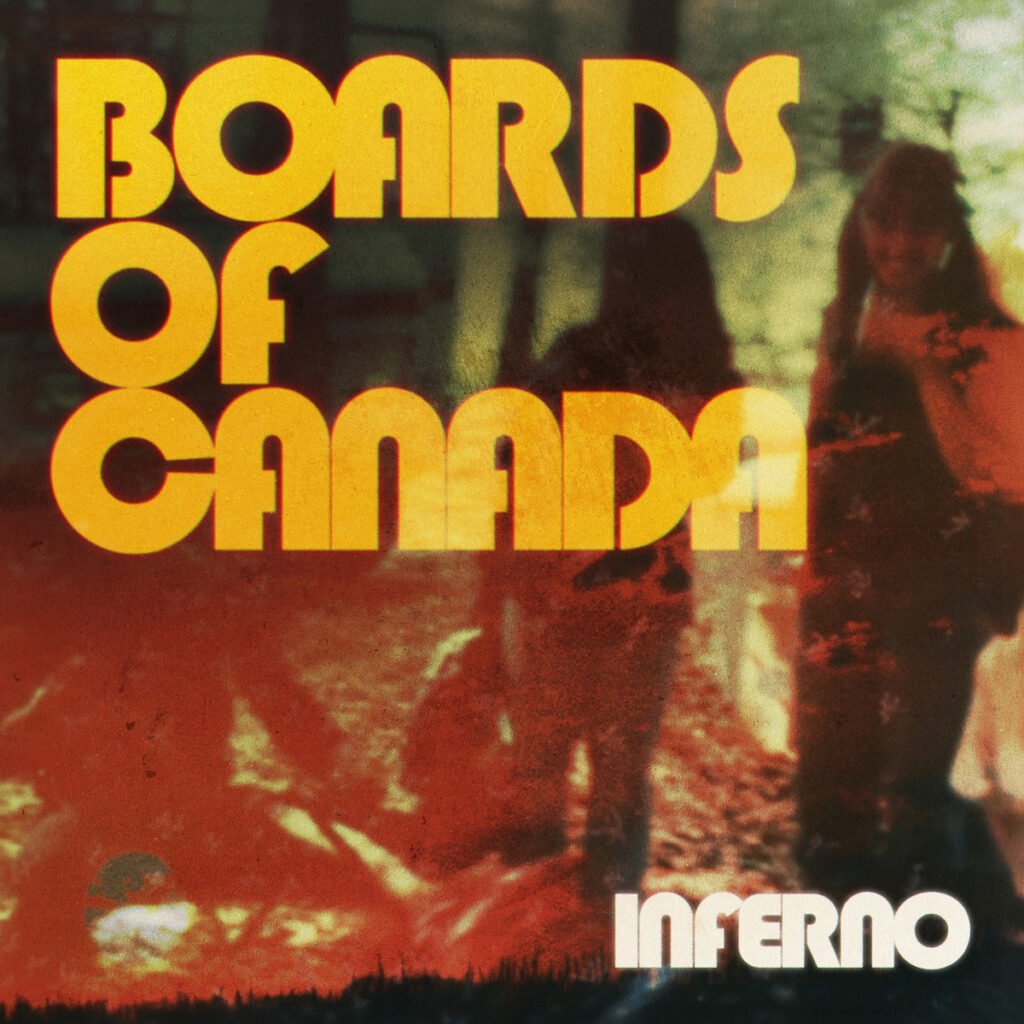
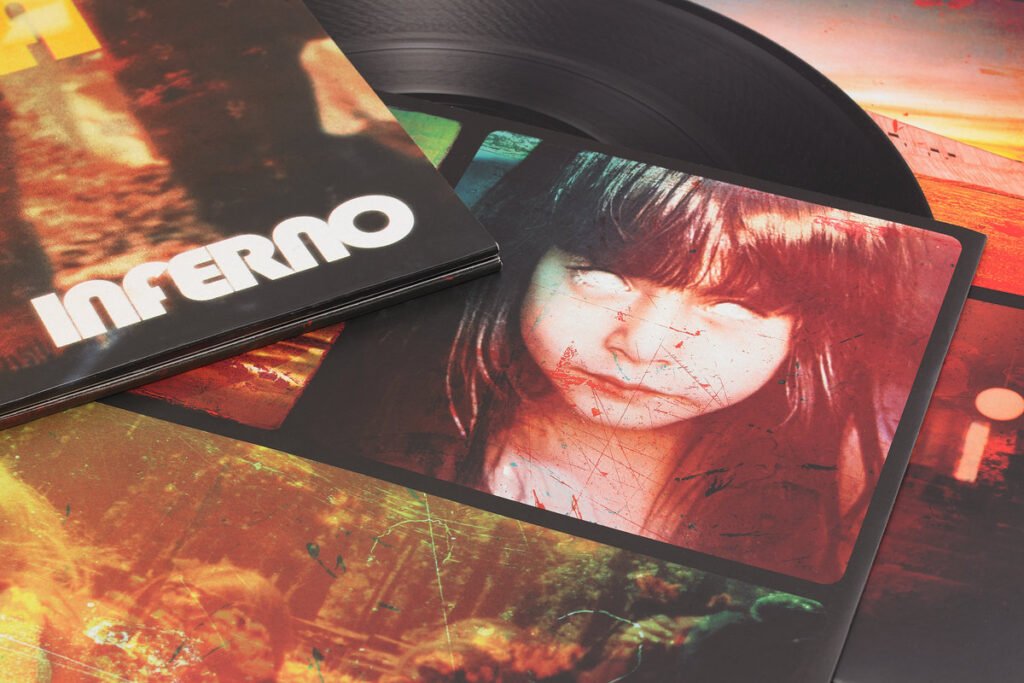
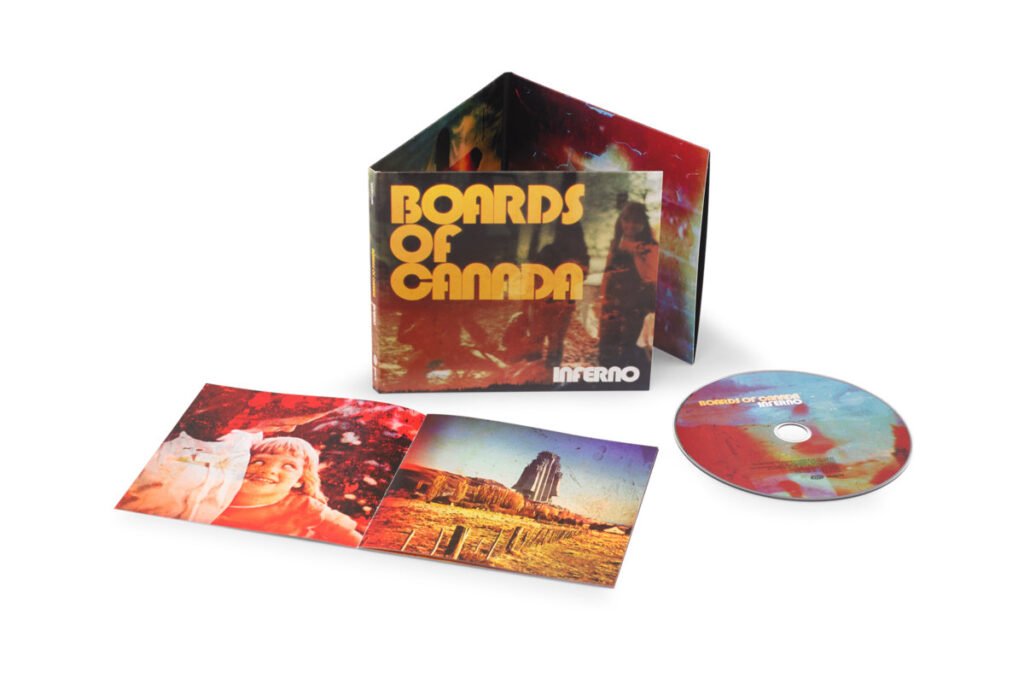
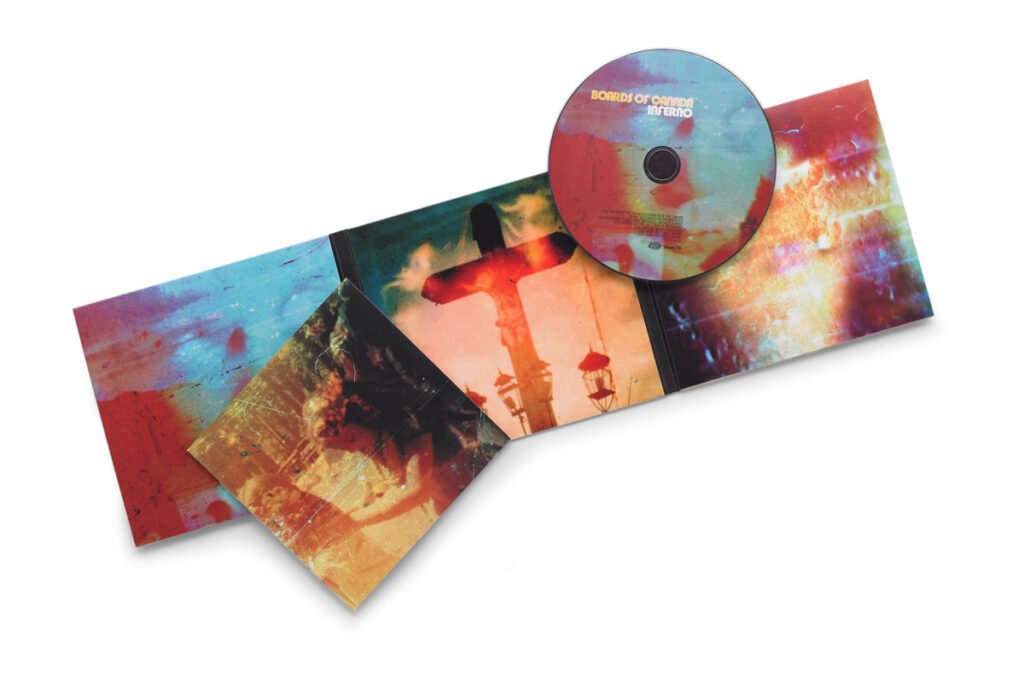
After thirteen years of silence, Boards of Canada return with Inferno, an 18‑track full-length releasing on May 29, 2026 on Warp Records across 2×LP (black and transparent red), CD, and digital formats. The album reads as a deliberate excavation: analogue circuitry and degraded tape textures are not merely aesthetic choices but the very language through which the duo stages a confrontation between spirituality and humanity, salvation and damnation, redemption and sacrifice. Inferno is neither sermon nor manifesto; it is an esoteric cartography of longing, guilt, and the fragile hope that persists at the edge of ruin.
From the first opening moments, Inferno insists on materiality. Vintage analogue arpeggios, warbled tape artifacts, and detuned pads create a sonic environment that feels lived‑in and weathered for a reason: This is that BoC sound, so many years later. They’ve still got it. Production choices—wobbled pitch, muffled filters, distant radio static—function as narrative devices: they age memory, fracture voice, and render the sacred as something both intimate and unreachable. Rhythms are often slow and methodical in this effort, allowing textures and mysterious artifacts to surface, accumulate, reveal themselves; when percussion does arrive, it is measured, ritualistic, steeped and heavy with consequence. The album’s palette favors warm, analogue saturation and a restrained use of melody, so that when a motif resolves it carries the weight of a confession.
Inferno is organized like a liturgy in reverse: invocation, trial, atonement, and a final, ambiguous grace. Vocal samples—prayers, confessions, devotional chants, and clinical observations—are chopped, mangled, and repurposed into percussive and melodic elements. This treatment turns language into relics: fragments of belief that are at once earnest and uncanny. Religious imagery and references to subterranean punishment coexist with domestic and scientific detail, producing a persistent tension between the metaphysical and the corporeal. The album’s esotericism is deliberate; it asks listeners to inhabit paradox rather than resolve it.
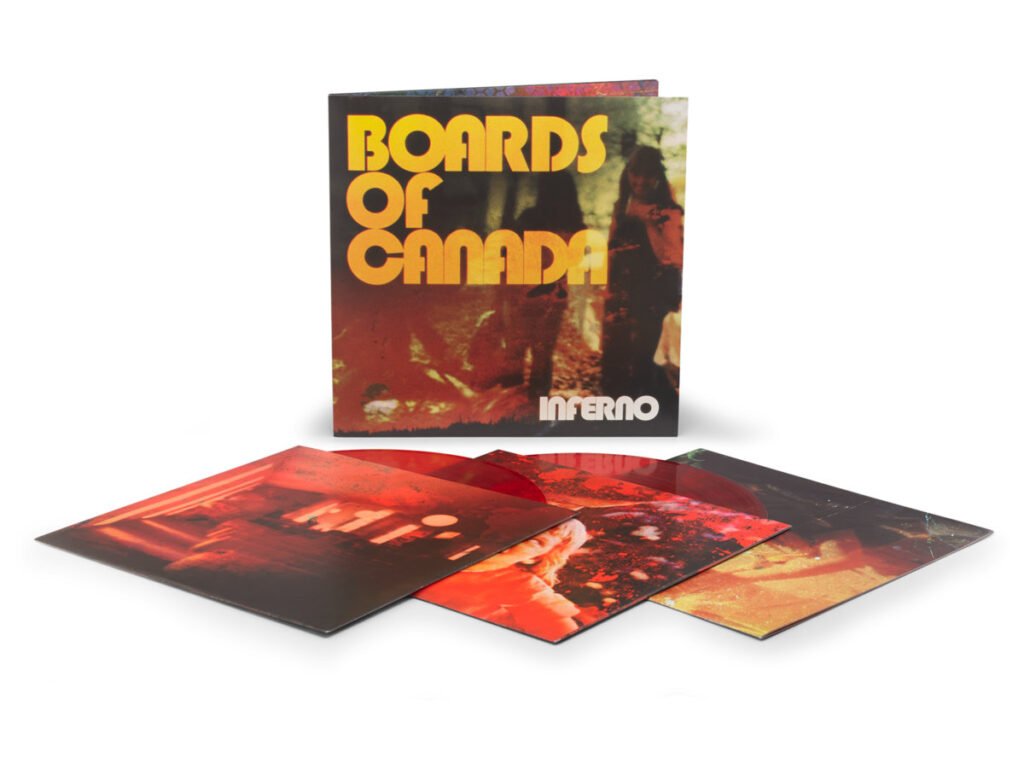

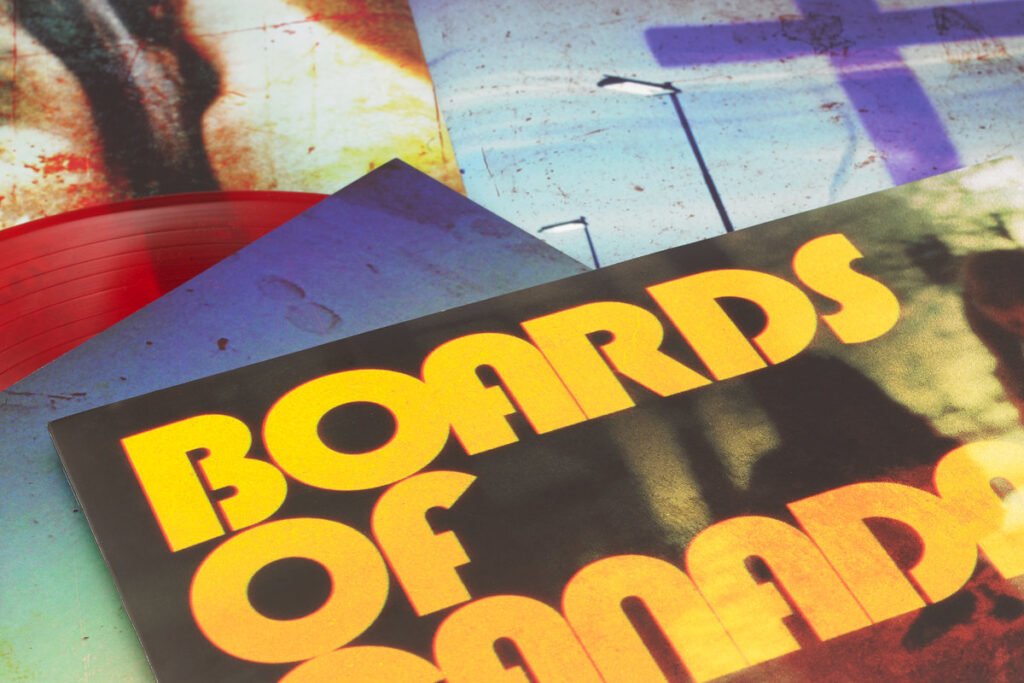
Inferno announces its preoccupation with spiritual rupture from the outset. “Introit” casts a dusty, analogue ceremonial glow across the album’s threshold, its musically mechanical arpeggio illuminating a space that feels newly awakened after long abandonment. The piece foregrounds the album’s central dialectic — the sacred refracted through decay — by letting its tape‑worn shimmer function as a kind of liturgical residue. This sense of haunted invocation deepens in “Prophecy at 1420 MHz”, where a low, ominous pad and spectral instrumentation frame distorted speech fragments that hover between revelation and coercion. Together, these opening works establish a cosmology in which authority, memory, and belief are not stable categories but contested terrains. “Hydrogen Helium Lithium Leviathan” extends this inquiry by assembling its detuned pads and backward drum articulations into a slow‑forming architecture, as though creation itself were being reconstructed from compromised materials. The track’s patient coalescence suggests both inevitability and fragility — a universe emerging under duress.
A more intimate register surfaces in “Age of Capricorn” and “Father and Son”, where the album turns toward the human voice as a site of vulnerability and ritual. In the former, dusty synth stabs and garbled transmissions dissolve into a fragile chorus that resembles a communal confession transmitted through static. The latter track reframes familial devotion as a kind of spiritual practice: chopped conversations, hand‑played percussion, and a high, plaintive drone converge into a portrait of faith rendered through distortion. Both pieces foreground the tension between connection and dislocation, suggesting that human bonds persist even when mediated by damaged signals. This introspective arc is momentarily suspended in “Somewhere Right Now in the Future”, a drum-less reverie whose woozy textures function as a contemplative interstice — a clearing in which the album briefly pauses its moral inquiry.
The record’s descent into darker ethical terrain begins with “Naraka”, where sparse drums and a solitary lead synth carve out a space of subterranean reckoning. Devotional voices complicate the track’s austere minimalism, introducing the possibility that punishment and atonement may be indistinguishable states. “Acts of Magic” serves as a liminal hinge, an experimental fragment of buzzing textures and distorted drones that suspends the album between movements. This suspension collapses into the elegiac “Memory Death”, where detuned drones and insectile timbres give way to soft strings, hospital‑like beeps, and mournful horns. A brief female vocal surfaces like a memory resisting erasure before the track recedes into silence — a sonic enactment of recollection’s final dissolution.
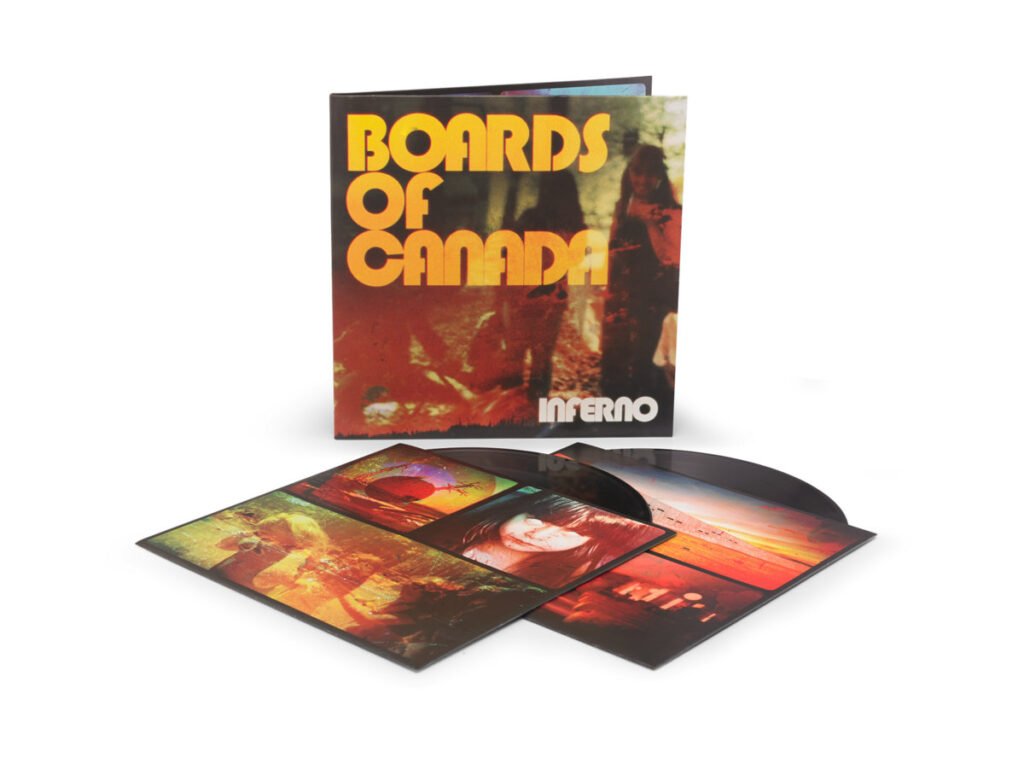
Emergence — biological, metaphysical, and theological — becomes the animating force of “The Word Becomes Flesh”. Slightly bent plucks and off‑key notes gather into a structure that feels embryonic, while drums and bass arrive with the inevitability of a heartbeat. Spoken passages about neurology and embryology are woven into the rhythm, framing incarnation as both scientific process and spiritual metaphor. “Into the Magic Land” offers a pastoral counterpoint: warm synths and acoustic guitar open a meditative space whose simplicity becomes its strength, though its serenity remains faintly shadowed. That shadow lengthens in “Blood in the Labyrinth”, where muffled synths, crisp drums, and sitar‑like plucks guide the listener deeper into the album’s moral maze. A sustained female cadence threads through the piece before dissolving into an eerie drone, marking another threshold crossed.
Temporal disorientation defines “Deep Time”, a composition built from hazy pads, deep bass, and a mournful three‑note motif that drifts through layers of acoustic guitar and organ‑like resonance. The track reads as both lament and invocation, a meditation on endurance stretched across epochs. Its introspection gives way to the unsettling “All Reason Departs”, where foreboding drones and a voice speaking of initiation and war introduce a melody that is simultaneously playful and ominous. The track’s methodical pacing and uncanny charm render it one of the album’s most disquieting moments. “Arena Americanada” continues this nocturnal trajectory: radio‑like ambience opens into a subdued, rain‑slick pulse, its reverb‑heavy progression evoking the uneasy exhilaration of moving through deserted streets at speed.
The album’s final movement turns toward domesticity and consolation without abandoning its spiritual unease. “The Process” intertwines organ‑like drones, deep bass, and a reverbed female voice with birdsong and distant children’s laughter, creating a tableau in which care and decay coexist. A plinking synth guides the piece toward a gentle resolution that feels cyclical rather than conclusive. “You Retreat Intime and Space” introduces a fragile luminosity: angelic vocal pads and organ‑like synths rise into a pattern that feels both weightless and grounded, and the gradual arrival of drums transforms the piece into a slow, radiant hymn. Grainy horns lend the closing moments a patinated warmth, a gesture toward consolation that remains aware of its own fragility. The record concludes with “I Saw Through Platonia”, a descent through detuned synth lines and heartbeat‑like double kicks that leaves the listener suspended between states — a final acknowledgment that Inferno is less a narrative of redemption or damnation than a sustained meditation on the thresholds between them.
Inferno turns inward, but never narrowly so. Its emotional palette moves from haunted nostalgia to a kind of austere, hard‑won hope, and its use of devotional language never settles into doctrine. These fragments function instead as human artifacts — traces of fear, longing, and the perennial search for meaning. The album’s esoteric architecture rewards patience: motifs surface gradually, and the tension between analogue erosion and crystalline melody becomes a central expressive force. What emerges is a work of moral seriousness, one that understands technological debris and spiritual yearning not as opposites but as mutually entangled conditions of contemporary life.
Boards of Canada have crafted a masterful album that is at once austere and generous: austere in its formal discipline, generous in the emotional and metaphysical depths it permits to surface. Inferno resists the temptation of a neat resolution; instead, it enacts a sustained ritual of inquiry, using sound to chart the unstable borderlands where faith and doubt, flesh and spirit, memory and oblivion converge. For listeners willing to yield to its slower, more deliberate currents, the album becomes a profound and quietly disquieting meditation — an invitation to listen not only with the ear, but with the parts of the self still capable of reverence, contrition, and a fragile, persistent hope.
Inferno by Boards of Canada releases 29 May, 2026 exclusively on Warp Records