
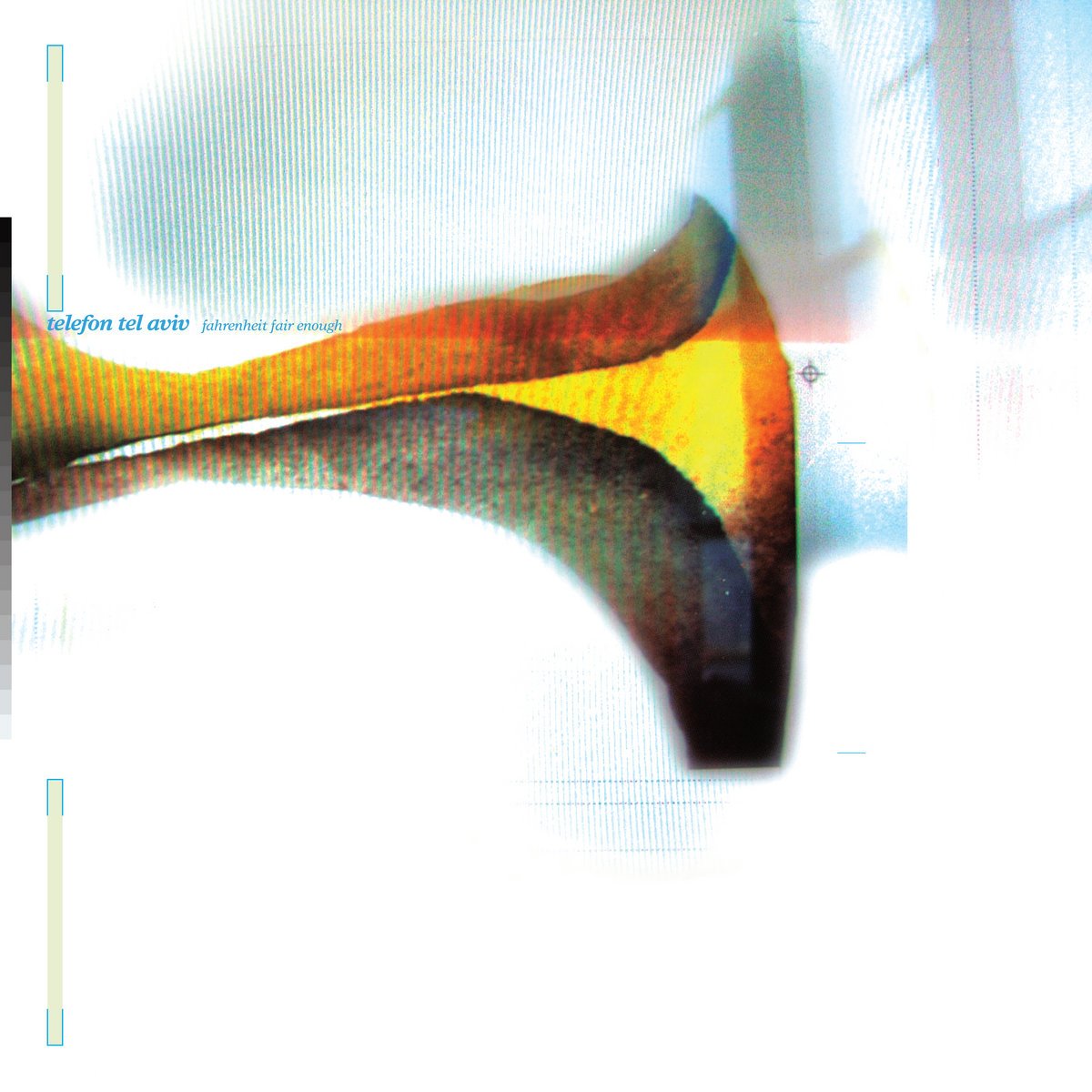
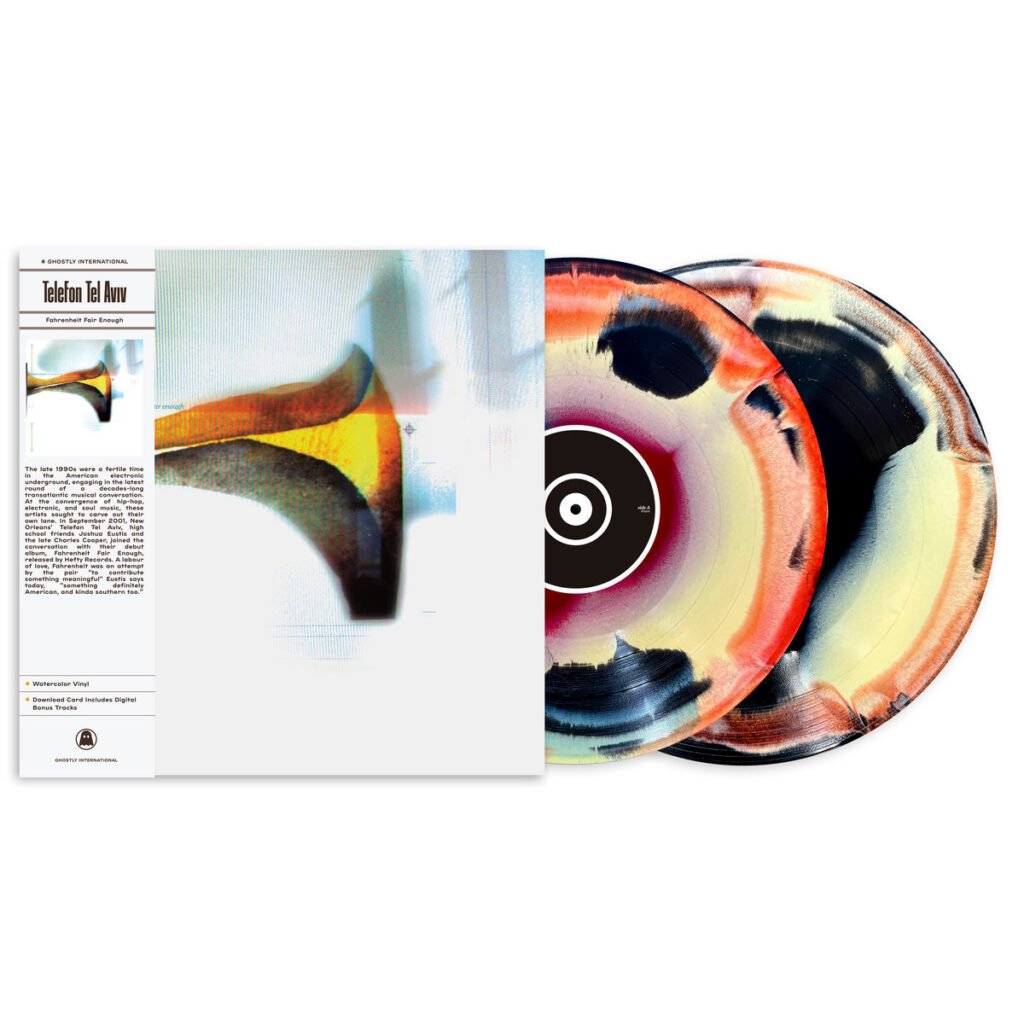
Stone-cold classic is this effort. American duo Telefon Tel Aviv’s legendary debut album, Fahrenheit Fair Enough, has gotten yet another re-release in time for its 25th birthday via the frequently excellent Ghostly International. This is one of those albums that for those of you old enough to remember, including myself, will still raise a smile.
However, in my view, what we’re really talking about here though is not the quarter-century that has elapsed between its initial outing and this rather handsome anniversary re-release, but the decade leading up to said original release. I talk of the digital/musical arms race of the ’90s that seemed to culminate in Fahrenheit’s incredibly detailed but supremely smooth complexity, as also reflected in other fantastic music of the time. In other words, the artistic distance between the early ’90s and Fahrenheit’s initial release back in 2001 seemed like a vast chasm in comparison with the subsequent 25 years in terms of sonic soundscaping. You might say that the ’90s were a period of perpetual and radical revolution in electronic music as opposed to the subsequent refinements and re-inscriptions of the following two and a half decades.
Discs like Fahrenheit Fair Enough, alongside other personal fave tracks/albums such as Squarepusher’s My Red Hot Car, Autechre’s LP5, Fennesz’s Endless Summer, Snd’s MakeSND and Fuckhead’s Doin’ Business (a bit more obscure is that last one – thank you BBC Radio 3 – but a track well worth checking out from the mighty Mego label), seemed to sit atop a dizzyingly high musical plateau. The decade prior had witnessed breakneck progress in terms of audio technology, in turn inspiring some insane, substance-fueled creativity. This trajectory took us from comparatively primitive early samplers with tiny memories to full computer audio and a veritable cornucopia of shiny new high-powered virtual software instruments and effects. Twas a revolution that ultimately birthed the laptop era of music production.
Discs like Fahrenheit represented a dizzying end to an ultra-fruitful era in electronic sound and offered surfaces that had become characterised by often synapse-frying complexity, ultra-widescreen production as clean, crisp and sterile as an Intel CPU plant, and the exquisite hyper-syncopation and groove of the glitch, a twisting, endlessly regenerating micro-funk that twitched and revolved around a minimal or completely absent musical centre.
I can vividly recall hearing Fahrenheit Fair Enough’s title track for the first time and having the old grey matter blown completely through my eye sockets, brain pan-fried, prefrontal cortex turned to radioactive plasma. I’d never heard glitch rhythms contextualised so smoothly before as they ricocheted against a mellifluous electric piano line. The rhythms themselves seemed to take the genre to a new stratospheric high, their wealth of textures crossing a vast expanse as they twitched, split, reemerged and bounced across the stereo field – rolling, trilling and briefly submerging in reverb before breaking surface back into the bone-dry ether.
A smooth synth counter line and bass guitar eventually dovetail into the mix before the track finally breaks down, seemingly very pleased with itself after having irradiated the listener’s noggin’ with high-energy protons. It’s an all-time electronica classic, in other words, and sounds as fresh today as it did in the early noughties. Definitely not to be missed if you are exploring the history of electronic music.
The rest of the album, while not quite scaling these rarefied heights perhaps, also has much to recommend it and is certainly worthy of this lovely re-release. Standouts include the delicate Lotus Above Water, which takes the electric piano in glitch sound in a more ambient direction, a direct precursor of a sound later mined by Alva Noto, Orla Wren, et al. Meanwhile, John Thomas on the Inside Is Nothing But Foam (no sniggering at the back, please) sounds like nothing so much as instrumental, Tortoise-like post-rock overlaid with a healthy slathering of releases from the old glitching ball bearing dispenser. What’s the Use of Feet If You Haven’t Got Legs is another ludicrously titled belter which takes the high-energy title track template and then dusting its surface liberally with piano chords and cinnamon organ swirls.
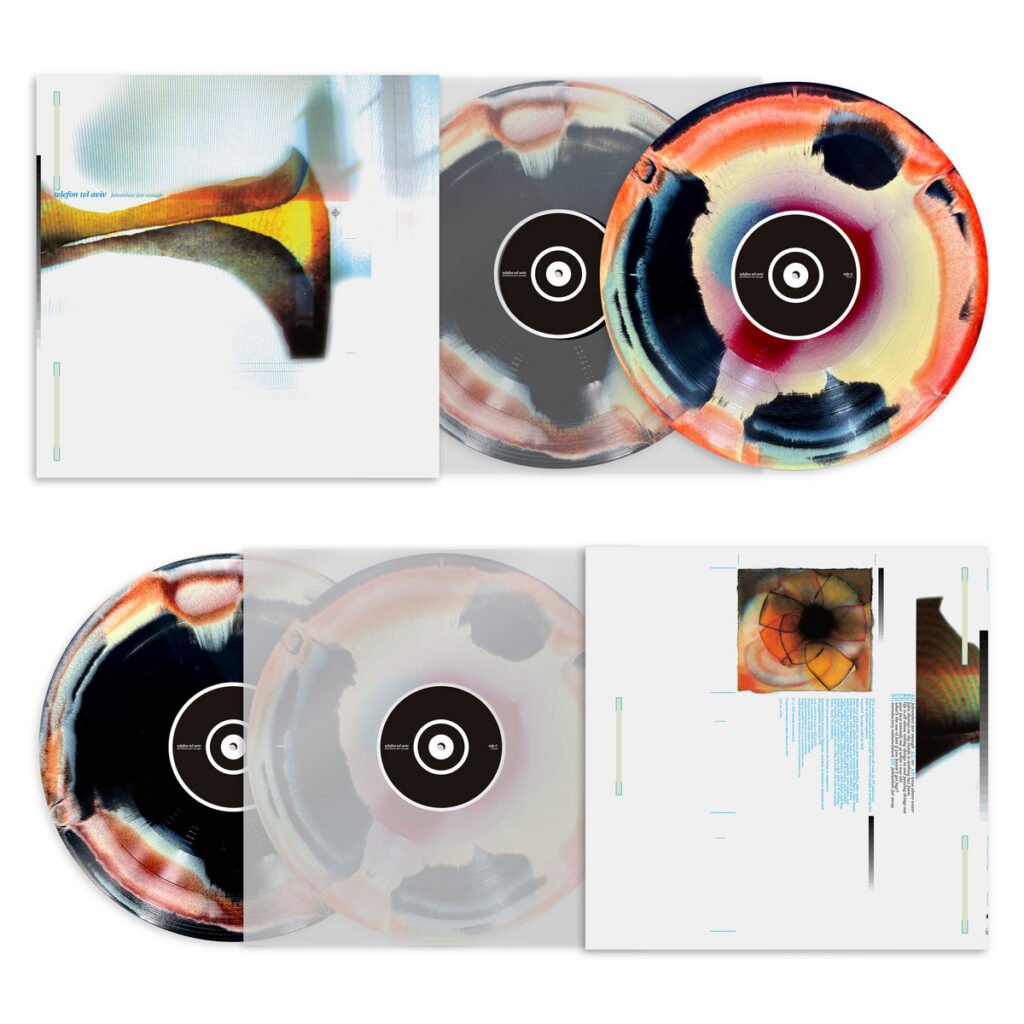
This is that late ’90s fizzing micro-sound at its most melodically accessible. So if you like your vinylz and have not yet been initiated into the world of the Telefon, then don’t miss this handsome re-release and its expanded bonus tracks. Sound fair enough?
Written by Simon Pitchforth. Simon spends his time staring into the existential void, cycle touring and grappling with the smooth contours and expansive cloudscapes of ambient music. Whiling away his days in Asia in warmer climes, Simon is engaged in an advanced research project into the synergistic effects of sunlight, mild stimulants, late night sessions and ethereal audio. You can find the results of this research here: https://www.mixcloud.com/simon-pitchforth/ …and here: https://belverticale1.bandcamp.com/