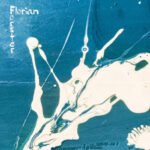

In 1992 David Lynch sent Laura Palmer back to the screen in Fire Walk with Me, a film that spends her final days among the people who loved her and failed her, and lets a few patches of sunlight fall across a life that is closing in. Delta Machina, the London project of Damiano Seresini, has named an album for that year, and LOVERS OF 1992 mimics the film’s sense of proportion: mostly tenderness, but with shadows gathered at the edges and in one stretch of the middle. Seresini’s own account puts two lovers adrift through the rain-slicked suburbs of Milan, with Philip K. Dick looming behind the story. The album comes from South Florida’s EC Underground. With releases ranging from Roel Funcken’s cosmic modular glitch to Kitbuilder’s electro-meets-new-wave-post-punk-angst, LOVERS OF 1992 finds a cozy home among similarly talented acts.
Taken one at a time, Seresini’s nine pieces ask for little in return. But the magic happens in sequence, where the same materials, pads that breathe, solid, grounding bass, melodies that advance at their own pace, these accumulate into a state of mind no single track announces. Lynch worked this way, letting stillness and repetition ripen (or curdle) until a scene means something its surface never said. “僕は誰だ” (Who Am I) sets the terms with no percussion at all, only thick synth chords that move at a glacial pace and sustain so long they harden into drone, wrapped in airy ambience. A woman whispers in Japanese, and the piece ends on rain falling on cement, which lands close to the bio’s insistence on the smell of rain on cold concrete. The detail feels central to the album’s world: urban, solitary and suspended between memory and physical place.

The next two pieces carry the sunlit side of Lynch’s sound. “文具店アンドロメダ” (Cartoleria Andromeda) lays a plinking synth melody over a phase-shifted drone, lets the tune grow slightly more complicated without ever hurrying, then brings in rich pads that answer its phrases in a slow call and response. “LOVERS OF 1992 – WE WERE JUST STRANGERS” shifts to glassy, chime-like plucks whose reverb tails ring out long, with deep bass notes holding up the lighter melody above. The synth voices carry a cinematic presence that belongs to 1990s film, giving the record a faded technological patina that suits its dreamlike vision of Milan.
The light narrows at the fourth track. “ダークエンジェルズ” (Dark Angels) opens on a rhythmic synth in a darker place than anything before it. A progression plays out, a pause opens, and the rhythm returns in a different tone and pace, settling into a pulsing drone of bass notes with a shimmering high register floating over it and texture moving underneath. “お子様スター” (Okosama Star) goes further. Pads trade alternating notes with a faint industrial edge, there is a pause, and then deep kicks arrive beneath a pulsating drone full of rhythm and character. At the halfway mark a human voice joins in an odd chant that stays buried toward the back of the mix, heard and never quite placed. This is where the album’s Lynchian unease lives, in the half-audible and the unlocatable.

After that the record regains soft luminosity. Three pad-driven pieces follow with no kick and no voice. “LOVERS OF 1992 – HOLD ME” fades in on pads with a metallic glow over deep bass and works through a slow progression, a ritual for cleansing the ear after the rhythm of the previous two. “コンクリート” (Concrete) turns soft and angelic, flowing and almost soaring, its simple progression kept alive by filters and effects that make it ebb, swell and recede. ミラノ東環状線 (Milano Tangenziale Est – Alba) is another slow bed of pads, with white-noise wind fading in and out and a single percussive event, a water drip that echoes into the surrounding space. These three sound much alike, and the resemblance is the point. The album settles into an architecture of concrete, rain and lingering electronic haze, less concerned with movement than inhabitation. The sequence folds back on itself, and the album lets that sameness do its slow work until the end of one track and the start of the next stop being distinguishable.

The piano arrives last. “LOVERS OF 1992 – WE WILL NEVER COME BACK” opens on three mournful chords that repeat in a slow call and answer. As they repeat they change, turning gradually hopeful, and the hope that results sounds austere and hard-won. The piece keeps brightening until it ends. The title says there is no return, and the music agrees while offering something to carry forward.
Heard in order, LOVERS OF 1992 reveals itself slowly. Its melodies rarely hurry, its textures rarely demand attention, and many of its individual moments seem deceptively slight when isolated from the whole. Yet by the end, the album has built a remarkably vivid world from small gestures: rain on concrete, distant voices, lingering synth haze and memories that refuse to settle into a fixed shape. The result feels like a dream of Milan viewed through degraded film stock and fading electronic light. Like all dreams, it eventually evaporates. What lingers is the mood it leaves behind.
Written by Jonathan Bishop. Jonathan is a writer, and the Editor and Founder of ChoonReview. His engagement with electronic music began in the late 1980s through early industrial acts such as Skinny Puppy, Coil and Ministry, and that interest soon spread into other styles such as Plunderphonics (John Oswald, Negativland, Stock, Hausen & Walkman et al). When IDM exploded onto the scene in the early 1990s, he became utterly immersed in it and that devotion has stayed with him ever since. Today Jonathan works as an engineer and sound designer, with Bitwig Studio as his primary creation platform. The hands-on knowledge of sound design and production that comes with that work shapes how he listens to and writes about the releases that reach ChoonReview.