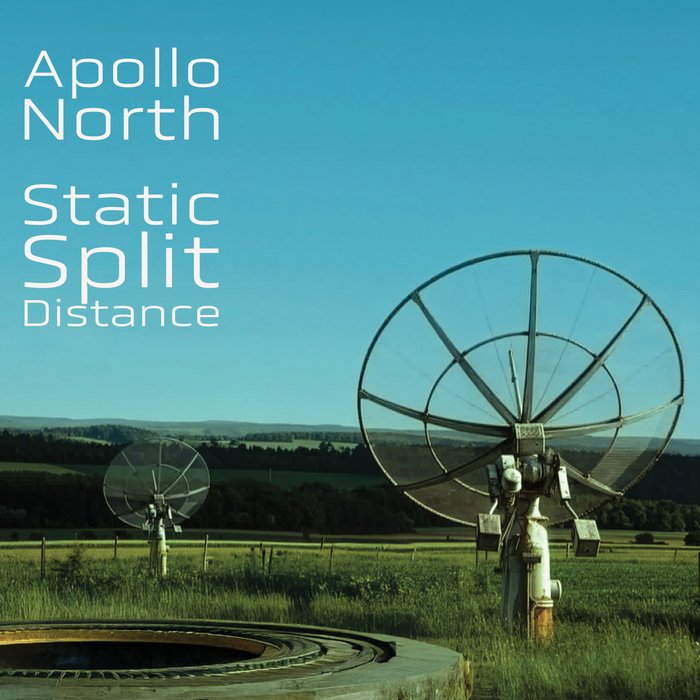
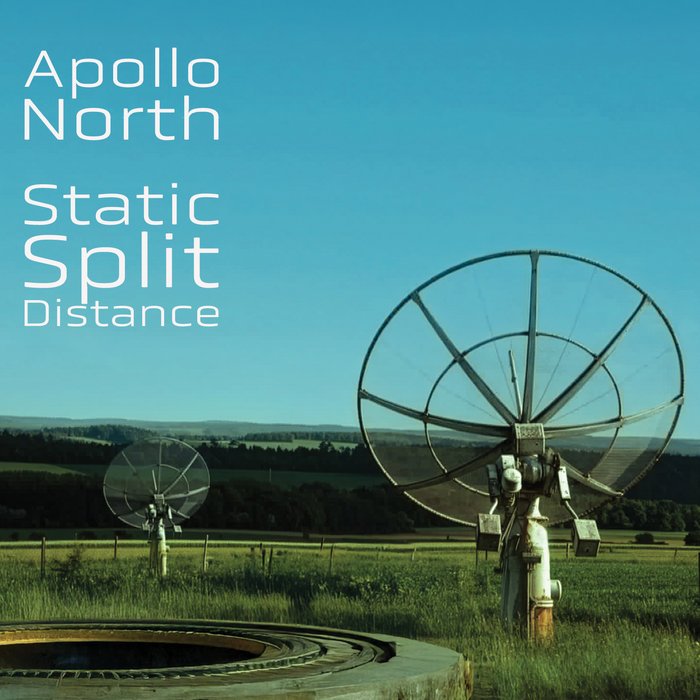
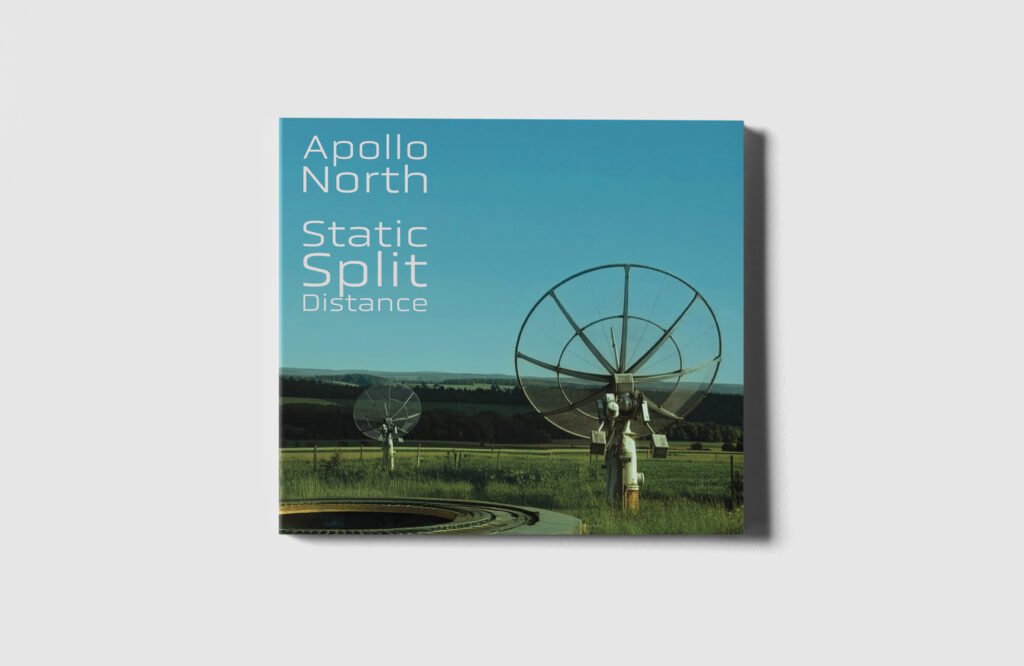
Static spills from the speaker first, the hiss of a shortwave set tuned between stations while a signal skips off the ionosphere and finds the antenna. That is how Apollo North opens Static Split Distance, due on Pulse State on 9 October 2026. The album keeps its ear pressed to that interference for an hour and two minutes.
Picture a control room at dusk, radio telescopes outside scraping the darkening sky, the logbook open to a fresh page. “Amo.1” is that page — the first survey of a strange stretch of spectrum. Warm pads swell and recede around two simple, beautiful notes. A slow drum pattern fades up out of the noise like a pulse traced by a chart recorder, and the whole thing glows with bliss and wonder. The deep rhythmic throb carries the ritual gravity of Psychick Warriors ov Gaia, a ceremony extracted from the void, and near the close a few darker ambient elements drift through the receiver, as though a cloud briefly attenuated the signal.
The telescope swings to a different quadrant for the second transmission, and “SD‑3.0” answers with a new rhythm and a new voice. Reverb‑heavy synths and FX gather around a broken, quiet drum pattern while a deep pad creeps up underneath, warm and rich as a bank of valves with their filaments glowing. The reverberation is immense, its tails stretching out like distance itself. The track suggests a different source with a different meaning, and the mind fills the sky with massive celestial bodies moving in slow motion, each tracing its own ancient gravitational path. Every drum hit feels like a test transmission sent into the dark and left to travel.
Somewhere from beyond our own star system, a strangely modulated carrier wave is detected and nobody in the room can identify it. “Aii‑DIV0” opens slow and deep on that mystery, then its synth notes ring out like an alien machine speaking through the dishes as they search, scan, map, plot. Deep bass arrives without warning, the carrier transforms into a rhythmic percussive wave, and the ambience around it turns slightly foreboding. Fragments of what may be human speech are mashed into machine gibberish, the kind of broadcast a numbers station might leak into the small hours. Then a melody forms. It repeats, vanishes, resurfaces altered, yet always returns to the same notes — a klaxon warning of some off-planet danger. It feels like a partial interception of a broadcast whose purpose stays unknown, and its urgency is mesmerizing, with the question of fate left hanging. The intensity recalls Substrata‑era Biosphere.
Panning hi‑hats, white noise and a distorted synth open the fourth transmission, then the drums fade in and “CAL.1” settles into a slick, down‑tempo groove. A deep bass synth leads it, and the distorted lead line repeats like an output stage held at the edge of saturation. The groove is definite enough to set heads nodding. Halfway through, everything falls away except light clicking percussion — relay contacts in an empty switch room — and a simple, haunting melody rings out on a detuned synth. Slowly the other elements creep back, and the song reforms like distant stars re‑aligning. The motif is enigmatic and menacing, drawing the listener toward a dark source, recalling Locust in the Weathered Well period, with dread and beauty sharing the same breath. Gorgeous tones and distorted ambient textures are bound together by clever percussive glue, and the mixing is superb.
Past midnight, a lone technician at a monitoring station almost misses it. A strange signal drifts through, and the reel‑to‑reel happens to be turning, so “Aips” exists as that captured recording, hiss and all, from an unknown stretch of spectrum. Odd ambient pads open with a rhythmic pattern buried inside them, and very deep bass groans beneath, doing something almost indescribable, like a MOSFET driven into a slow, heavy clip. Synth tones repeat in triplets, and through the middle of that groaning a four‑note alien melody breaks through, carrying a mournful, ominous urgency. The piece ends with a claustrophobic droning buzz — this is the sound of surveying the skies and finding something looking back.
Strange textures pour from the monitors in “CAL.2” and slowly lock into a cadence, a staggering pattern with a hypnotic percussive rhythm. It is a tribal, extraterrestrial drum circle ringing out on some far‑off asteroid, one large enough to hold its own atmosphere, and the whole thing feels like a ritual beamed-in, received from a distant corner of the galaxy. At the halfway point every melodic element gives way to a grinding metallic synthesizer that announces a shift in frequency, its signal swinging through a filter that opens and closes like a Doppler sweep. Eventually the listener stands in a deep echo chamber where the original melody has been rebuilt from metallic oscillations and electrical storms. An absolutely amazing bit of electronic music that you will kick yourself for missing out on.
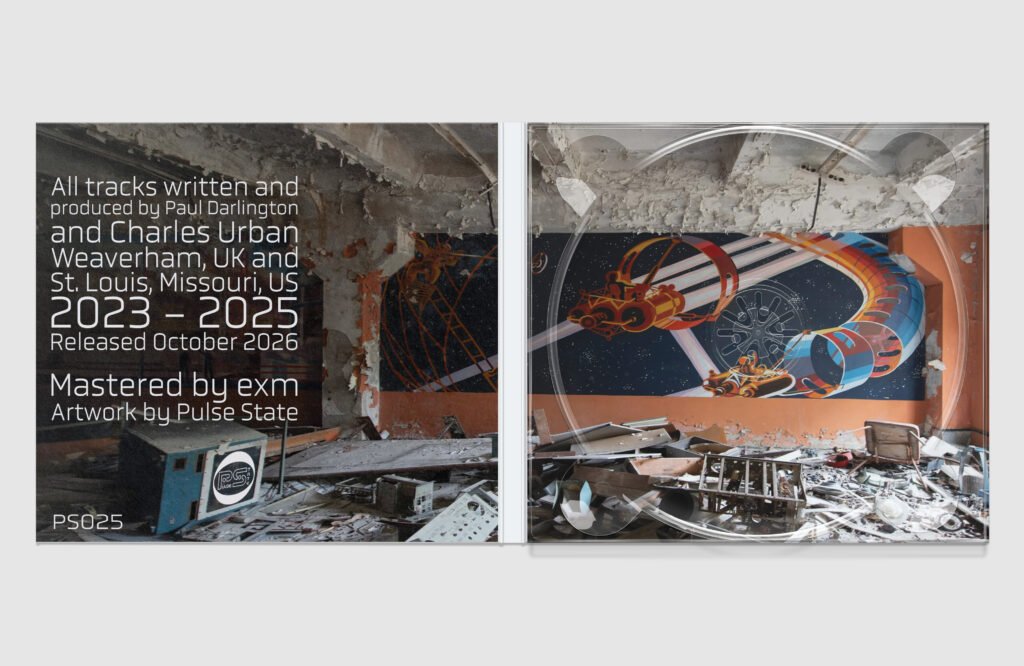
Dissonant, near‑fractured melodies open “LS‑Oc” over a pacing hi‑hat and a long‑ringing metallic pad, with electrical sounds crackling in the background like some mad experiment gone awry. The beat evolves until it bears no resemblance to where it began. Bright, plinky arpeggios ring out, and the track grows into a more positive signal that builds toward an irresistible crescendo, its brightness sitting beside the dissonance of the opening. The result is a song of contrasts, as though several inbound signals from a microwave array had been accidentally patched into the same channel, each sharing the same fader.
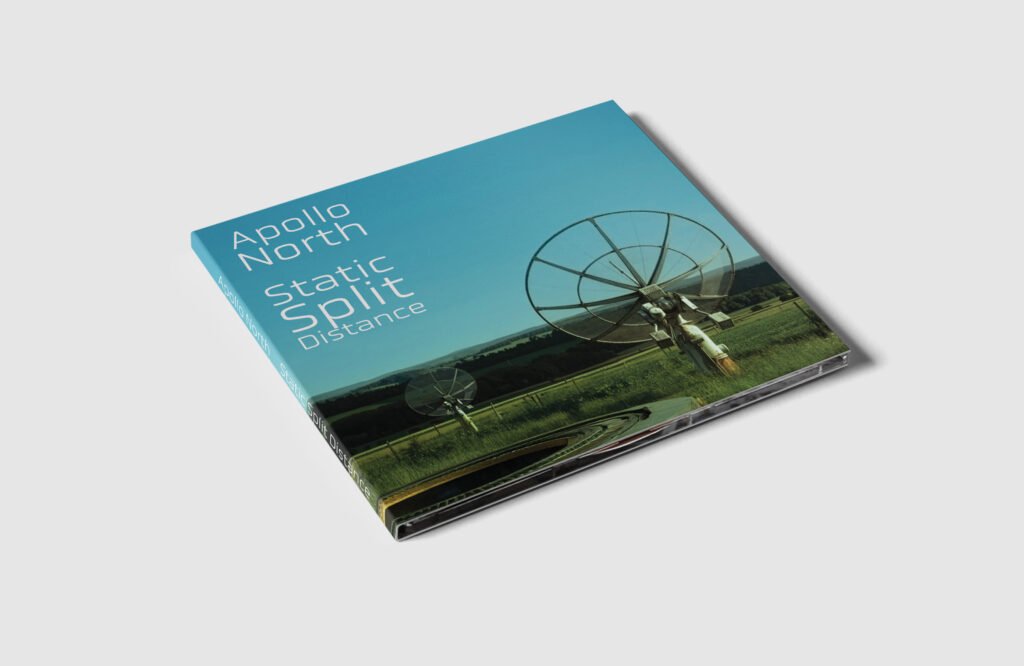
Airy pads and modulated percussion open “AScnD” above a deep bass whose pitch bends to meet each coming note. Arpeggios run a melody up and down, twittering synth flourishes join in, and the drums multiply until the track is in a full braindance clip, a simple motif swallowed by intoxicating rhythms. At the two‑thirds mark everything softens into a floating, melodic embrace, a Jarre‑like ambience where the sky seems to open. Then the track gains steam again, summoned back by that irresistible melodic ritual, until it returns to where it began: bright, airy, shimmering.
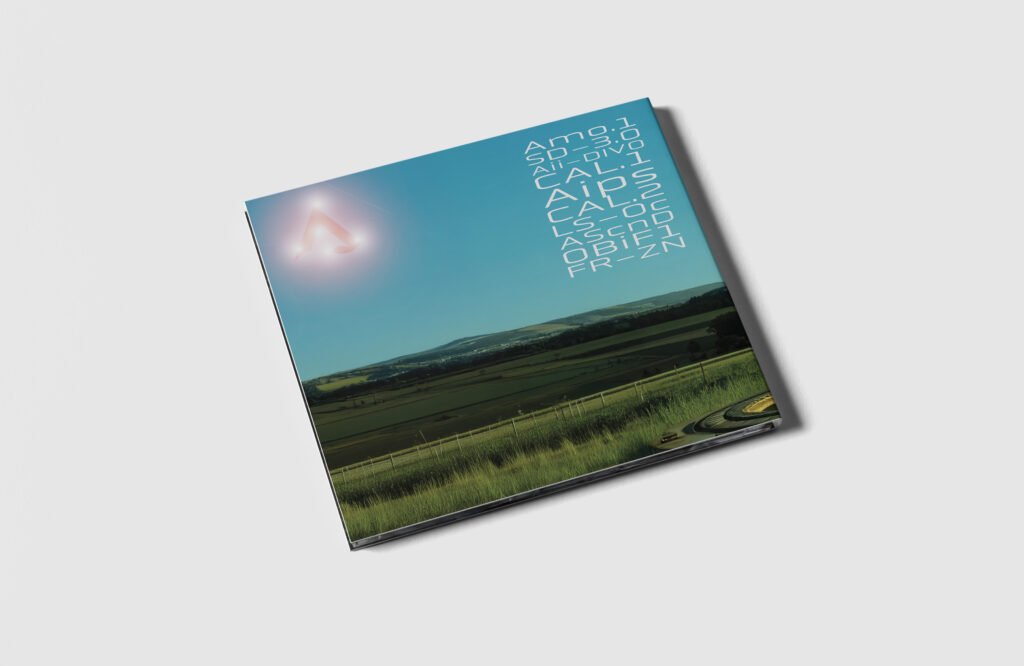
Fast, repeated kicks and a strangely modulated synth carry the highest energy on the album in “OBiF1,” a hybrid techno piece with a warbling, off‑kilter lead repeating over the top. The cadence is peculiar. Because of the kickoff point and the timing of the rhythm, the track always feels ready to fall forward on its face, like a phase‑locked loop that keeps almost catching its signal. As it plays out, it transforms into a heavenly invitation to dance around the base of a radio antenna at some secret location. In the middle it softens, the drums merge into a heavy breakbeat, and soft ambient pads sparkle in the twilight while more lead flourishes add depth. Slowly the song slips back into its odd cadence and threatens again to wobble to pieces before closing in its mad dance energy. Easily one of the most unexpected and unique tracks on the album.
Grumbling bass tones from some far distant place open “FR‑ZN,” with voices lost in the static that follows. Then everything stops except a starlight‑drenched melody played in the high registers of a synth, bright and cheery, while distorted bass grumbles underneath and offsets some of that brightness. The piece is reflective, calming, pristine — a final, clean signal arriving down the waveguide. It does not hold. The sound slowly breaks up, coming apart bit by bit until all that remains is noise and crunchy static, and then the carrier drops and there is silence, the dish turning away from the sky and the monitors going dark.
Static Split Distance has spent just over an hour proving that deep, experimental ambient music can be tender, strange, hypnotic, deliciously unnerving and genuinely danceable without resorting to gimmick or forcing the work into some arthouse format. Apollo North has a gift for the hook that arrives sideways: two soft notes surfacing out of the pads in “Amo.1,” the detuned melody that drifts back into the groove of “CAL.1,” the drunken forward lurch of “OBiF1” that never quite topples. Atmosphere is the spine of the record, formed through patient songwriting and hypnotic from the first fade‑in to the last rumble, and the mixing keeps lush synth tones and gnarled textures in the same room, playing nice with each other. Out on Pulse State on 9 October 2026, it belongs on the shelf of anyone who has ever sat up late beside a glowing receiver with a cold cup of tea, waiting for a signal to come through.
Static Split Distance by Apollo North releases on 9 October 2026 exclusively on Pulse State