There is a temptation when writing about modular synthesis to reach for the language of construction — patches, signal paths, voltage. But Kine 3, the latest and most expansive entry in Roel Funcken‘s long-running Kine series, plays out like a standing meeting between autonomous machines. Across seventeen tracks (there are two additional digital-only pieces, “Koidz” and “Kido“), oscillators, envelopes, and sequencers, each with its own private logic, each capable of running entirely on its own terms, convene and agree, for the duration of a track, to speak to one another. The vocabulary they share is limited to four words — tone, rhythm, pitch, time — and the entire album is an extended demonstration of how much can be said with only those four words, if your speakers are patient enough.
This is exactly the kind of record you’d expect from a producer who cut his teeth as one half of Funckarma before building a solo catalogue defined by its granular, shape-shifting relationship to ambient, IDM and glitch. Funcken has spent decades learning this four-word machine language, and Kine 3, built from hardware patches and rotating trigger patterns rather than static arrangement, may be the clearest statement yet of his generative philosophy. Every gesture on the record sounds discovered, transcribed from an organic machine conversation that was already happening inside the rack and simply stumbled upon.
At two hours and fourteen minutes across those seventeen tracks, Kine 3 is too vast a system to summarize in full — the pleasure of an album this size is in its accumulation, in the sheer number of machine conversations you’re invited to eavesdrop on over its runtime. What follows are a handful of the moments where that conversation reveals itself most clearly, chosen not because the rest of the record has less to say, but because these tracks make an unusually good case for how the whole thing works.
“23rklehk2,” the opener, sets the terms immediately and might be read as the album’s mission statement. Deep in the mix, modular voices hold what can only be called a quiet meeting — hushed, murmured exchanges of tone that never rise too close to the surface — while up top the drums do the opposite, hitting with real physical force, hi-hats skittering off at unpredictable tangents into the ether. Underneath both layers, a bass synth growls from the substrate, pitched low enough that it never collides with the murmured voices above or the force of the drums — three distinct layers occupying three distinct registers, so none has to compete for space.
That sense of layered, semi-independent dialogue deepens on “Cweq 22,” where high-pitched digital drones chatter like background murmuring at the edge of audibility, machine-language gossip that never quite resolves into meaning. Then, without warning, a very deep synth bass blooms, genuinely gorgeous, unhurried, blooming repeatedly across the track’s runtime, and arrives again after a pause that functions almost like a caesura, a held breath before the low end returns to make its point again. It’s one of the album’s most quietly moving moments: proof that Funcken‘s generative systems aren’t merely clever, they’re capable of beauty that seems to arrive by accident and land with the full weight of intention anyway.
Rhythm becomes the explicit subject on “Kine 2,” the track that gives the series its name and arguably its clearest thesis. Here the drums refuse to be metronomic; they run on their own internal rules, unhurried, unpredictable, opening into long stretches of near-silence before a heavy kick reasserts itself. An insistent, loose hi-hat fades in and out like a signal drifting in and out of range. Meanwhile the synths chatter in short, clipped bursts, routinely cut off by great fills of silence, and it’s in that silence that the deep bass rumbles back, a presence reasserting itself with almost no regard for the instrument that carries it. The track’s real subject is the interruption of pattern, and the way absence becomes as rhythmically legible as sound.
“Dorphins” inverts the album’s usual hierarchy by removing drums from the equation almost entirely at first. A bass synth and a set of odd, metallic high-pitched tones circle each other with no percussive scaffolding to organize them, a genuine duet before the spartan kit — kick, modulated snare, a scattering of hi-hats — finally arrives to give the conversation a pulse. What’s most compelling here is the relationship between that bass and the higher synth: at times they lock into complementary counterpoint, dancing in careful synchrony, and at other times they fall out of step entirely, producing happy accidents, moments of generative misalignment, where the track finds its most human-sounding instants. Funckendoesn’t correct the drift. He lets it become the point.
By “Kton,” the album has drifted furthest from rhythm and closest to pure atmosphere: a distant, klaxon-like drone hangs at the edge of the mix like a contact signal from somewhere off-screen, while underneath it a bubbling bass synth swells and recedes in slow cycles, eventually locking into a repeating, almost ritualistic drum pattern. It’s the album’s most overtly alien moment and the clearest evidence of Funcken‘s range across the record’s arc from soft ambience through glitch-inflected IDM into generative dissonant, otherworldly soundscape.
Our favorite track of the album is the deeply interesting “Rayleighs Criterion.” The opening splatty snare is eventually joined by a fat, delicious bass kick while all is metallic distortion and dissonance otherwise, but this all gives way to an eventual gorgeous generative plucky synth run. The track’s bass synth grumbles to itself like a madman in the corner being far too loud for everyone’s comfort, while in the middle of the track the wheels threaten to come off before Funcken‘s chaotic-yet-crisp drum programming corrals all the elements back together for a conclusion.
These six tracks we discuss here are only a sample of what’s on offer — eleven more full-length pieces, counting the two additional bonus tracks, extend the same generative logic into territory this review hasn’t touched: further ambient stretches, further rhythmic experiments, further alien detours. Funcken‘s evident trust in his own modular systems and the generative volt-per-octave language they speak is the catalyst that makes this latest addition to the Kine series so compelling and unique across its full two-hour-plus span, not just in the handful of moments singled out here. With a curatorial ear he listens to the modular equipment he assembled, allowing the pieces of its architecture to find moments of clarity, cohesion, dissonance and struggle as they will come. This gives us a record that moves the way the weather moves: slowly, deliberately, according to hidden internal pressures and pockets of relief from the same.
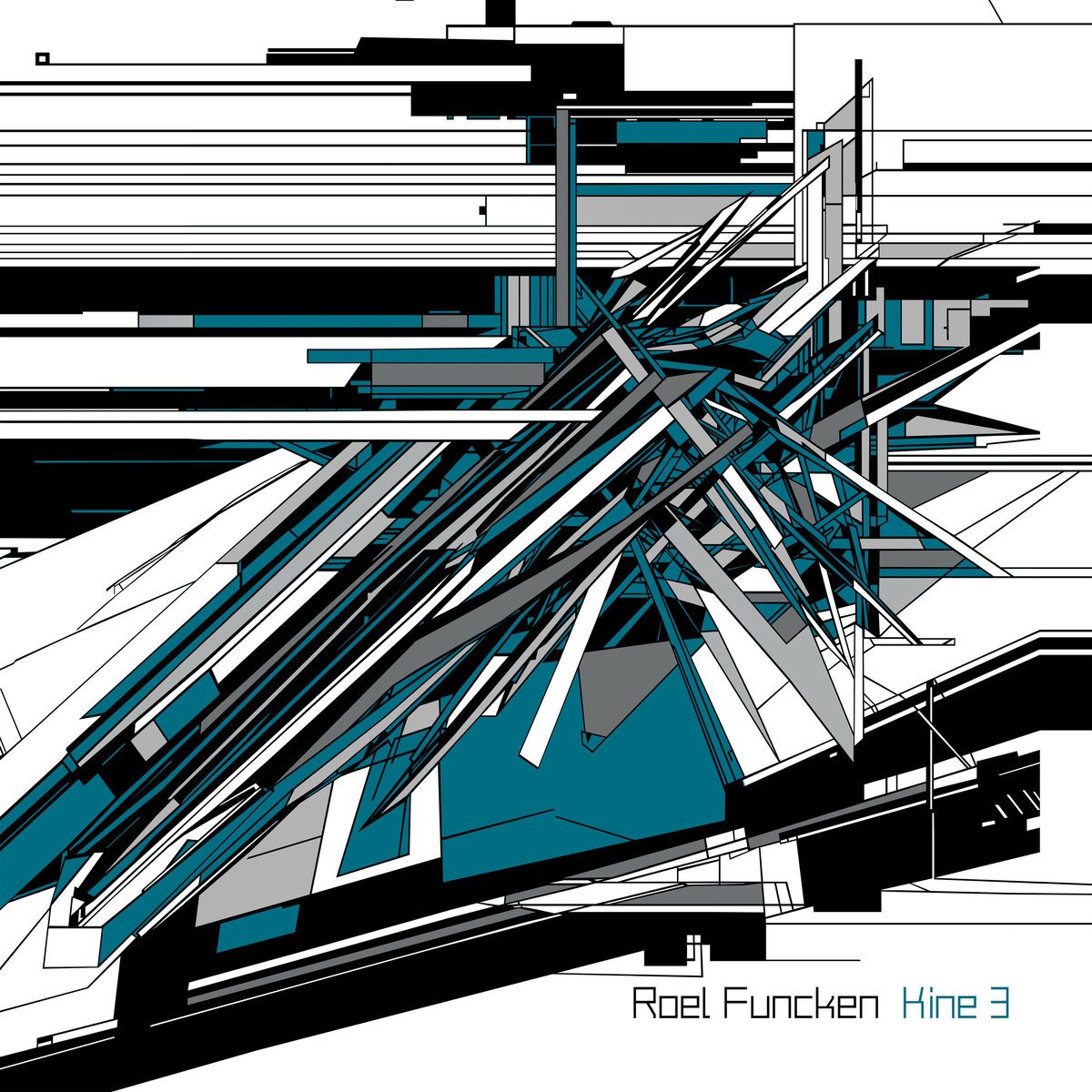
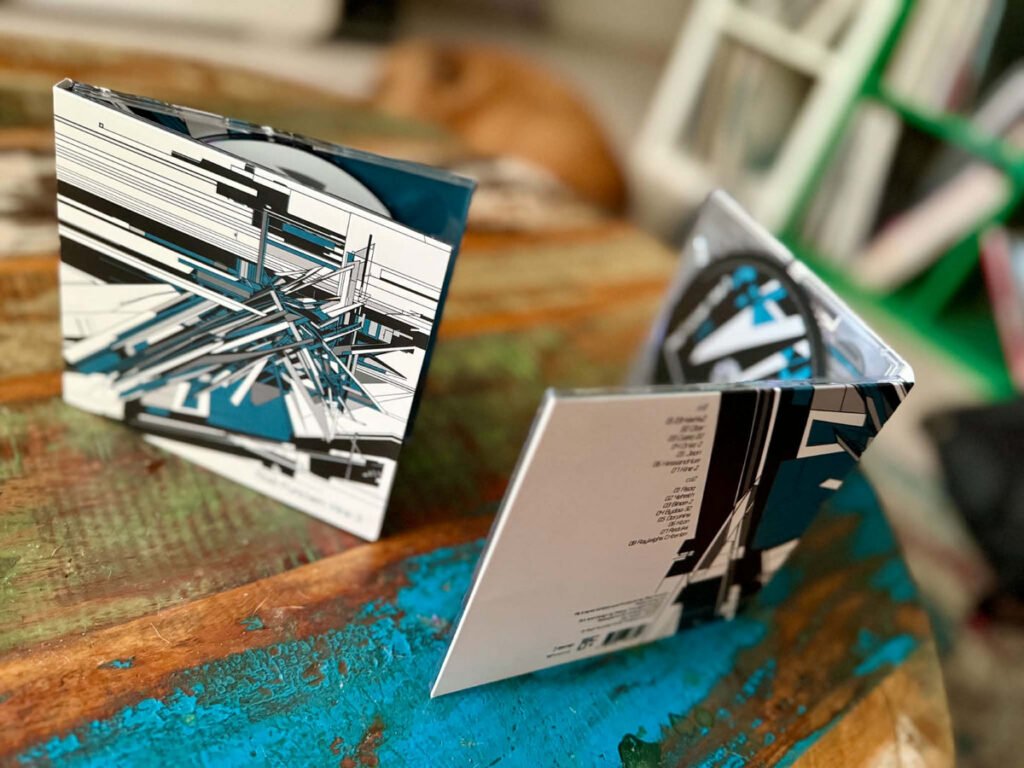
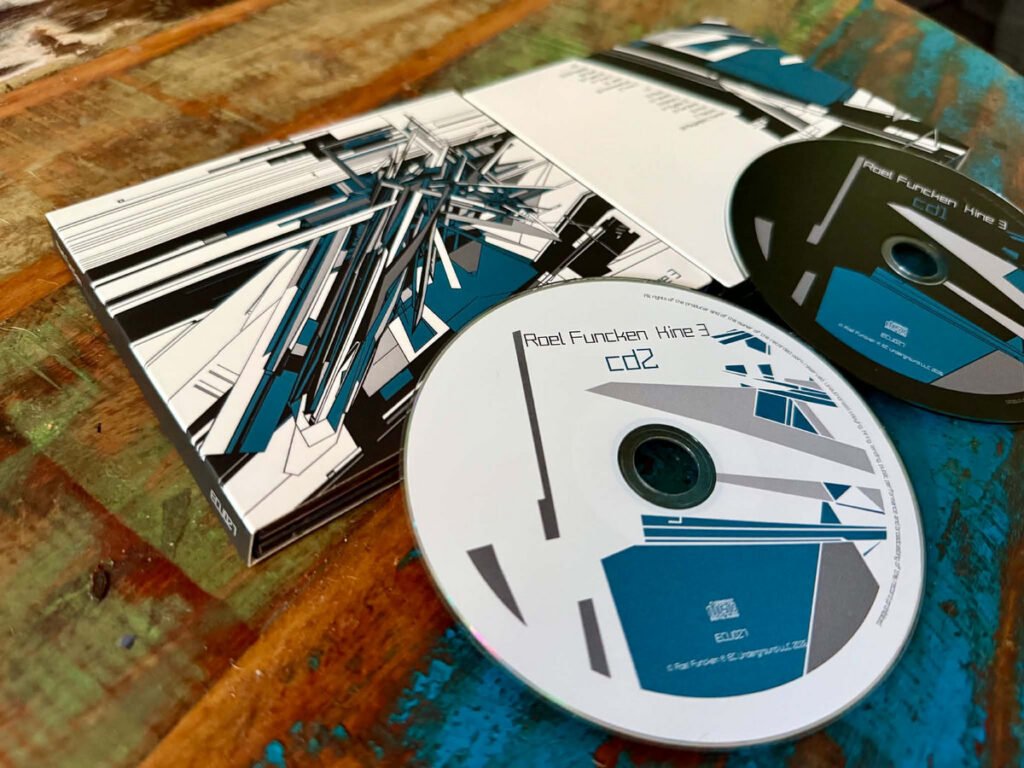
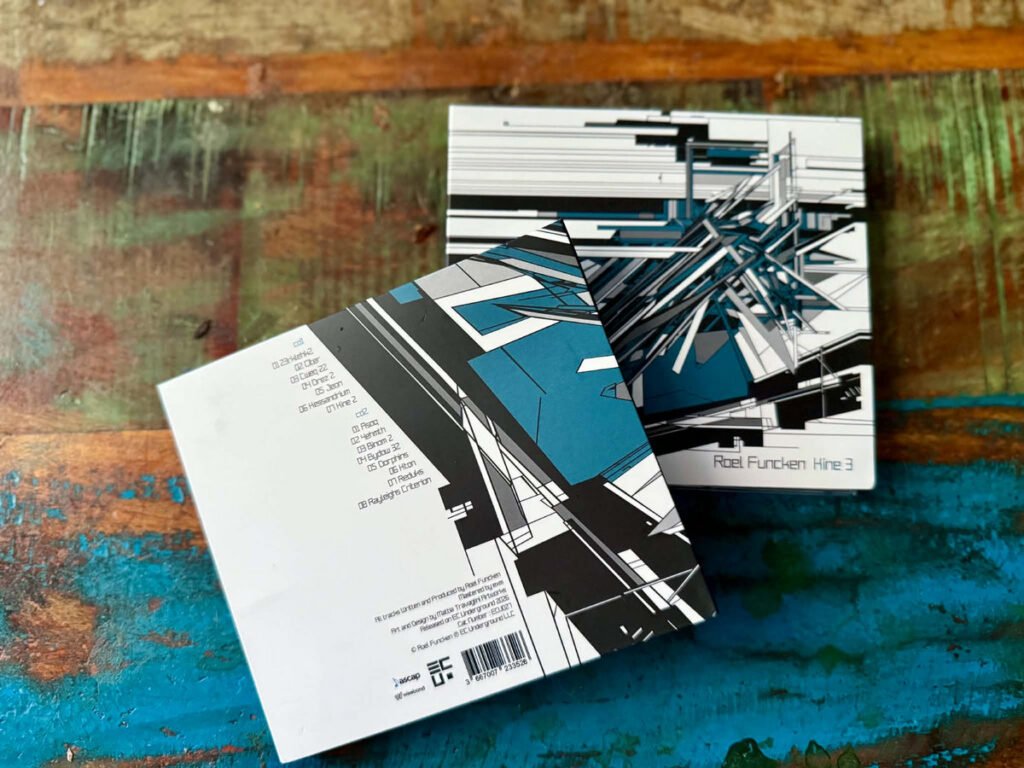
Kine 3 releases 4th September 2026 via EC Underground with striking cover art by Mattia Travaglini