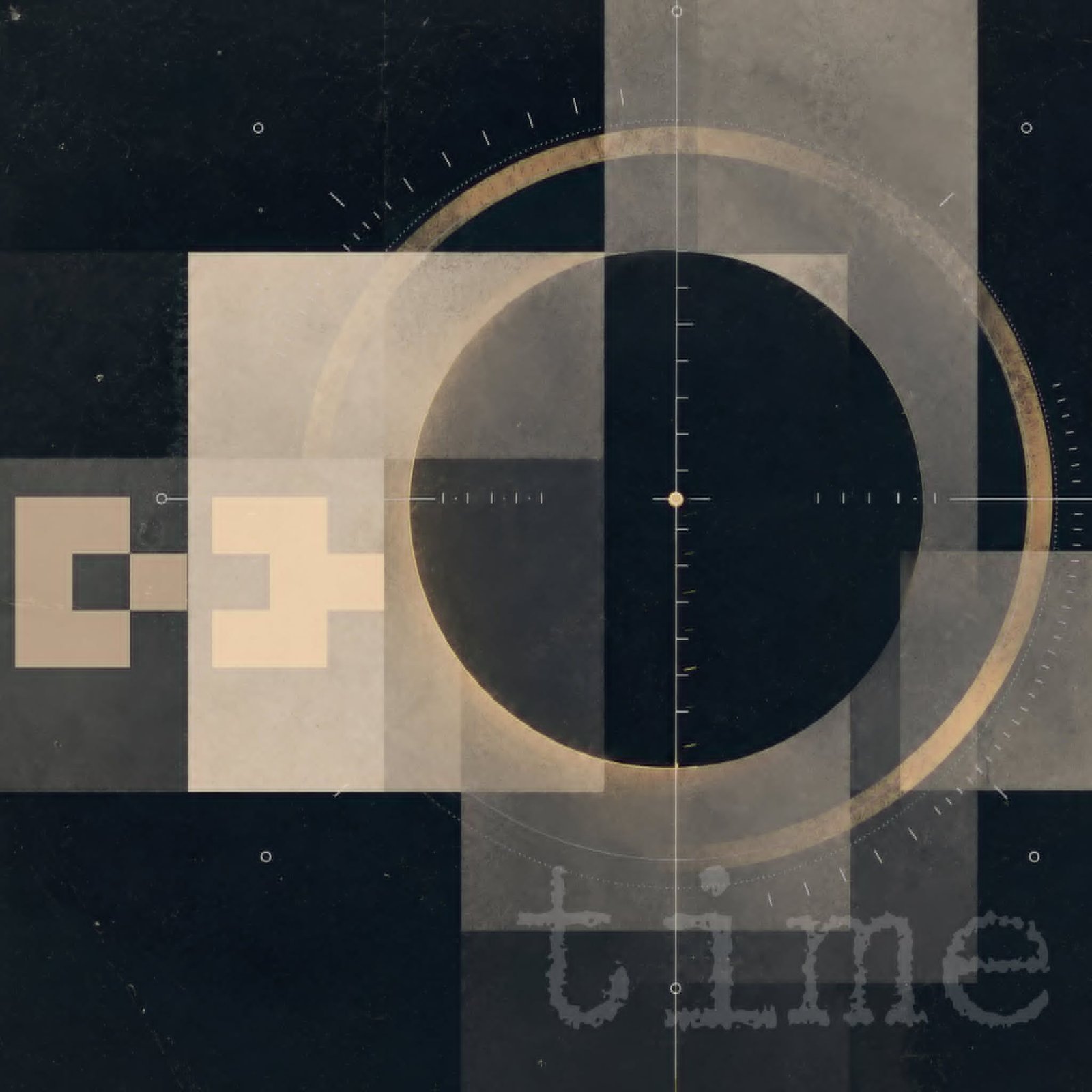
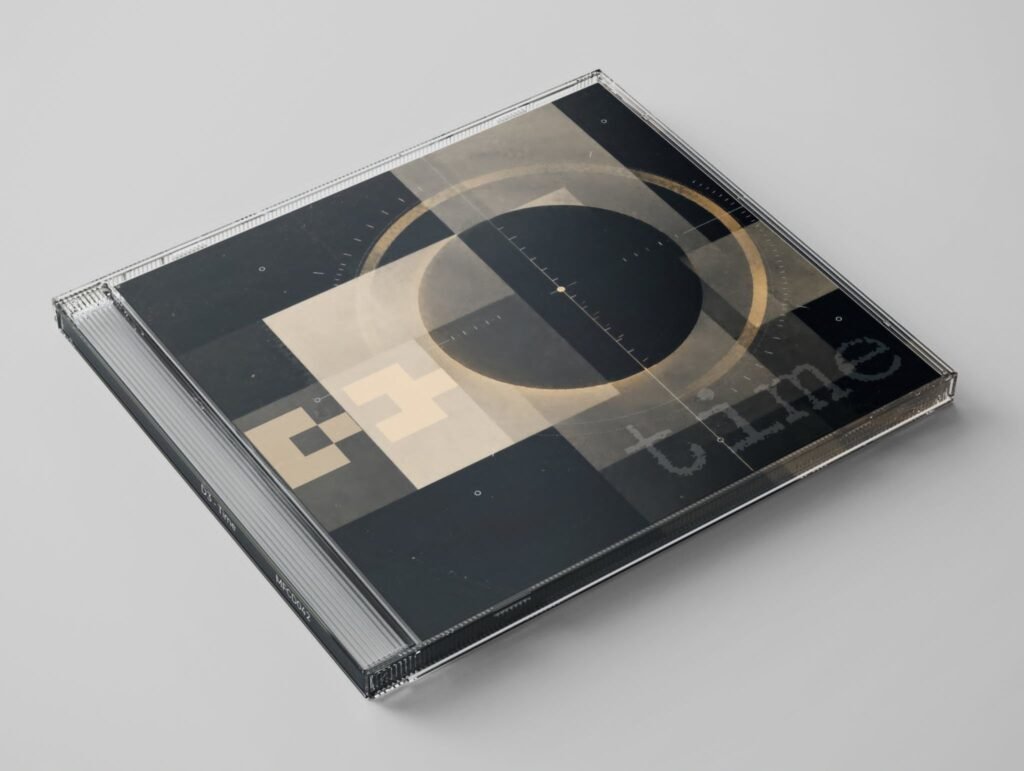
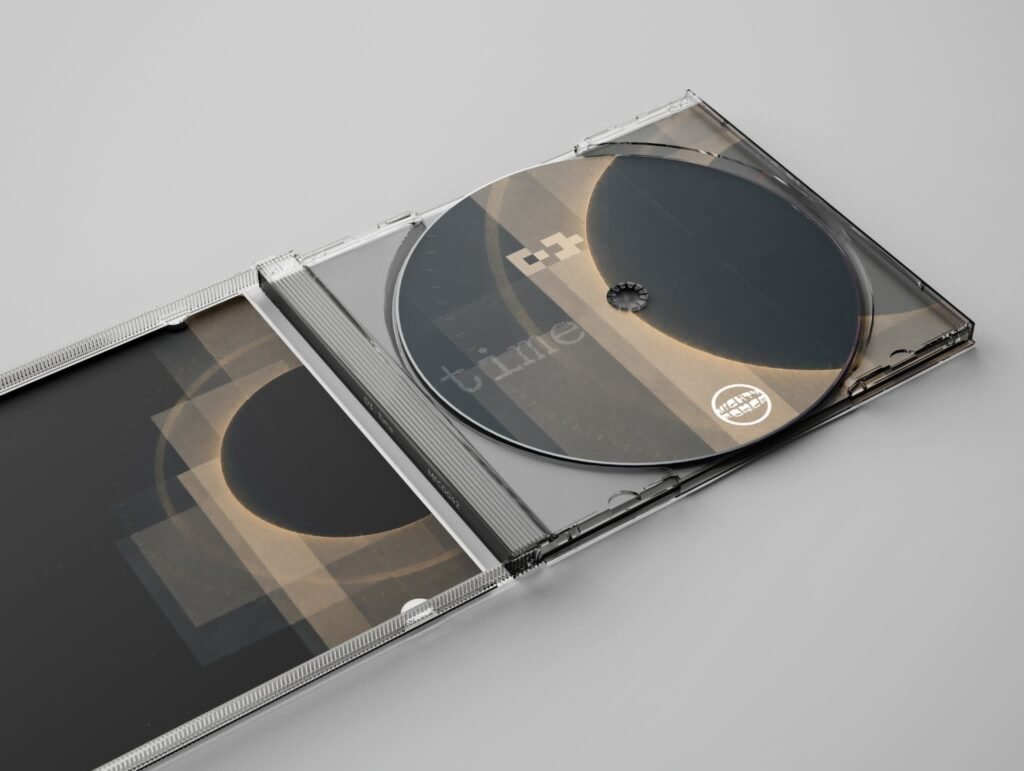
Put Time on in a bedroom and it might sound restless. Put it on in a packed room, late, with the crowd already moving, and it clicks into place. D3‘s new nine-track record for Mighty Force is built for the second scenario, and it doesn’t pretend otherwise. This isn’t headphone music built for solitary introspection. It’s music built for bodies already in motion, sweat already gathering, the night already committed. D3 works the seams between classic techno, acid, and IDM. This is the common pulse that holds the record together.
The album’s drum-forward instinct announces itself on “Unexpected,” which opens on a bed of skittering, unusually textured percussion before synth pads and a melodic line settle in over the top. The track’s best trick is its mid-song vanishing act — the rhythm section drops out almost entirely, leaving a murmuring acid bassline to wander alone under sparse voice samples, before the drums crash back in harder and more distorted than before. It’s a simple structural move, but an effective one, and it sets a template the album returns to more than once: strip everything away, then slam it back with interest.
“This Is…” takes that same rave-leaning energy and darkens it. A stabbing lead synth and a distorted bass line sit under a relentless 4×4 kick, and the overall mood is more dystopian than euphoric — this is a track built for the kind of night out that leaves you wrung out rather than uplifted, and it does the job well. The drums bounce around between four on the floor and hybrid techno-IDM styles with enough pauses before transitions to let everything else breathe.
D3‘s playful side comes out on “Blow The Computer,” which opens with a sparse, quick breakbeat and warbling synth tones before a second melodic line and heavier drums push it into fuller, more futuristic hybrid-techno territory. The manipulated computer samples give it a distinctly digital character, and the recurring vocal hook — “we’re gonna have to blow the computer” — is deployed with enough deadpan commitment to make one consider a hard drive backup before the night is through.
Things get considerably stranger on “Trust,” which is really the album’s clearest pivot away from the dancefloor and toward braindance. Long synth chords and spoken-word fragments open the track at a near-standstill before a slow, patient drum build takes over — and once it arrives, it’s genuinely unpredictable, busy in a way nothing else on the record quite matches. The repeated “trust” vocal sample becomes a fixed point to orient around while the drums do most of the actual talking.
“Is This Heaven?” returns to techno proper but keeps the experimental edge, opening on a strange, breathing acid bassline and metallic textures before locking into a tight bass-snare-clap pattern that periodically breaks apart into looser, breakbeat-driven passages. It’s one of the more successful fusions on the record — the acid and more experimental elements feel genuinely combined.
If there’s a moment where the album’s darker instincts fully take over, it’s “Chill!” — a title that undersells a track built on a breakbeat, a distorted bassline that keeps swelling in intensity, and spoken-word samples that lean unmistakably ominous. It’s an efficient, well-constructed piece of dark, rhythmic melodic techno, with D3‘s sense of atmosphere on full display.
Offering the clearest change of pace is “Not Real”. It opens on a slow, neon-tinged synth melody and drifting acid bassline well before any drums arrive — nearly ninety seconds pass before the hi-hats even show up. When the breakbeat finally does kick in, the track has already established enough atmosphere that the payoff is especially satisfying, and the result is the closest thing on the record to a genuine breather.
“The Dark” is the album’s most polished and disciplined moment. Robotic synth phrases and soft pads carry the opening, and the drums enter modestly. There’s no rush toward maximalism, no rapid-fire hi-hat flourishes competing for your attention. Cymbals and spoken-word fragments arrive gradually, and the acid bass is used tastefully for accent rather than to dominate the track. It’s the most restrained arrangement on the record. Leaving elements out of a track is harder than piling them on, and D3 clearly pulls it off, leaving us with one of the album’s strongest tracks.
The title track, “Time,” closes things on a genuinely minimalist note: a warbling, shimmering analogue synth carries a soft melody that develops slowly, reverb and echo stretching it out, complicating it. Around the halfway point, acid elements bleed in and the track drifts into a hybrid of ambient texture, acid techno, and braindance influence — less a climax than a wind-down, the sound of a room after the lights have slowly come up but the adrenaline is still draining out of the crowd.
Time is a confident, high‑octane record that showcases D3’s ability to mix-and-merge electronic music styles without diluting their character. It’s dance‑forward, inventive, and brimming with personality. Mighty Force has a standout release on its hands, one that will resonate with ravers, acid heads, and techno militiamen alike.
Time by D3 releases 31 July 2026 exclusively on Mighty Force Records