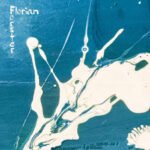
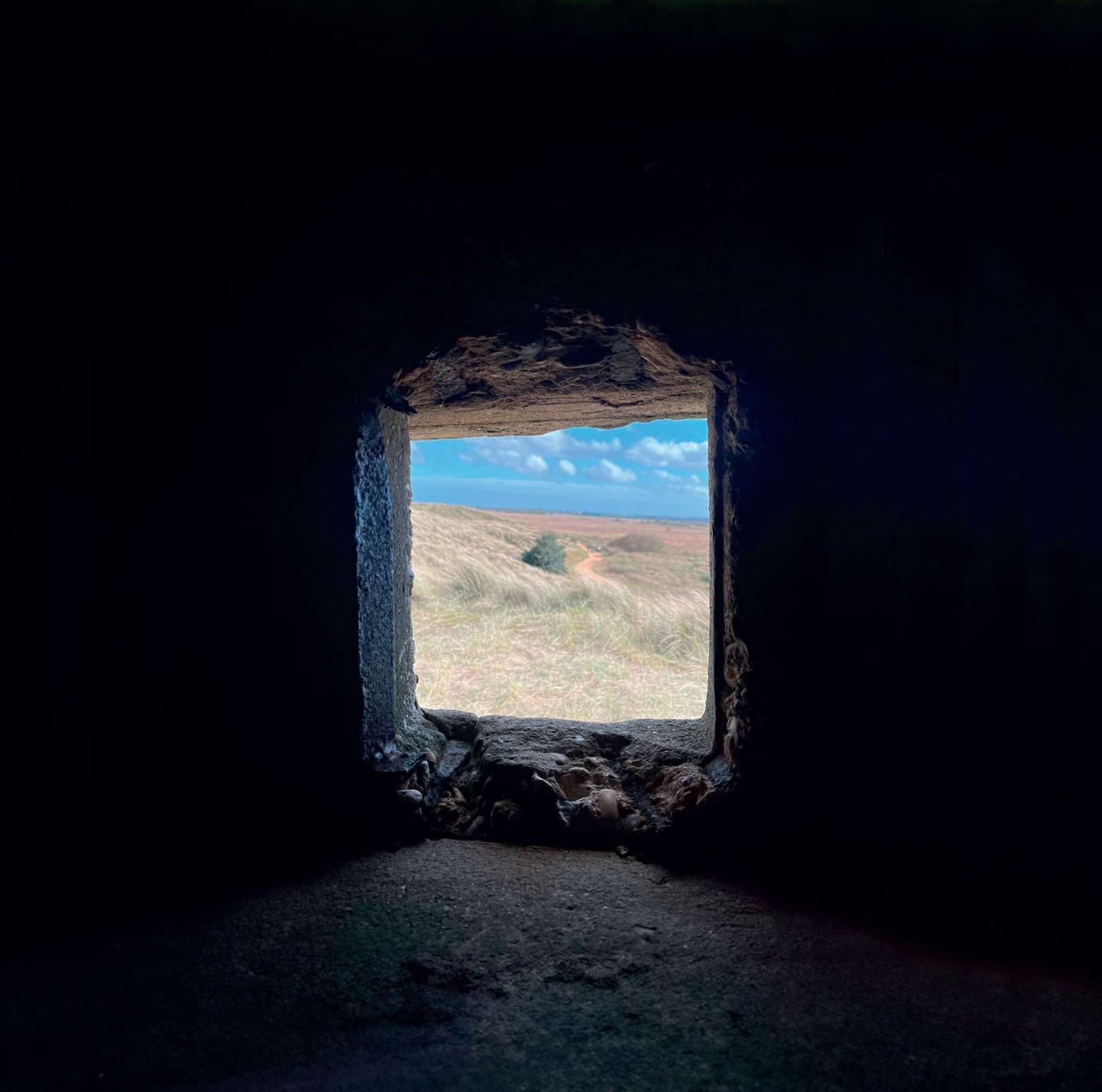
There is a particular kind of British eccentricity in naming a record after an amphibian and a stretch of Norfolk coastline, and an even more particular kind in letting that concept actually organize the music rather than merely adorn it. Horsey Gap, the debut outing under the Natterjack alias from Ben Murphy — better known and more battle-tested as BufoBufo — takes its structure seriously enough to split itself into a “Window” side and a “Flip” side, each with its own climate, its own tidal rhythm, its own way of breathing. The natterjack toad, for the uninitiated, is a rare and jealously protected creature found along exactly this kind of shoreline: nocturnal, rasping, easily displaced by the wrong conditions. It is a fitting mascot for a record that treats genre-hopping not as restlessness but as habitat-seeking, each track finding the specific ecological niche where it can rasp its loudest.
Murphy has spent years building BufoBufo‘s reputation on a fluent, almost scholarly command of electro, breakbeat, acid, and jungle — a producer’s producer, and, not incidentally, a music journalist whose books on drum & bass history and field recording suggest someone who thinks in lineages even as he’s dabbling in new ones. Natterjack, by his own account, is the alias where that scholarship gets to loosen its tie. Notably, across these twelve tracks, “loosening” doesn’t mean diffusion. If anything, the record is tighter and more architecturally confident than the premise of a side-project experiment might promise.
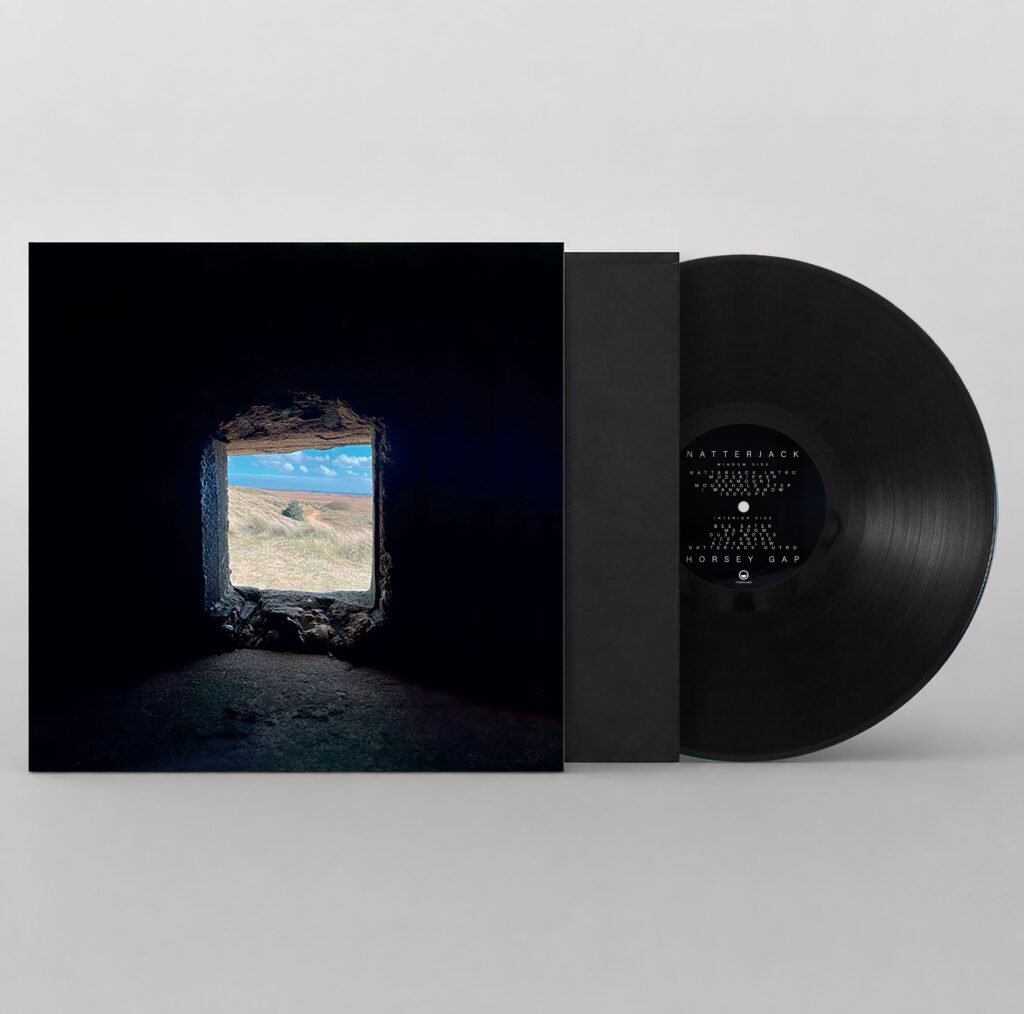
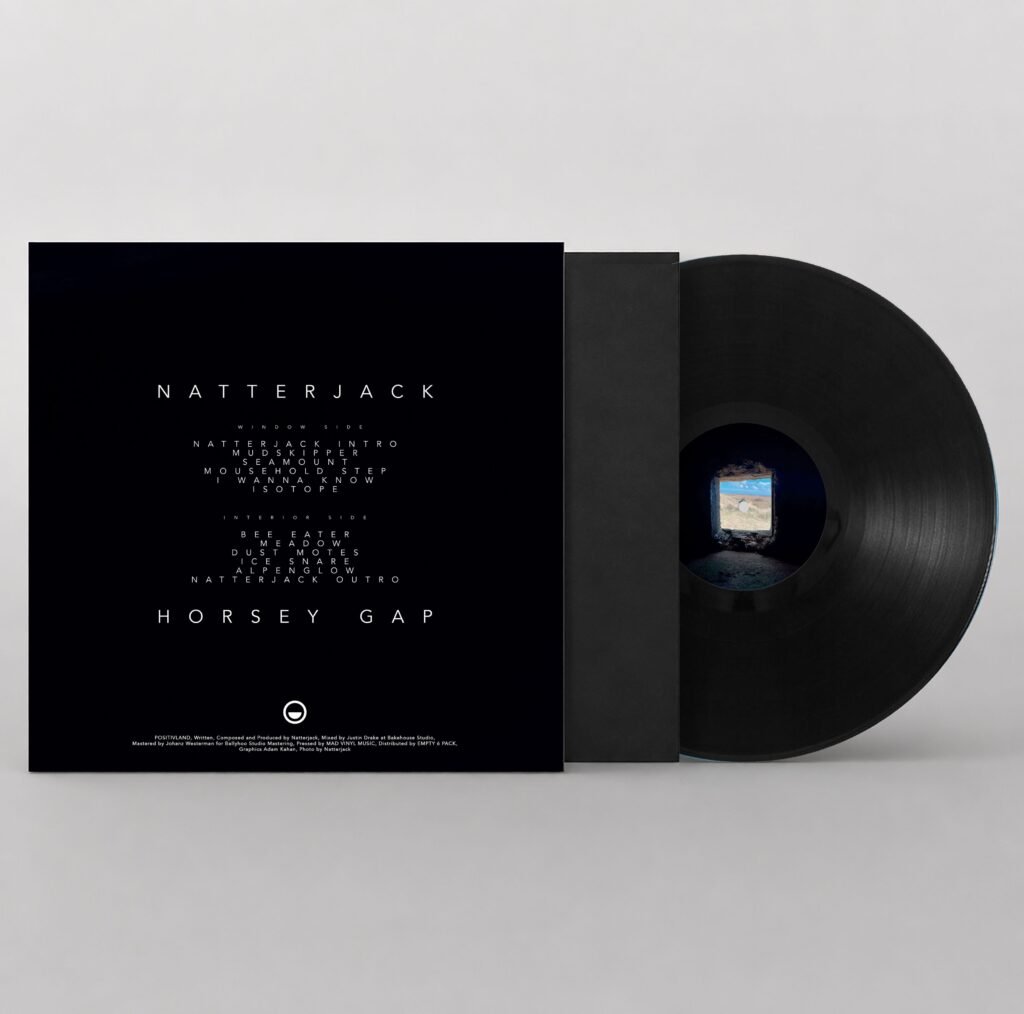
The “Window” side opens with “Natterjack Intro”, a brief overture of synth pad and actual frogsong that functions less as an ambient throat-clearing than as a thesis statement: this is a record where the environmental and the electronic are the same substance, just recorded at different resolutions. “Mudskipper” follows and immediately demonstrates the record’s central skill: restraint deployed as a form of intensity. Sitting around 140 bpm or so, it’s minimal-leaning drum & bass that doesn’t mistake minimalism for emptiness: vocal snippets are chopped into percussion, the bassline sits deep and patient, and the drums pull back at exactly the moments a lesser producer would pile on. It’s a genuinely strong opener, unhurried in a way that reads as confidence.
“Seamount” arrives as the record’s first intermission — backwards strings, vinyl crackle, a sepia-toned hush that feels like a held breath. It’s brief by design, an ambient vignette rather than a lengthy track, but its nostalgic patina does real work: it tells you this is a producer for whom texture is memory. “Mousehold Step” snaps things back into focus with a UK garage 2-step that plays it commendably straight — classic in cut, stripped of clutter, with just enough acid bassline curling underneath to remind you whose record this is. “I Wanna Know” is the side’s deliberate stumble in tempo: deep bass synth, female vocal, a heavier breakbeat that slows the pulse without losing weight. Short as it is, it functions as a fulcrum, the point where the side pivots from garage litheness toward something denser. “Isotope” closes the “Window” side in full electro mode, all robotic high-register melody and a repeating, distorted bass motif, before a late playful synth line arrives to soften its edges — a track built unambiguously for a sweaty dance-floor jaunt
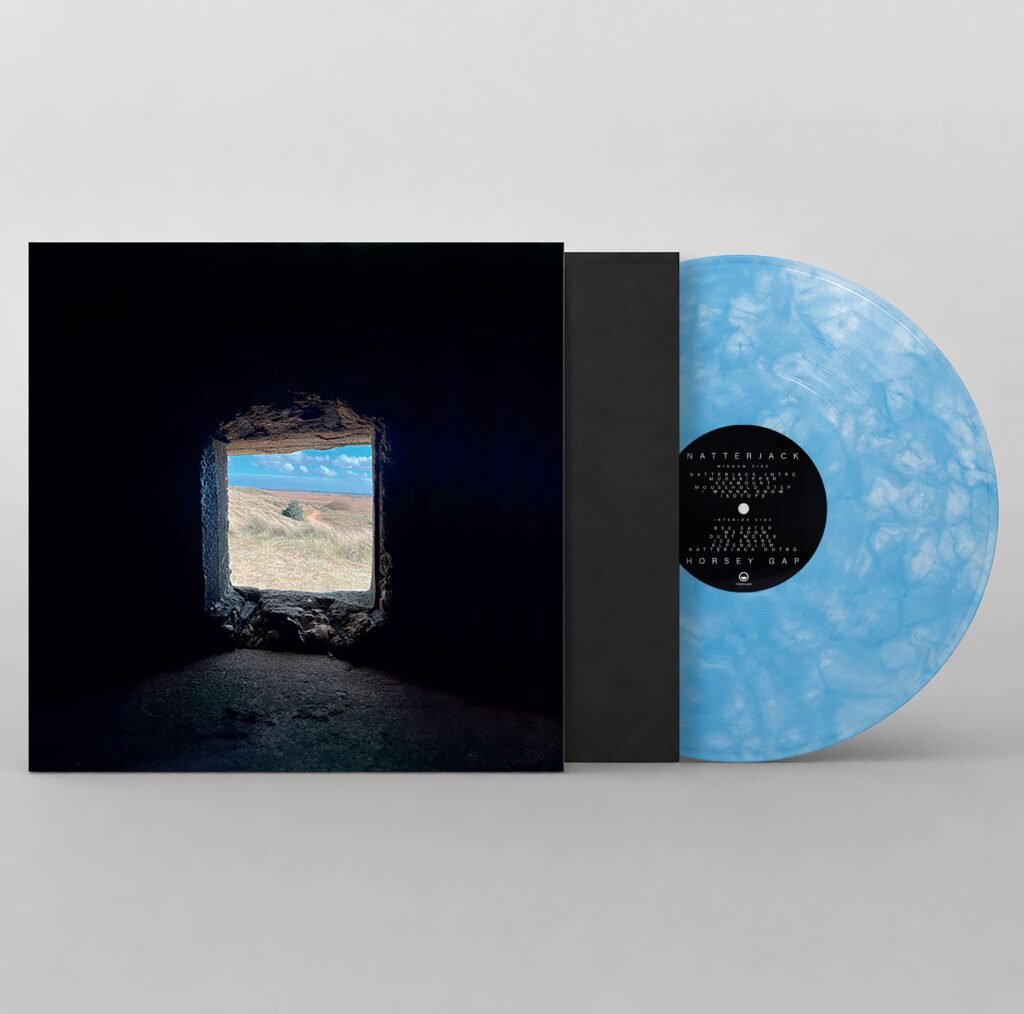
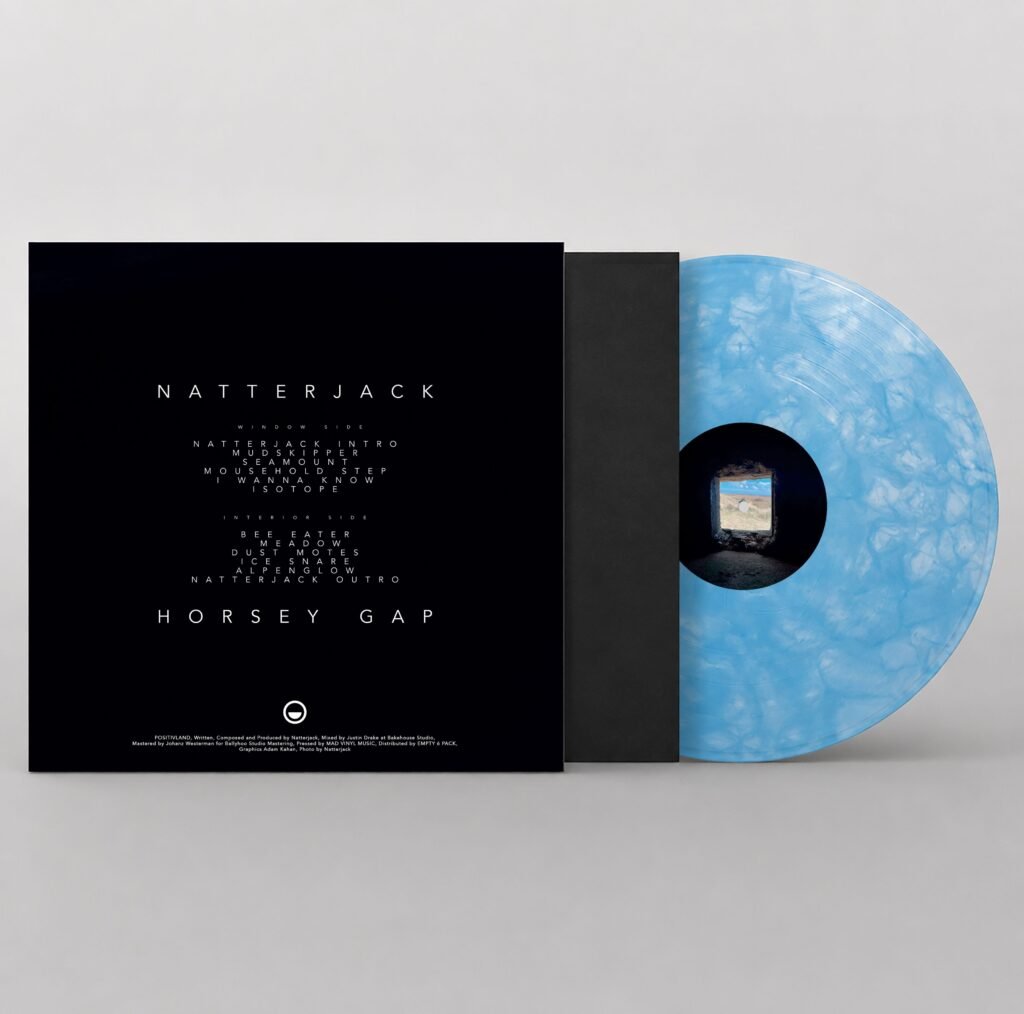
The “Flip” is where Natterjack‘s stated appetite for other sounds declares itself most plainly, and it does so immediately. “Bee Eater” is Italo Disco rendered with startling conviction: melodic, propulsive, catchy in the unashamed way that genre demands, and persuasive enough that it could pass for a period artifact and not a homage. “Meadow” downshifts into hip-hop-inflected electronica, an ascending piano riff giving way to a heavy breakbeat and a mellow acid bassline that fills the frame satisfyingly; it’s warm and inviting where “Bee Eater” is slick chrome, and the sequencing benefits from the contrast. “Dust Motes” takes that same hip-hop-scented palette and pulls it somewhere stranger, replacing warmth with long, distorted bass synth tones before the drums return, mildly glitched and stuttering to form one of the record’s more experimental moments.
“Ice Snare” is another vignette rather than a full-length track: birdsong, foley, slow IDM drums, a lead synth that plinks like light breaking through cloud cover. It earns its brevity. “Alpen Glow” is the closest thing to a second dance-floor peak on this side: ambient techno that finds its groove, pauses on a deep bass punctuation, and starts again, minimalist in construction but built with an old-school melodic sensibility that reveals a solid songwriting pedigree. The record closes as it opened, with “Natterjack Outro”: modulated synth, no rhythm section at all, and the frogs returning from the intro to close the loop. It’s a small, odd, effective piece of bookending, the kind of formal symmetry that only becomes apparent once you notice you’ve been led right back to the beach you started on.
The natterjack toad survives by being extremely particular about where it will and won’t live — a narrow band of dune slack and brackish pool, nothing more forgiving. Murphy‘s record inherits that pickiness and turns it into a compositional principle. He doesn’t smear electro into jungle into Italo disco in search of some unifying sonic mush. He lets each style keep its own salinity, its own temperature, and trusts the sequencing to do the work of coherence instead. That trust is the record’s real achievement. The two vignette pairs, “Seamount” and “Ice Snare” on one axis, the frogsong intro and outro on the other, these do the quiet labor of making twelve fairly disparate tracks feel like they were dug out of the same stretch of coastline rather than assembled from a mood board. It’s a small record with an unfashionable kind of discipline, and it’s brilliant for refusing to explain itself.
Horsey Gap by Natterjack releases 29 July, 2026 exclusively on POSITIVLAND